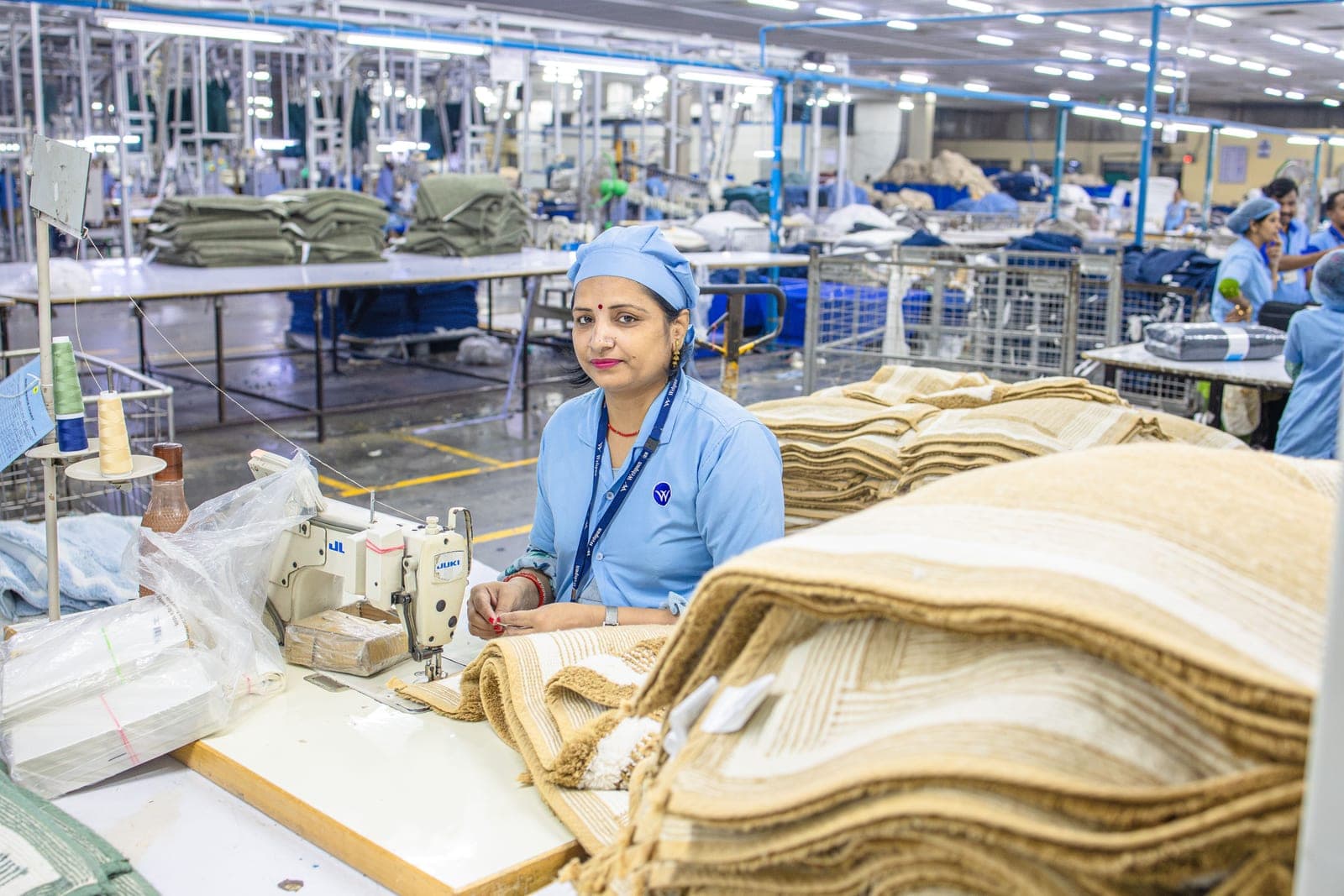
I watched a fabric inspector at a mill in Bhiwandi examine a 200-meter roll of cotton shirting last month. He ran the fabric over the inspection table at approximately 15 meters per minute, marking defects with chalk and tallying them on a paper form. At the end of the roll, he calculated the 4-point score by hand, wrote the grade on a sticker, and attached it to the roll. The paper form went into a tray on his desk. Someone from the quality office would collect it later that day — or maybe the next morning.
Between the time that inspector identified a recurring weft bar defect on Roll number 47 and the time that information reached the production manager, fourteen hours had passed. During those fourteen hours, the loom that produced the defective roll continued running, producing twelve more rolls with the same defect. By the time the issue was traced to a faulty tension mechanism on Loom 23, twenty-six hundred meters of defective fabric had been produced — worth nearly four lakh rupees in material that would be downgraded or scrapped.
This is the cost of paper-based quality inspection. Not the inspection itself — the inspector caught the defect. The cost is the delay between detection and action. In a paper-based system, that delay is measured in hours or days. In a digital system, it is measured in minutes. The difference between hours and minutes, compounded across hundreds of rolls per day, is the difference between a profitable quality operation and one that bleeds money through defect leakage.
The 4-Point Inspection System: A Good Framework With Bad Implementation
The 4-point system is the global standard for fabric quality grading and it is well-designed for its purpose. Every meter of fabric is inspected and defects are assigned penalty points based on their length: one point for defects up to three inches, two points for three to six inches, three points for six to nine inches, and four points for defects over nine inches. The total points per hundred linear yards determines the fabric grade. Most international buyers accept a maximum of forty points per hundred yards for first quality.
The system itself is not the problem. The problem is how the data is captured, processed, and used. On paper, inspection data is a historical record that arrives late and gets filed in a cabinet. Digitally, it becomes a real-time quality management tool that drives immediate corrective action, reveals patterns invisible to human analysis, and provides documentary evidence for buyer quality assurance.
What Digital Inspection Actually Looks Like on the Factory Floor
In a digital inspection workflow, the inspector uses a tablet mounted at the inspection table. When they start inspecting a roll, they scan the roll barcode. The system pulls up the roll production data — which loom produced it, which operator ran it, which yarn lot was used, what construction was woven. As the inspector identifies defects, they tap the defect type on the screen — broken end, missing pick, stain, shade bar, slub, hole, contamination — and the system records the defect position, length, and severity automatically.
The 4-point score calculates in real-time as defects are entered. No manual arithmetic at the end of each roll. No transcription errors from chalk marks to paper to Excel. When the inspector finishes a roll, the grade is immediately visible to the quality manager, the production manager, and the warehouse team on their own dashboards. If the cumulative defect score exceeds a configured threshold, the system sends an alert — not hours later when someone collects the paper forms, but in real-time while the issue is still occurring.
The speed difference is dramatic. Our data from 150 mills shows that the average time from defect detection to production floor awareness drops from eight to fourteen hours with paper systems to under fifteen minutes with digital inspection. In those thirteen-plus saved hours, a problematic loom can produce dozens of defective rolls. Catching the issue thirteen hours earlier prevents all of that waste.
Root Cause Analysis: The Real Power of Digital Quality Data
When defect data is digital and automatically linked to production data, root cause analysis transforms from a manual investigation to a pattern recognition exercise. Instead of the quality manager pulling out paper forms and manually correlating defects with production records, the system does it instantly.
Are weft bar defects concentrated on specific looms? The system shows a defect heat map by machine. Do defect rates increase during the night shift? The system shows shift-by-shift quality trends. Are defects correlated with a particular yarn supplier? The system cross-references defect data with material lot data. One mill in Erode discovered through digital pattern analysis that sixty-eight percent of their fill defects occurred on looms serviced by a specific maintenance technician — not because of poor work, but because he used slightly different tension settings during reassembly. A problem that persisted for months was identified and fixed within a week once the data was connected.
The Integration That Multiplies Value
Digital inspection becomes exponentially more valuable when integrated with other ERP modules. When quality data flows into inventory management, the warehouse knows which rolls are A-grade and which are B-grade before the inspector leaves the table. When quality data feeds into production planning, the scheduler routes critical orders to higher-performing machines. When quality trends connect to procurement, the system identifies suppliers whose yarn consistently produces fewer defects. When quality data links to customer management, your sales team proactively communicates quality metrics to buyers.
The Transition: Practical Advice from 200 Implementations
The biggest concern mill owners express about digital inspection is disruption. In practice, inspectors are usually the fastest adopters because the tablet eliminates tedious manual calculation. The approach that works: start with one inspection table, train one inspector, let them use the tablet for a week. Within days, colleagues see them finishing rolls faster and ask for tablets themselves. We have never had to mandate the switch.
The ROI: Numbers from Real Mills
Mills implementing digital inspection consistently report: sixty percent reduction in defect leakage to customers, forty percent reduction in inspection time per roll, seventy-five percent reduction in time from defect detection to corrective action, and thirty percent reduction in total quality cost. The investment — tablets and software — is typically three to five lakh for a mid-size mill. The savings from reduced customer complaints alone exceed this within the first quarter.
The inspector in Bhiwandi still examines fabric with the same skill and attention he has developed over twenty years. But now, when he identifies a defect pattern, the production floor knows about it in minutes — not hours. And the data he generates does not disappear into a filing cabinet. It feeds a quality intelligence system that gets smarter with every roll inspected.
Frequently Asked Questions
What is the 4-point inspection system?
The global standard for fabric grading. Defects get penalty points by length: 1pt (up to 3in), 2pt (3-6in), 3pt (6-9in), 4pt (over 9in). Total points per 100 yards determines grade. Most buyers accept max 40 points for first quality.
How long does it take to train inspectors on digital systems?
Typically 2-3 hours. The tablet interface uses large defect-type buttons. Most inspectors prefer it within a week because it eliminates manual calculation.
Can digital inspection integrate with existing equipment?
Yes. Digital inspection requires only a tablet at the inspection station and barcode scanners for roll identification. No modifications to inspection tables or physical processes needed.
Vastra ERP Editorial Team
Textile Technology Experts
Our editorial team brings decades of combined experience in textile manufacturing, supply chain management, and enterprise technology. We publish in-depth guides, industry analysis, and practical insights for textile professionals worldwide.