Textile ERP software for Indonesia’s TPT industry
Run weaving, dyeing, finishing, and garment production on one system that already speaks Indonesian compliance — e-Faktur and Coretax PPN, Kawasan Berikat and KITE, SNI quality, and costing in Rupiah.
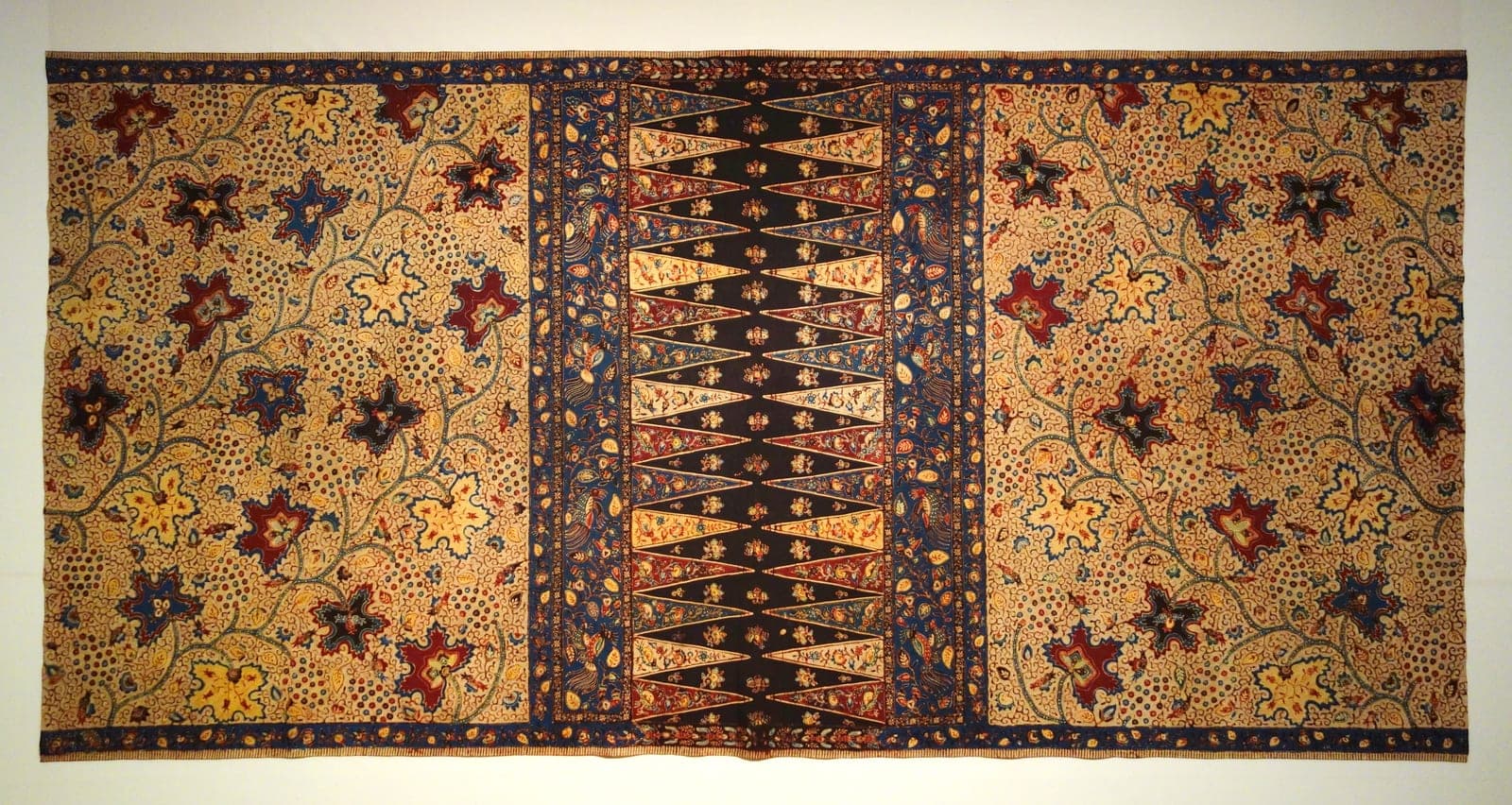
One of the world’s largest textile industries — and one of the most demanding to run
Indonesia’s textile and textile-product sector — known locally as TPT (Tekstil dan Produk Tekstil) — employs more than three million people and is a named priority under the Making Indonesia 4.0 roadmap. Production clusters around the weaving and finishing heartland of West Java (Bandung, Majalaya, Cimahi), the fast-growing garment hubs of Central Java (Semarang, Surakarta, Boyolali, Sukoharjo), the Greater Jakarta corridor (Jabodetabek), and Surabaya in the east.
Two pressures define the moment. First, garment investment is shifting from higher-wage West Java toward lower-UMK Central Java, so many groups now run plants in several regions at once. Second, a wave of low-cost imports led the government to impose safeguard duties (BMTP) on certain textile products in 2024–2025, putting real pressure on domestic margins. Both make one thing non-negotiable: knowing your true, region-specific cost per order.
On top of that sits a compliance load heavier than most of Indonesia’s regional rivals — the 2025 move to the Coretax tax system, mandatory SNI standards, bonded-zone export rules, and labour reporting that generic ERP simply was not built to handle.
The Indonesian compliance reality, handled
Vastra ERP is configured for the rules Indonesian textile and garment businesses actually file against — not a generic tax module you have to bend into shape.
PPN · e-Faktur · Coretax
VAT invoicing compatible with e-Faktur and aligned to the DJP Coretax administration system introduced in 2025.
Kawasan Berikat · KITE
Bonded-zone and import-for-export input–output reconciliation tied to real production and shipment data.
SNI quality
Standar Nasional Indonesia conformance captured in the same 4-point inspection your buyers already require.
UMK labour costing
Per-region minimum-wage (Upah Minimum Kabupaten) rates applied to labour cost per plant and per order.
PEB · INSW
Export declarations (Pemberitahuan Ekspor Barang) and documentation ready for the Indonesia National Single Window.
BPJS · NPWP
BPJS Ketenagakerjaan and Kesehatan labour reporting and NPWP-based tax handling built in.
Built for bonded-zone exporters
Most Indonesian textile exporters operate under a Kawasan Berikat (bonded zone) or a KITE facility, importing yarn and accessories duty-relieved on the condition they are re-exported as finished goods. The catch is reconciliation: Bea Cukai expects a clean input–output trail proving every imported input ended up in an export. Done on spreadsheets, it is slow and audit-risky.
Vastra ERP ties imported inputs to production orders and to the PEB (Pemberitahuan Ekspor Barang) export declarations they ship under, so the input–output position is always current and INSW-ready documentation is a report, not a fire drill. For groups selling into RCEP markets, rules-of-origin data is captured against the order from the start.
How Vastra ERP fits an Indonesian manufacturer
True cost per order, in Rupiah
With imported yarn priced in USD, conversion in IDR, and BMTP safeguard duties shifting input costs, margins move fast. Vastra ERP costs every order in Rupiah with multi-currency export invoicing and realisation against the booked rate.
Textile costing →Production across West and Central Java
Plan weaving, dyeing, finishing, and CMT across multiple plants with capacity-aware scheduling — and keep one live view as garment work shifts toward lower-UMK Central Java.
Production planning →Roll-level inventory and SNI quality
Track fabric at the roll, lot, and shade level and grade it once against both SNI and buyer standards, so finished goods carry their quality record to the buyer.
Quality control →Built for garment exporters
Tech packs, size-colour order matrices, cut planning, and CMT subcontractor visibility for the apparel factories that drive most of Indonesia’s textile exports.
Garment & apparel →Indonesia textile ERP — FAQs
Does Vastra ERP support e-Faktur and the Coretax system for Indonesian PPN?
Yes. Vastra ERP produces PPN (Pajak Pertambahan Nilai) invoices compatible with e-Faktur and keeps records aligned to the DJP Coretax system rolled out from 2025, so your tax team files from clean data instead of rebuilding it every period.
Can it handle Kawasan Berikat (bonded zone) and KITE reconciliation?
Yes. Imported inputs are tracked against production output and exports, so Kawasan Berikat and KITE (Kemudahan Impor Tujuan Ekspor) input–output reports are audit-ready for Bea Cukai rather than reconstructed by hand before an audit.
How does it cope with different regional minimum wages (UMK)?
Labour cost is captured per plant and per order using each kabupaten’s UMK, so costing stays accurate whether you run lines in higher-wage West Java or lower-wage Central Java.
Does it record SNI and buyer quality standards together?
Yes. A single 4-point inspection records SNI (Standar Nasional Indonesia) conformance alongside each buyer’s own quality standard, so you don’t inspect the same roll twice.
Where is Indonesian customer data hosted?
Vastra ERP can host Indonesian customer data in the AWS Jakarta (ap-southeast-3) region to meet data-residency expectations, with disaster recovery in a secondary Asia-Pacific region.
See Vastra ERP run an Indonesian order
Bring a real order — bonded-zone inputs, a size-colour matrix, and a CMT step — and we’ll take it from PPN-compliant invoice to PEB-ready export in front of you.
Book a walkthrough