Garment software: five things, one confusing name
CAD, PLM, ERP, shop-floor and billing systems all get sold as “garment software.” Here is what each actually does, where they overlap, and which one to buy first.
What people mean by “garment software”
Search for garment software and you will be shown five genuinely different products, all using the same two words. A CAD vendor means marker-making. A PLM vendor means tech packs and sample approvals. An ERP vendor means orders, materials and costing. An MES vendor means bundle scanning on the line. An accounting vendor means the invoice.
This matters because buying the wrong category is expensive and slow to undo. A factory that cannot say what a style cost does not need better patterns. A factory whose patterns are the bottleneck will get nothing from an ERP. The useful question is not “which garment software is best” but “which of these five am I actually missing?”
Below we lay out each category honestly — including the ones we do not sell, and the ones you should probably keep as they are.
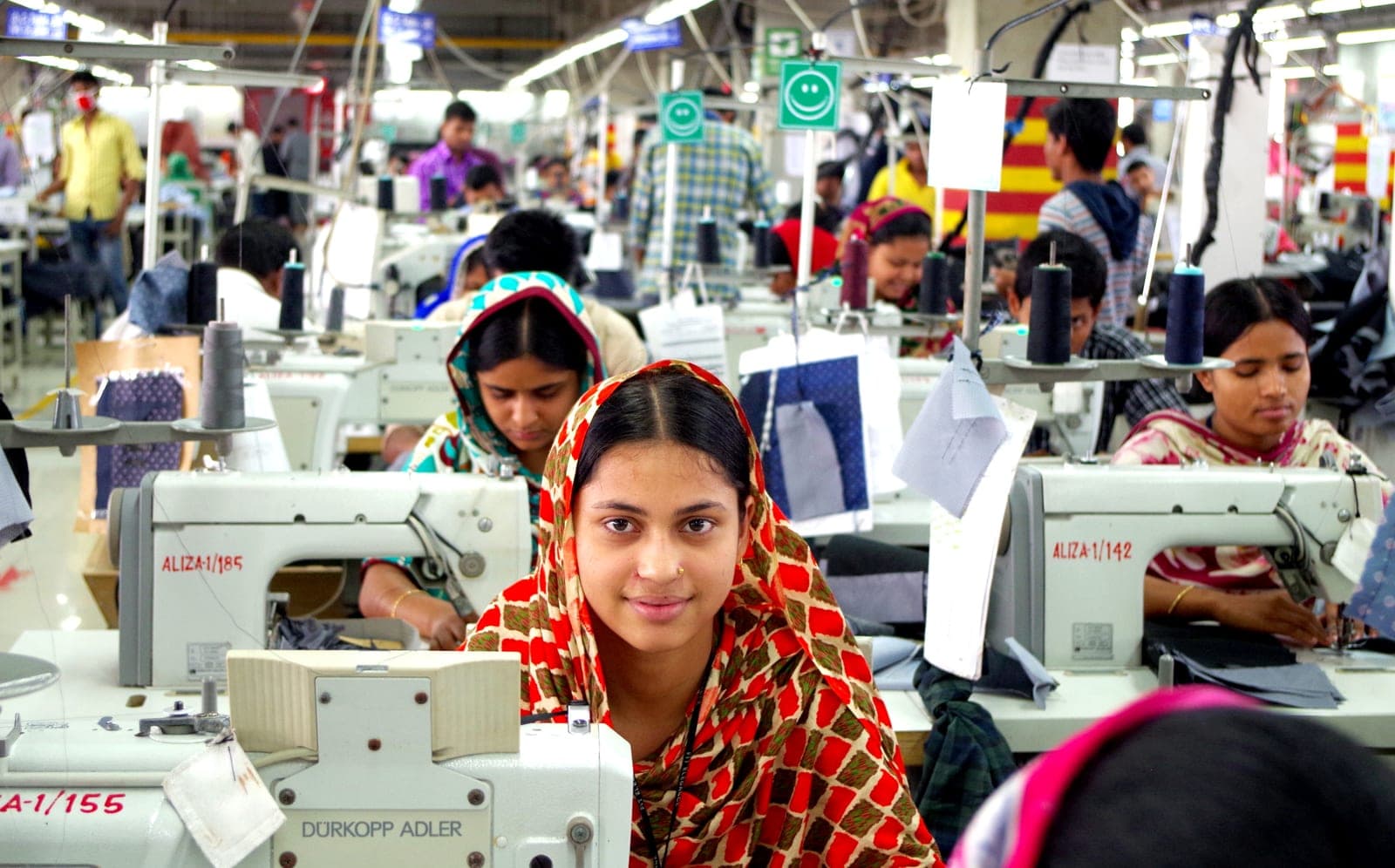
The five kinds of garment software
What each one does — and our honest verdict on whether you need to buy it.
CAD & pattern software
Keep itDesigns the garment, grades the sizes, lays the marker.
Specialist and hard to replace — most factories keep their CAD. It is the one category a general ERP should not pretend to cover.
PLM (product lifecycle)
Often folded into ERPStyle master, tech pack, sample rounds, approvals.
Essential for brands developing hundreds of styles a season. For a factory making to a buyer's tech pack, this usually belongs inside the ERP.
Learn moreERP
Usually the missing pieceOrders, materials, production, costing, finance — connected.
The system that links the buyer PO to the fabric bought, the line that sewed it, the cost it incurred and the invoice raised. This is the gap for most factories.
Learn moreShop-floor / MES
Needs ERP underneathWhat each line and operator actually produced, hour by hour.
Bundle scanning, SAM-based efficiency, live WIP. Powerful — but useless in isolation, because the numbers need an order and a cost to attach to.
Learn moreBilling & accounting
You probably have thisThe invoice, the tax, the ledger.
Where most businesses already have something — usually Tally or a billing package. It works, until it cannot tell you what a style cost to make.
Learn moreThe trap: five tools that do not talk
How most garment factories end up worse off after buying software.
The common path is to buy point solutions as each fire breaks out. CAD for the patterns. A billing package for the invoices. A spreadsheet for costing. A WhatsApp group for line updates. Each one solves its problem — and creates a new one, because the same information now lives in four places and agrees in none.
The symptom is re-keying. Somebody types the buyer's order into the costing sheet, then into the cutting plan, then into the invoice. Every retype is a chance to be wrong, and by the time an error surfaces the goods have shipped. The spreadsheet says the style made money; the bank says otherwise.
This is precisely the gap an ERP is supposed to close — not by replacing the CAD or the sewing machines, but by being the single record that the buyer PO, the fabric, the line, the cost and the invoice all attach to. If you recognise the symptom, the real cost of spreadsheet-and-WhatsApp operations is worth ten minutes of your time.
What Vastra ERP covers — and what it does not
We would rather tell you the boundary than sell you past it.
What we cover
- Style master, BOM, fabric and trim procurement
- Cut plan, bundle tracking, sewing-line and operator efficiency
- Inline and end-line QC, 4-point fabric inspection, DHU
- CMT and FOB costing, billing, GST, multi-currency invoicing
- Buyer compliance and export documentation
What we do not
- Marker-making and grading CAD. This is specialist software and the good products are very good. Keep yours — we take the cut plan and consumption from it rather than replacing it.
- Design and illustration. Your designers keep their tools.
- A vendor who claims to replace everything you own is telling you what you want to hear, not what is true.
Where to start, by business
Job-work / CMT unit
You need line efficiency and CMT costing above all. Start with garment ERP and shop-floor capture.
Exporter
FOB costing, buyer compliance and LC-linked documents decide your margin. See the garment export ERP guide.
Own-label brand
You make and you sell, so you need both sides on one record. See apparel ERP and clothing ERP.
See it connected end to end
One record from the buyer's order to the shipped carton.
The test of good garment software
Here is the only benchmark that matters. Pick a style you shipped last month. Can you say, in under a minute and without opening a spreadsheet: what it was quoted at, what fabric it actually consumed, which line sewed it and at what efficiency, how many pieces were rejected, and what margin it finally earned?
If yes, your software is working. If no, no amount of additional features will fix it — because the problem is not a missing module, it is that the data was never joined up in the first place.
Frequently asked questions
What is garment software?
Garment software is an umbrella term for the systems a garment business runs on, and it covers at least five quite different things: CAD and pattern-making software that designs the garment and lays the marker; PLM that manages the style, tech pack and sample approvals; ERP that runs orders, materials, production, costing and finance; shop-floor systems that capture what each line and operator actually produced; and billing or accounting software that raises the invoice. People searching for 'garment software' usually need one of these specifically — the trouble is that vendors of all five use the same phrase.
What is the difference between garment software and garment ERP?
Garment ERP is one type of garment software — the one that ties the business together. CAD designs the garment, PLM develops it, and shop-floor systems watch it being made, but ERP is what connects the buyer's purchase order to the fabric bought, the line that sewed it, the cost it incurred, and the invoice that went out. If you already have CAD and are drowning in spreadsheets between order and shipment, ERP is the gap. If your patterns are the bottleneck, ERP will not help you.
Which garment software should a small factory buy first?
Buy for your worst bottleneck, not for the longest feature list. If you cannot say what a style actually cost you, start with costing and order management. If you ship late and cannot explain why, start with production planning and shop-floor capture. If invoices and stock are the mess, start with billing. A small factory that buys a large integrated suite to fix one problem usually ends up using ten percent of it — and a factory that buys five disconnected point tools ends up re-keying between all of them.
Do I need separate CAD, PLM and ERP systems?
Not necessarily, and most small and mid-size factories should not start there. CAD is genuinely specialist — marker-making and grading software is hard to replace, and you will likely keep it. PLM and ERP, however, overlap heavily for most manufacturers: the style master, BOM, tech pack and sample approvals can live inside a modern ERP without a second system. Buying a standalone PLM makes sense when you are a brand developing hundreds of styles a season; for a factory making what buyers send, it is usually an expensive duplicate.
How much does garment software cost?
It depends entirely on which of the five categories you are buying. Marker-making CAD is typically a per-seat licence. Cloud garment ERP is usually priced per user per month; Vastra ERP is not — it is ₹12,000 a month flat with unlimited users, plus a one-time ₹50,000 setup fee. A traditional on-premise apparel suite can run into lakhs of licence plus annual maintenance, before implementation. The number that catches people out is never the licence: it is data migration, training and customisation, which is why we publish a full cost breakdown rather than a single figure.
Can one system handle both manufacturing and selling?
Yes, and increasingly it has to. Many garment businesses now both manufacture for buyers and sell their own label, which means one system needs to handle bundle-tracked sewing lines and CMT costing on one side, and B2B order books, wholesale and retail stock on the other. Vastra ERP covers both from the same data, which is the point — a factory that sells its own brand should not be reconciling a production system against a separate retail system by hand.
Bring us a style you shipped
We'll run it through Vastra ERP live — order, fabric, line, QC, cost and invoice — and you can judge for yourself.
Image credits: Solidarity Center (CC BY 2.0) · Fahad Faisal (CC BY-SA 4.0) · Fahad Faisal (CC BY-SA 3.0)