What Vastra ERP connects to
Tally and accounting, barcode scanners, RFID, e-commerce, payroll, banking, logistics and SAP — plus a REST API for everything else. Including an honest note on where an integration is not worth the money.
The point of an integration is to stop re-keying
Almost every integration question in a textile business comes down to the same complaint: the same information is being typed into two places. The order is typed into the costing sheet and again into the invoice. The day's production is written on a tally board and again into a spreadsheet. Stock is counted on the shelf and again into a register that already disagreed with it.
An integration is worth its cost when it removes one of those retypes — and it is not worth its cost when it merely adds a fourth place for the same number to live. That is the test we apply below, and it is why this page tells you where an integration pays for itself and where it does not.
Most textile businesses need three connections and no more: post the accounts to the ledger their auditor already uses, scan what moves in and out of the godown, and — if they sell their own label — keep one stock pool behind every channel. Everything else on this page is available, but it is optional.
What it connects to
Each of these removes a retype. If it does not, we will tell you.
Barcode vs RFID in a textile business
The honest version — including where RFID does not pay for itself.

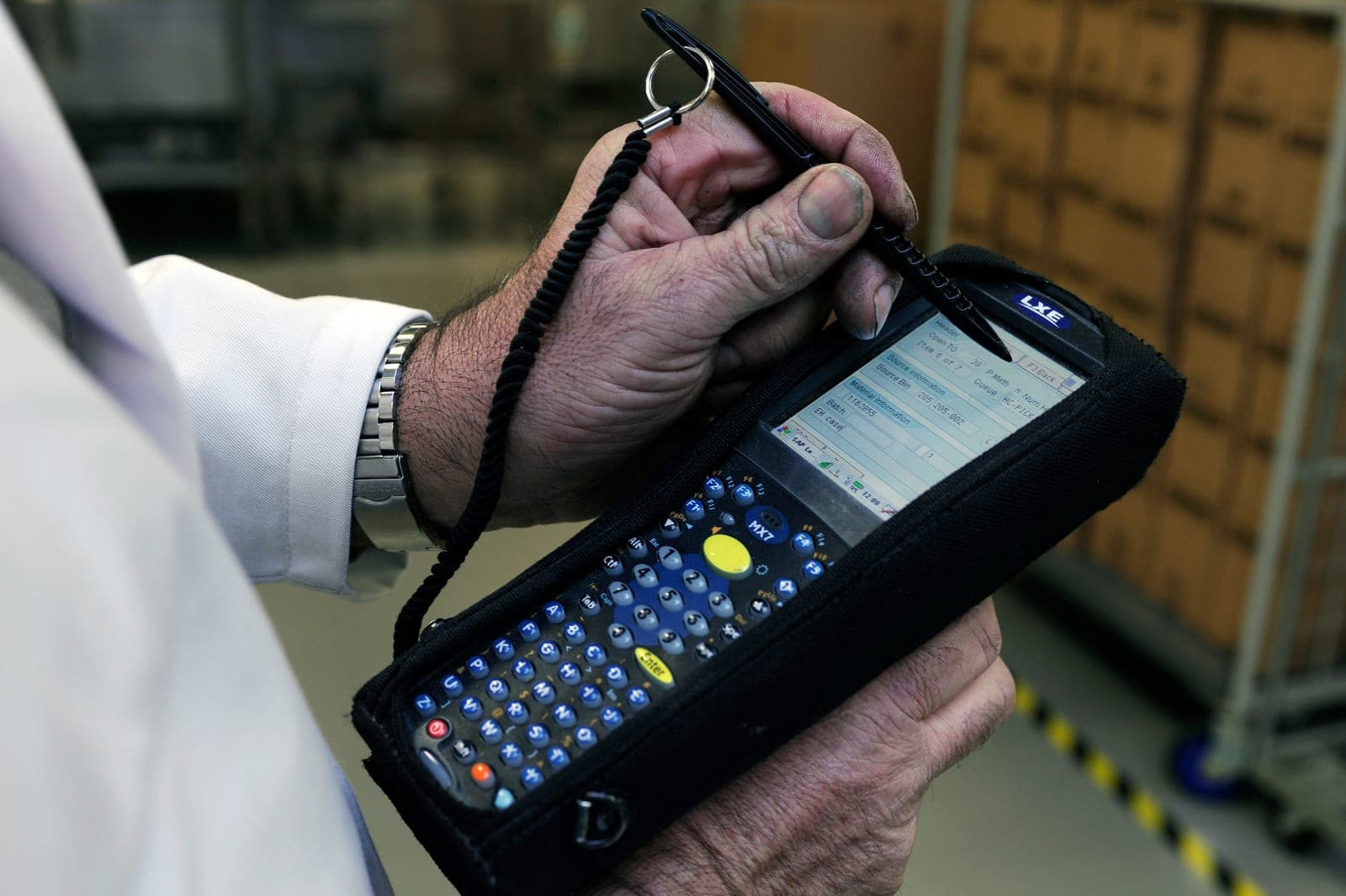
Barcode is the workhorse. A label on a fabric roll is not a SKU — it is a pointer to that specific roll, with its quality, shade, dye lot and remaining length. Scan it at goods-in, at issue to cutting, and at dispatch, and the closing stock on the screen matches the cloth on the shelf. Any standard handheld works; there is no proprietary hardware to buy.
RFID earns its keep in three places and struggles everywhere else: reading a whole pallet at goods-in without line-of-sight, high-value finished-goods dispatch, and tracking assets or trolleys around the floor. Those are real wins.
Where RFID usually does not pay: tagging individual low-value items. The tag cost, the reader infrastructure and the tuning effort rarely come back on a garment that sells for a modest price. Plenty of vendors will happily sell you readers anyway. We would rather you spent that budget on getting barcode discipline right first — it captures most of the benefit for a fraction of the cost.
You do not have to leave Tally
This is the question we are asked most often, and the answer is usually a relief. You do not have to choose between Vastra ERP and Tally on day one. The common pattern is to run operations — orders, production, stock, costing and billing — in Vastra ERP, and post the resulting financial entries into Tally against the ledgers your accountant and auditor already use.
That removes the retype without asking your finance team to relearn their job in the same month the floor is learning a new system. Later, if you would rather consolidate, Vastra ERP's own financial module can take over the ledger — but that is a decision you make when you are ready, not a precondition.

And an API for everything else
No connector list survives contact with a real business. Every mill has one system that is not on anybody's list — a machine controller, a customer's portal, a legacy tool someone built years ago that quietly runs something important.
Vastra ERP exposes a REST API over HTTPS with token authentication, plus webhooks so an external system can be told when an order status changes rather than polling for it. If your case fits one of the common shapes — post entries to an accounting package, read orders from a channel, exchange files with a customer or a forwarder, capture data from a device — it is usually straightforward. If it genuinely does not, we will tell you that instead of promising a connector that would have to be built from scratch.
On security: API access is token-authenticated over HTTPS with role-based permissions, so an integration can be scoped to only the data it needs. If your procurement process requires a specific compliance certification, ask us — we will tell you exactly what we hold today rather than what sounds reassuring.
Frequently asked questions
Can Vastra ERP integrate with Tally?
Yes. The most common pattern is to let Vastra ERP run operations — orders, production, inventory, costing and billing — and post the resulting financial entries to Tally, so your accountant and auditor keep the ledger they already know. Sales invoices, purchase entries, payments and journal vouchers are mapped to your existing Tally ledgers so nothing is re-keyed. Businesses that would rather consolidate can instead use Vastra ERP's own financial module and retire Tally, but there is no requirement to do that on day one — most start with both running side by side.
Does Vastra ERP work with barcode scanners?
Yes, and this is one of the highest-value integrations in a textile business. Standard USB and Bluetooth handheld scanners work without any special driver, because a scanner simply types the code it reads. Vastra ERP prints barcode labels for fabric rolls, bundles, cartons and finished goods, and each code resolves to the underlying record — for a roll, that means its quality, shade, dye lot and remaining length. Scanning at goods-in, issue, bundle tracking and dispatch is what keeps the stock figure on the screen matching the cloth on the shelf.
Does it support RFID?
Yes, via RFID readers that expose their reads over a network or serial connection. RFID earns its cost in specific places rather than everywhere: bulk goods-in where you want to read a whole pallet without line-of-sight, high-value finished-goods dispatch, and asset or trolley tracking on the floor. For most textile businesses barcode covers the majority of the benefit at a fraction of the cost, and it is worth being honest that RFID tags on individual low-value items rarely pay for themselves. We would rather tell you that than sell you readers.
Can it connect to my e-commerce store or marketplace?
Yes. For businesses selling their own label, the integration keeps one inventory pool behind every channel — so a piece sold on your website cannot also be sold to a wholesale buyer. Orders flow in, stock is decremented against the same record your factory works from, and dispatch and tracking flow back out. The connection is made either through the platform's API or through a scheduled file exchange, depending on what the platform supports.
Does Vastra ERP have an API?
Yes. Vastra ERP exposes a REST API over HTTPS with token-based authentication, so anything not covered by a prebuilt connector can still be integrated — a legacy system, a machine controller, a customer's portal, or an internal tool your team already relies on. Webhooks are available for event-driven flows, so an external system can be notified when an order status changes rather than polling for it.
What if the system I use is not on this list?
Tell us what it is. Most integrations in a textile business fall into a handful of shapes — post financial entries to an accounting package, read orders from a sales channel, exchange files with a customer or a logistics provider, or capture data from a device on the floor. If yours fits one of those shapes, it is usually straightforward. If it genuinely does not, we will say so rather than promise a connector that would need to be built from scratch.
Tell us what you already run
Bring your current stack to a 30-minute demo — Tally, your scanners, your marketplace — and we'll show you exactly which retypes disappear and which do not.
Image credits: IAEA Imagebank (CC BY-SA 2.0) · Axisadman (CC BY-SA 3.0)