A garment exporter in Noida shared a statistic with me that perfectly captures the garment industry's efficiency problem: of the 12 weeks between receiving an order and shipping the goods, only 4.5 weeks involve actual production. The remaining 7.5 weeks are consumed by planning, coordination, approvals, and waiting. That's 63% of the lead time spent not making garments.
When I shared this with other exporters, nobody was surprised. They all knew the timeline was bloated. What they didn't know was exactly where the time went — because in a garment export operation with 50+ active orders, dozens of suppliers, and hundreds of style-size-color combinations, tracking the time loss requires data that manual systems simply cannot provide.
This guide breaks down exactly where the time goes in a 12-week garment export cycle, how ERP technology compresses it to 7 weeks, and what it means for your margins and competitive position.
The Anatomy of a 12-Week Order Cycle
Week 1-2: Order confirmation and tech pack finalization. The buyer sends a purchase order with reference samples. Your merchandising team creates or updates the tech pack — measurements, construction details, fabric specifications, trim details, label requirements. This goes back and forth 3-5 times between your team and the buyer's technical team. Each round takes 2-3 days because it's done via email with PDF attachments.
Week 2-4: Sourcing and sample development. Fabric needs to be sourced and tested. Trims — buttons, zippers, labels, tags — need to be procured. A pre-production sample is made and sent to the buyer for approval. If the sample is rejected (which happens 60% of the time on the first round), add another week. Average sample approval cycles: 2.3 rounds.
Week 4-5: BOM finalization and cutting. Once the sample is approved, the Bill of Materials is finalized. Fabric consumption is calculated by size. Cutting markers are planned — this determines fabric utilization and directly impacts cost. Manual marker planning achieves 85-88% fabric utilization; AI-optimized planning achieves 94-96%.
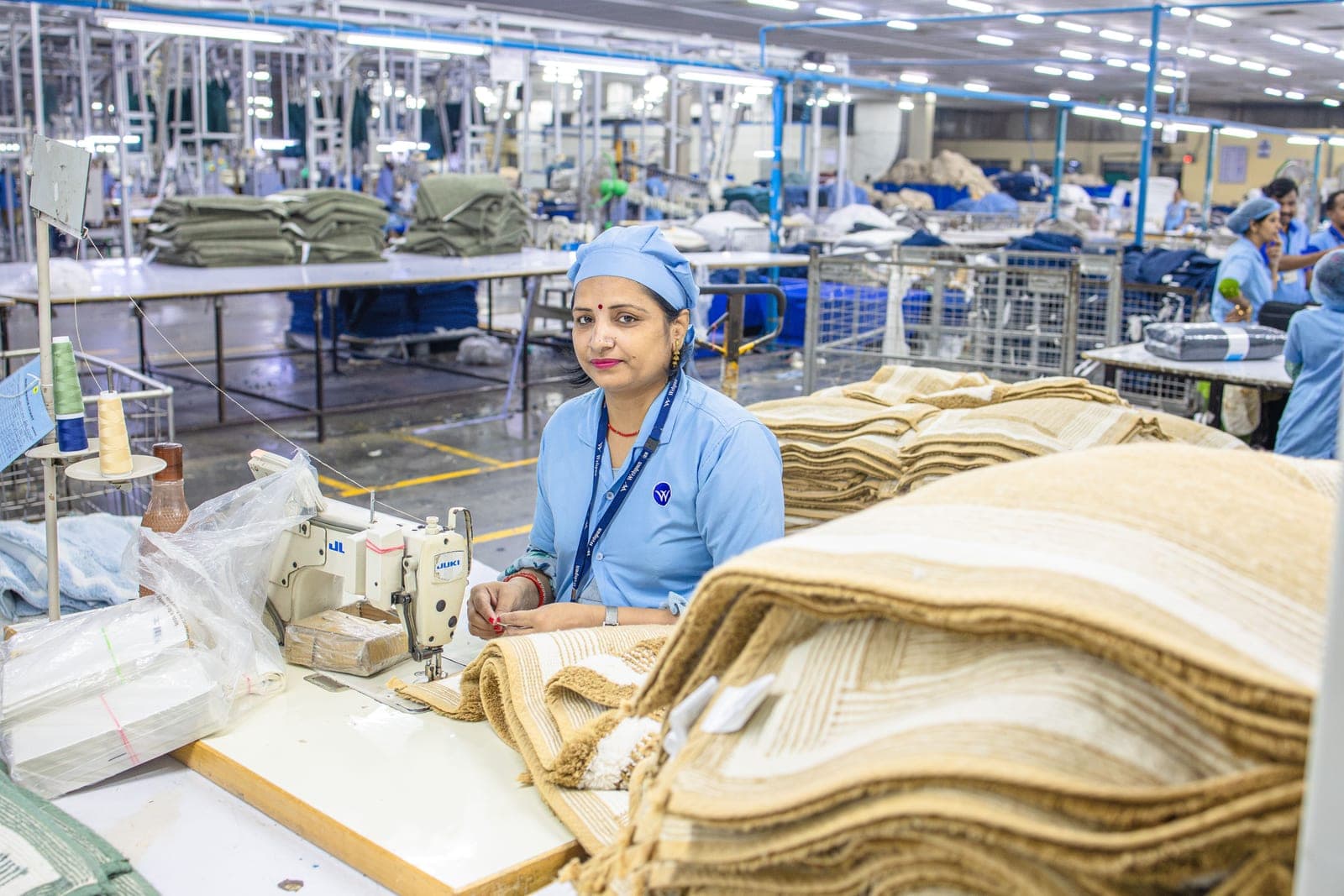
Week 5-8: Sewing and assembly. The actual garment manufacturing stage. Cutting feeds sewing lines. Multiple operations run in sequence — front panel assembly, back panel assembly, sleeve attachment, collar, finishing. Each operation has its own capacity and skill requirements.
Week 8-10: Washing, finishing, quality inspection. Post-sewing processes depending on the garment type — washing for denim, ironing and pressing for formals, quality inspection against buyer standards. The 4-point inspection or AQL sampling determines pass or fail.
Week 10-12: Packing, documentation, shipping. Garments are packed according to buyer-specific requirements (packing ratio, carton configuration, labeling). Export documentation — commercial invoice, packing list, certificate of origin, GSP certificate, bill of lading — is prepared. Pre-shipment inspection is arranged if required by the buyer.
Where ERP Compresses the Timeline
The production stages (weeks 5-10) are relatively optimized — most factories have been improving sewing line efficiency for decades. The real opportunity for time savings is in the information-intensive stages: planning, coordination, approvals, and documentation.
Digital tech packs save 5-7 days. Instead of emailing PDFs, a textile ERP provides a collaborative platform where your merchandising team and the buyer's technical team work on the same live document. Measurements, specifications, and comments are updated in real-time. The buyer's approval is a single click, not a multi-day email chain. Average tech pack approval time drops from 8-10 days to 2-3 days.
Automated BOM and costing saves 3-5 days. When a tech pack is approved, the ERP automatically generates the Bill of Materials — fabric requirements calculated by size, trim quantities, thread consumption, and packaging needs. Simultaneously, it calculates the cost per garment based on current material prices, standard labor minutes, and overhead allocation. What takes a manual team 3-5 days of spreadsheet work happens in minutes.
AI-optimized cut planning saves 2-3 days. Manual marker making by an experienced marker planner takes 4-8 hours per style and achieves 85-88% fabric utilization. AI marker planning generates optimized markers in minutes with 94-96% utilization. For a 10,000-piece order, the fabric savings from 88% to 95% utilization can be 400-600 meters — worth ₹60,000-₹150,000 depending on fabric cost.
Parallel production tracking saves 3-5 days. Traditional sequential production waits for each stage to complete entirely before starting the next. ERP-enabled parallel production begins the next stage as soon as the first bundle of the previous stage is complete. As the first 500 cut pieces enter sewing, cutting continues on the remaining sizes. As the first sewn garments enter washing, sewing continues on the remaining bundles.
Automated documentation saves 2-3 days. Export documentation — packing lists, commercial invoices, certificates of origin — is generated automatically from order and production data. Barcode-scanned packing ensures accuracy. Pre-shipment inspection can be scheduled while the last cartons are being packed rather than waiting for everything to be complete.
The Size-Color Matrix: The Garment Industry's Unique Challenge
A single garment style with 5 colors and 6 sizes creates 30 SKUs. An order for 10,000 pieces might have a size-color matrix that looks like: 200 in XS-Red, 600 in S-Red, 1000 in M-Red, 800 in L-Red, 400 in XL-Red... multiplied across 5 colors. Tracking this matrix through cutting, sewing, washing, and packing — ensuring every size-color combination is complete before shipment — is where most exporters lose control.
A garment ERP treats the size-color matrix as a first-class data structure. Every production stage operates on it. The system knows that 500 pieces of M-Navy are in sewing while 200 pieces of L-White are still at cutting. It knows that the XL-Red is running 2 days behind because the sewing line had a machine breakdown. It calculates the impact on the packing deadline and suggests reallocation.
This visibility eliminates the daily 'where is my order?' meetings that consume hours of production manager time. The answer is always one click away.
The Financial Impact
Milano Fashion House reduced their order-to-shipment from 12 weeks to 7 weeks using Vastra ERP. Sample iterations dropped from 5 rounds to 2. Their European buyer rated them the most responsive supplier in their network, which led to a 40% increase in order volume the following season. The additional revenue more than paid for the ERP implementation ten times over.
A Noida exporter processing 200 styles per season reduced their merchandising team's workload by 35% through automated BOM and costing. They didn't reduce headcount — they used the freed capacity to handle 35% more orders with the same team. Revenue grew proportionally.
In the garment export business, speed is margin. Every week saved in the order cycle is a week less of working capital tied up in inventory, a week less of production capacity committed to a single order, and a week more of buffer against the unexpected delays that inevitably occur. ERP technology delivers that speed.
Frequently Asked Questions
Can textile ERP handle both CMT and full-package?
Yes. It supports CMT (buyer supplies fabric) and full-package (manufacturer sources everything). Costing, inventory, and procurement adapt based on operation type — even mixed operations in the same factory.
How does ERP help with buyer compliance?
It stores buyer-specific compliance templates and auto-applies them per buyer and destination. Labels, packing ratios, testing requirements, and documentation are generated correctly every time without manual checking.
What ROI can garment exporters expect?
Average: 35-42% reduction in order-to-shipment time, 25% fabric waste reduction through AI markers, 98% order accuracy, and 4x ROI within Year 1.
Vastra ERP Editorial Team
Textile Technology Experts
Our editorial team brings decades of combined experience in textile manufacturing, supply chain management, and enterprise technology. We publish in-depth guides, industry analysis, and practical insights for textile professionals worldwide.