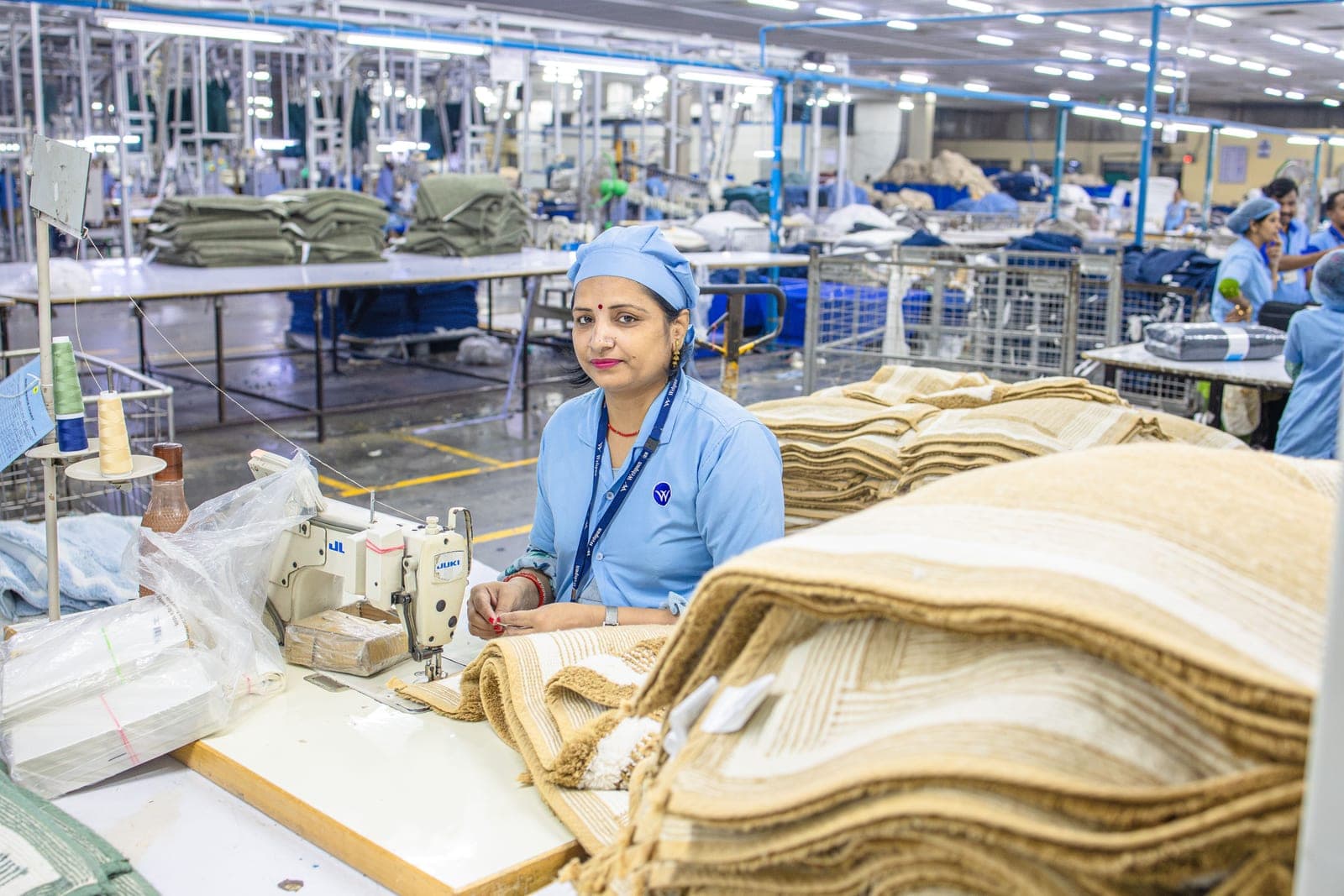
I spent last Tuesday on the floor of a weaving mill outside Surat. Twenty-eight looms running simultaneously, each producing different fabric constructions for different buyers. The production manager — a man named Rajesh who's been in textiles for thirty years — was tracking everything on a whiteboard and three Excel spreadsheets open on his phone.
When I asked him how he knew which loom to assign to which order, he tapped his temple and said 'experience.' When I asked what happens when he takes a day off, he laughed nervously. That nervousness is the sound of a business running on tribal knowledge instead of systems.
The textile industry is undergoing a digital transformation, but it's happening unevenly. While some mills have embraced ERP technology and are seeing 30-40% efficiency gains, the majority — especially in South Asia — are still running on spreadsheets, WhatsApp groups, and the institutional memory of a few key employees.
Why Textile Production Planning Is Uniquely Difficult
Textile production is not like assembling cars or packaging food. It's a multi-stage, interdependent process where the output quality of each stage depends on decisions made three stages earlier. Consider a basic woven fabric order. The yarn needs to be warped with the correct count and twist. The loom needs the right construction — ends per inch, picks per inch, reed count. Grey fabric goes to dyeing, where shade depends on fiber composition, construction, and the machine's temperature profile. Then finishing — calendering, sanforizing, or coating based on end use.
Each stage has its own constraints. The warping machine handles a maximum beam width. The loom has a maximum weaving width. The dyeing machine has a specific batch capacity. The finishing line runs at a fixed speed. Change any variable, and the entire downstream schedule shifts.
Now multiply this by twenty-eight looms producing different constructions for different buyers, each with their own quality standards and delivery deadlines. That's the reality Rajesh faces every morning with his whiteboard.
The Real Cost of Manual Production Planning
When I dig into the numbers with mill owners, the inefficiency isn't where they expect it. They think they're losing money on yarn waste or loom downtime. Those are real costs, but the bigger losses are invisible.
Changeover waste is the first silent killer. Without optimized sequencing, mills frequently switch between vastly different constructions. Each changeover wastes 30-60 minutes of production time plus 50-100 meters of off-quality fabric during transition. With intelligent sequencing — grouping similar constructions together — changeover frequency drops by 40-50%.
Then there's underutilized capacity. Most mills estimate their capacity utilization at 80-85%. When we install actual monitoring, the real number is typically 65-70%. The gap comes from micro-stoppages (thread breaks, small jams), waiting time between orders, and suboptimal speed settings that operators default to when uncertain.
Late deliveries trigger the most expensive consequence: air freight. For a mill shipping to Europe, the difference between sea and air freight on a 10-ton shipment can be $15,000-$25,000. One late shipment per month erases the margins on dozens of on-time deliveries.
Finally, quality rejections from poor coordination. The dyeing department doesn't know what's coming from weaving until grey fabric physically arrives. If they're unprepared with the right chemicals and recipe setup, they rush — and rushing in dyeing means shade inconsistency. Shade-related rejections alone cost the average export mill ₹12-15 lakh per quarter.
How Modern ERP Changes the Game
A textile-specific ERP doesn't just digitize your whiteboard. It fundamentally changes how production decisions are made by giving every department visibility into what's happening across the entire operation.
When a new order comes in — say 15,000 meters of 58-inch cotton dobby in Navy Blue — the ERP immediately checks raw material availability, identifies which looms can produce this construction, finds the optimal schedule slot based on current load and delivery date and changeover minimization, reserves dyeing capacity for the estimated grey fabric arrival, and calculates expected cost per meter based on actual input costs. All in seconds.
The production plan updates automatically. Every department sees the impact on their schedule immediately. No waiting for the morning meeting to find out what's changed.
Real-Time Monitoring: Seeing What's Actually Happening
Planning is only half the battle. The other half is knowing what's actually happening versus what was planned. In textile manufacturing, things deviate constantly — a loom breaks down, yarn from a new supplier causes excess breakages, the dyeing machine needs an extra wash cycle.
Real-time monitoring closes this gap. Whether through IoT sensors or simple operator input on tablets, the ERP maintains a live picture: which looms are running and which are stopped (and why), current speed versus target speed, quality metrics from ongoing inspection, estimated completion versus delivery deadline.
When something deviates — and it always does — the system suggests corrective actions. If a loom breaks down and the affected order risks late delivery, the system identifies alternative looms, calculates impact on other orders, and recommends the option that minimizes total late delivery risk. This decision takes a human planner 2-3 hours. The ERP does it in seconds.
The Implementation Reality
I won't pretend ERP implementation is easy. It requires changing how people work, and that meets resistance. Rajesh and his whiteboard have a fifteen-year relationship.
The mills that succeed share three characteristics. First, they start with a clear business problem — 'reduce late deliveries from 25% to under 5%' beats 'digitize production planning.' Second, they involve the floor team early — the loom master, dyeing chemist, and production manager must see the value. Third, they accept the first 30 days will be harder. The payoff comes in month 2 and beyond.
The Numbers That Matter
Where mills typically land within six months: 30-40% improvement in scheduling efficiency. 25% reduction in fabric waste from better changeover sequencing. 60% reduction in late deliveries through proactive schedule management. 70% faster month-end production reporting.
For a mid-size mill running 30 looms, these improvements translate to roughly $400,000-$600,000 in additional annual revenue from the same installed capacity. The ERP investment pays for itself within the first quarter.
The Inventory Connection Most People Miss
Here's something that surprises most mill owners: 30% of production delays aren't caused by machine issues or scheduling problems. They're caused by raw material not being available when production needs it. The yarn isn't in the store. The chemicals for dyeing aren't ready. The packaging material hasn't arrived. Production grinds to a halt while someone makes frantic phone calls to the procurement team.
A textile ERP solves this by linking production scheduling directly to inventory management. When the scheduler assigns an order to a specific machine slot, it simultaneously checks that all required materials — yarn, chemicals, dyes, packaging — will be available by that date. If something is short, the system alerts procurement immediately, not on the day production is supposed to start.
This integration between production and inventory is impossible with spreadsheets. The production planner doesn't see inventory data. The stores manager doesn't see the production schedule. Each department operates in its own information silo, and the gaps between silos is where delays hide.
Quality That's Measured, Not Assumed
The most dangerous sentence in textile manufacturing is 'the quality is fine.' Without real-time quality data, that statement is based on assumption, not measurement. I've seen mills ship entire containers of fabric that passed visual inspection but failed spectrophotometer testing at the buyer's warehouse. The human eye accommodates shade differences that instruments catch. By the time you know about it, the goods are 8,000 kilometers away.
An ERP-integrated quality system captures inspection data as fabric is produced — not hours or days later. The 4-point inspection score, shade coordinates, weight measurements, and width checks are recorded digitally and linked to the specific production lot, machine, and operator. If quality drifts during a production run, the system flags it in real-time. The operator adjusts. The buyer never sees the problem.
This proactive approach to quality saves far more than the inspection costs. One prevented rejection saves enough to pay for the quality system for a year. And the data trail gives you something invaluable: when a buyer does raise a concern, you have documentary evidence of every inspection point, every measurement, every decision. That transparency builds trust in a way that verbal assurances never can.
Beyond the Factory: The Ecosystem Effect
The most transformative aspect of textile ERP isn't any single feature — it's the ecosystem effect. When production talks to inventory, and inventory talks to procurement, and procurement talks to finance, and finance talks to analytics, the entire operation becomes more than the sum of its parts. Decisions that previously required cross-department meetings and multi-day analysis happen automatically. Information that lived in someone's head or someone's spreadsheet becomes organizational knowledge that survives personnel changes and shift rotations.
Rajesh from Surat is now three months into his implementation. The whiteboard is still on the wall, but it's been clean for six weeks. He checks his phone for the production dashboard instead. 'I should have done this ten years ago,' he said. I hear that a lot.
Frequently Asked Questions
How long does it take to implement ERP in a textile mill?
Most mills go live within 2-4 weeks with a purpose-built textile ERP. Week 1 is configuration and data migration, week 2 is training, weeks 3-4 are parallel running. Generic ERPs take 6-12 months because of customization.
Do factory floor operators need computer skills?
No. Modern textile ERPs use tablet-based interfaces with large buttons, visual indicators, and minimal text. Operators need only 2-3 hours of training.
Can ERP connect to existing looms?
Yes. IoT sensors for modern machines, tablet input for older ones. Both feed into the same real-time dashboard. Many mills use a hybrid approach.
Vastra ERP Editorial Team
Textile Technology Experts
Our editorial team brings decades of combined experience in textile manufacturing, supply chain management, and enterprise technology. We publish in-depth guides, industry analysis, and practical insights for textile professionals worldwide.