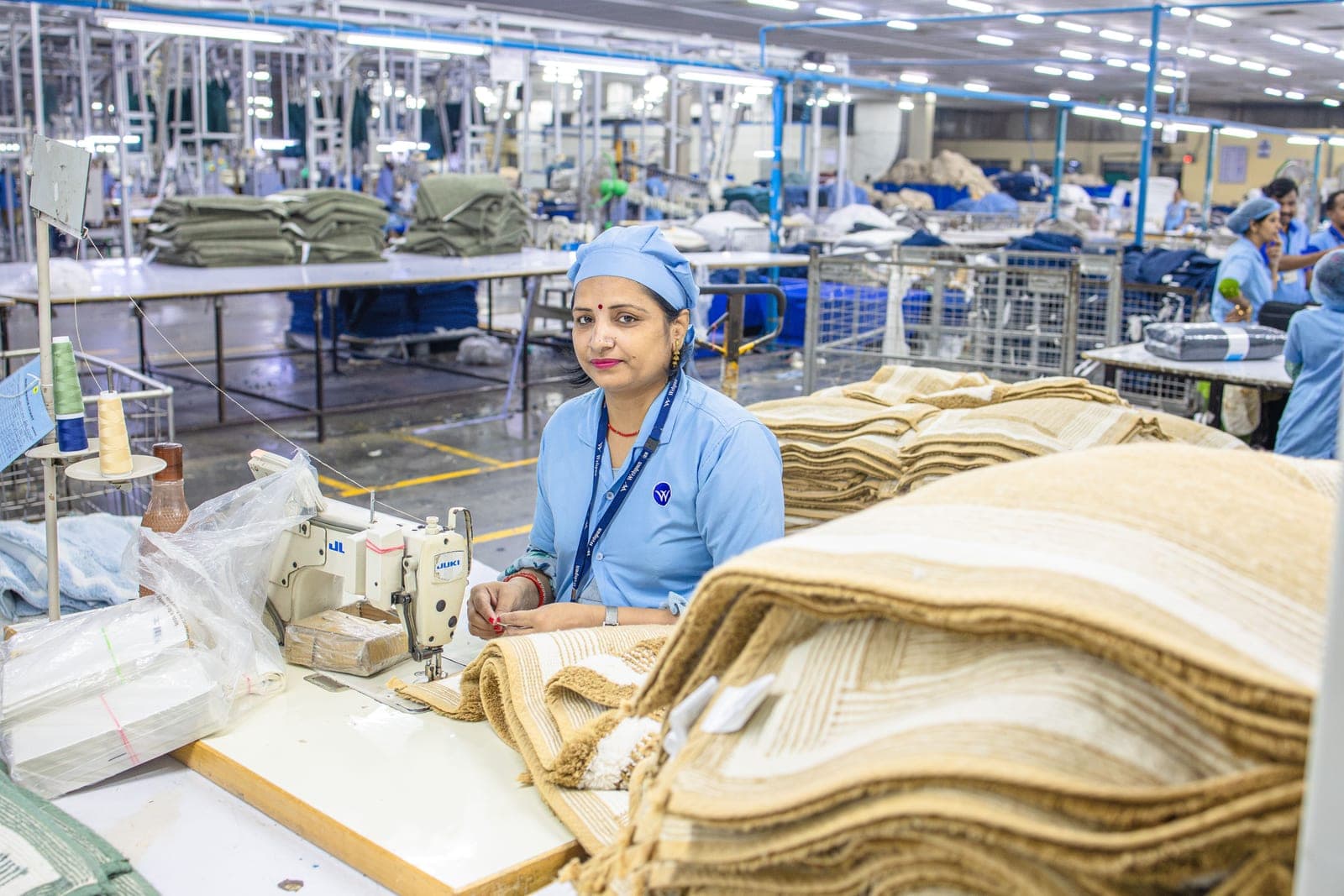
At 2:17 AM on a Thursday, Loom 14 at a weaving unit in Salem broke down. The main drive belt failed, shearing the belt tensioner and damaging the gear housing. The machine was down for thirty-eight hours while maintenance sourced a replacement belt — the spare in stock was wrong size — repaired the gear housing, and recalibrated the drive system.
During those thirty-eight hours, the five thousand meter order fell behind schedule, forcing air freight at eighteen thousand dollars. Four operators were reassigned at reduced productivity. The weekly plan required reshuffling, cascading disruptions to three other orders. Total cost: approximately fifty-two thousand dollars. Cost of the belt that failed: one hundred twenty dollars. Cost of monitoring that would have predicted the failure: eight dollars per month.
The Three Approaches to Maintenance
Reactive maintenance — fix when it breaks — is still dominant in seventy percent of textile mills. It is simple but catastrophically expensive when failures happen during critical orders at 2 AM.
Preventive maintenance fixes on a schedule — replace belts every six months, service bearings quarterly. Better than reactive but wastes money replacing components with useful life remaining and misses failures that do not follow calendars.
Predictive maintenance monitors actual machine condition and predicts failures before they occur. A bearing designed for twelve months might last eighteen in light duty or only six in heavy duty. Predictive catches actual degradation regardless of calendar.
What Gets Monitored in Textile Mills
Vibration patterns are primary for rotating machinery. A healthy bearing produces consistent vibration. As it degrades, the signature changes at specific frequencies corresponding to specific fault types. Sensors mounted on housings feed continuous data to the ERP maintenance module.
Temperature trends indicate friction and electrical issues. A motor running eight degrees hotter than historical average signals bearing wear, belt slippage, or insulation degradation.
Production quality metrics serve as indirect indicators. More broken ends or uneven yarn often indicates developing mechanical issues before vibration or temperature data shows clear signals.
Implementation: Start with the Critical Few
Start with the twenty percent of machines causing eighty percent of unplanned downtime. Install vibration and temperature sensors. Set alert thresholds based on manufacturer specifications and historical patterns. Train maintenance team to interpret alerts.
The ROI
A fifty-machine mill experiences fifteen to twenty unplanned breakdowns per year at fifteen to fifty thousand dollars each — three hundred to seven hundred fifty thousand dollars annually. Predictive maintenance reduces breakdowns by forty to sixty percent. Implementation cost: fifteen to thirty thousand dollars. Payback: one to three months.
The Salem maintenance manager now monitors Loom 14 in real-time. Three months after the catastrophic failure, the system detected early bearing wear on Loom 22. The bearing was replaced during a planned two-hour Sunday window. Cost: one hundred eighty dollars and zero in lost production.
Understanding Failure Signatures
Every textile machine component has a characteristic failure pattern. Loom drive belts develop micro-cracks increasing vibration weeks before failure. Spinning traveler bearings generate heat correlating with rising breakage rates. Dyeing pumps show flow decay matching impeller erosion. Most failures are gradual degradation processes — not sudden events. A bearing degrades over weeks with measurable changes in vibration, temperature, and output quality at every stage. Predictive maintenance detects the trajectory and projects when failure threshold will be reached.
Start with Your Worst Machines
Pull maintenance records from the past twelve months. Identify the five to ten machines with highest breakdown frequency and repair costs. Install vibration and temperature sensors on these machines. Set alert thresholds from manufacturer specs, refining with actual data within three months. Train maintenance to interpret alerts: yellow means schedule inspection within next window, red means inspect within twenty-four hours.
The Culture Shift from Heroes to Prevention
In most mills, maintenance teams are valued for fast emergency repairs — the hero culture. Predictive maintenance values different skills: preventing breakdowns quietly during planned windows. This requires visible management support. When a team prevents a breakdown based on a predictive alert, quantify the save and celebrate it: this bearing replacement cost one hundred eighty dollars versus the estimated forty-five thousand if the failure occurred during production. The Salem maintenance manager tracks prevented downtime hours — four hundred twenty hours prevented in six months, representing over two crore in protected revenue.
The Economic Model: Maintenance as Investment, Not Cost
Most textile mills categorize maintenance as a cost center — money spent to keep machines running. Predictive maintenance reframes it as an investment center — money spent to prevent losses that are five to fifty times larger than the maintenance cost itself. A two hundred dollar bearing replacement that prevents a forty-five thousand dollar breakdown is not an expense — it is a four hundred percent return on investment in a single transaction.
The challenge is that prevention is invisible. Nobody celebrates a breakdown that did not happen. The maintenance team's best days are the quiet ones — which makes it hard to justify investment in a function that succeeds by producing non-events. The solution is tracking and communicating prevented losses: this month, predictive maintenance identified and resolved seven developing issues that would have caused an estimated three hundred twenty hours of unplanned downtime and twelve lakh in lost production.
Beyond Vibration: The Multi-Signal Approach
The most sophisticated predictive maintenance systems combine multiple signal types for higher accuracy. Vibration analysis detects mechanical wear. Temperature monitoring catches friction and electrical issues. Power consumption analysis reveals load changes that indicate developing problems. Oil analysis for machines with lubrication systems shows metal particle content indicating wear rates. And production quality data — increasing defect rates often signal mechanical issues before dedicated sensors detect them.
Each signal type catches different failure modes. Vibration is excellent for bearings and gears but poor for electrical insulation. Temperature catches motor and electrical issues but misses mechanical looseness. The combination of signals provides earlier and more accurate warnings than any single sensor type.
Scaling from Pilot to Plant-Wide
Start with ten machines, prove the concept, then scale. The pilot phase typically runs three to six months — long enough to prevent several real incidents that validate the approach. Document each prevented breakdown with estimated cost avoidance. Present the business case for plant-wide rollout using real data from your own machines, not vendor promises. When the maintenance team shows that their ten monitored machines had zero unplanned breakdowns while the hundred unmonitored machines had fifteen, the investment case makes itself.
Frequently Asked Questions
What does it cost per machine?
$200-$500 for sensors plus $8-15/month software. Start with 10-15 most critical machines.
How much does downtime cost?
$15,000-$50,000 per incident including repairs, lost production, overtime, and expedited shipping.
Can it work without IoT sensors?
Partially. ERP quality and production data serve as indirect indicators. Dedicated sensors provide earlier, more specific warnings.
Vastra ERP Editorial Team
Textile Technology Experts
Our editorial team brings decades of combined experience in textile manufacturing, supply chain management, and enterprise technology. We publish in-depth guides, industry analysis, and practical insights for textile professionals worldwide.