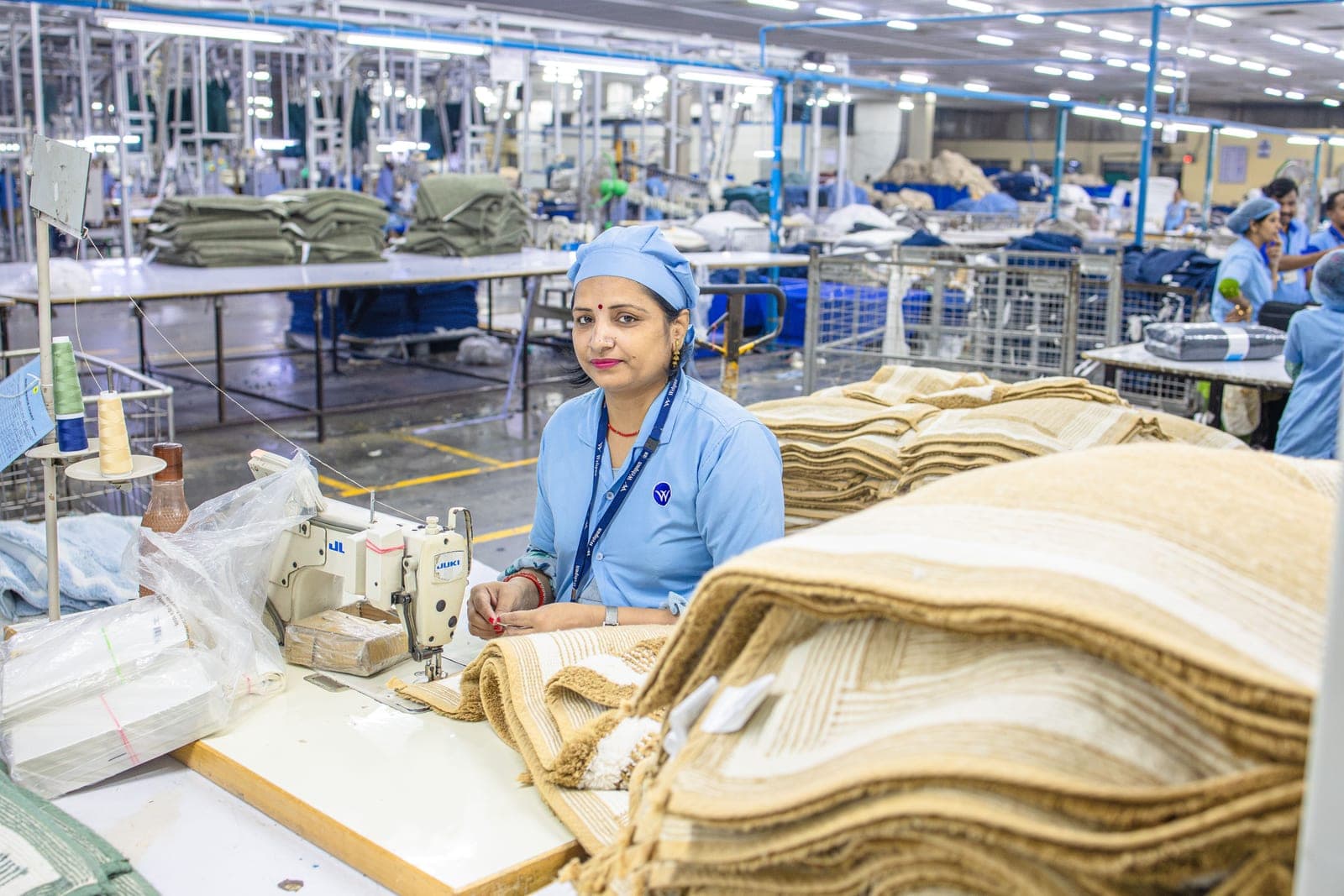
A warehouse supervisor in a Surat fabric trading company told me he could identify any roll of fabric in his forty thousand square foot warehouse by memory. He knew the Egyptian cotton was in Rack C Row 3, the polyester blends along the back wall, and the new silk shipment from China near the loading dock. When I asked what happens when he takes leave, he said he does not take leave. He was not joking. His warehouse operated entirely on tribal knowledge — his knowledge specifically. The four helpers under him could find fabric only if he told them where to look. Without him, the warehouse was a forty thousand square foot puzzle with no answer key.
This is not unusual. In our assessment of two hundred textile warehouses across India, seventy-two percent relied primarily on human memory for stock location. Only eighteen percent used barcode scanning. Fewer than five percent had zone-based storage optimization. The operational cost of this informality — picking errors, search time, misshipments, and lost inventory — averaged fifteen to twenty percent of warehouse operating costs.
The Three Levels of Warehouse Automation
Level 1 is barcode identification. Every roll gets a unique barcode label at goods receipt. The barcode links to full attributes in the ERP — fabric type, dye lot, quality grade, dimensions, supplier. When goods are dispatched, the barcode is scanned, updating inventory in real time. Investment is minimal: barcode printers at fifteen to twenty-five thousand each, handheld scanners at eight to fifteen thousand each. Impact is immediate: goods receipt time drops sixty percent, picking accuracy jumps from eighty-eight percent to ninety-nine percent.
Level 2 is zone-based storage. The warehouse is divided into zones by fabric type, customer, or movement frequency. High-velocity items near the dispatch area, slow movers in the back. The ERP suggests optimal putaway locations based on item attributes and zone configuration. This requires no additional hardware — just software configuration and physical zone marking.
Level 3 is RFID-based tracking. RFID tags on rolls are read automatically by fixed readers or handheld devices without line-of-sight scanning. You can read hundreds of tags simultaneously by walking through an aisle. This enables real-time inventory visibility without manual scanning. Cost per tag is fifteen to thirty rupees, justified for high-value inventory.
The Business Case at Each Level
Level 1 pays for itself within two to three months through reduced picking errors alone. A textile distributor shipping five hundred rolls per day with a twelve percent error rate was spending eight to ten lakh per month on return logistics. After barcode scanning, errors dropped to one percent. Annual savings: ninety-six lakh rupees.
Level 2 delivers value through reduced search time. The average textile warehouse worker spends thirty-five to forty-five minutes per hour searching for fabric. Zone-based storage with ERP-directed picking reduces this to ten to fifteen minutes — effectively tripling picking productivity without adding staff.
Level 3 makes economic sense for high-value inventory or operations requiring cycle counting. The technology shines during physical inventory counts: instead of spending three days counting rolls one by one, RFID counts the entire warehouse in four hours with greater accuracy.
Common Implementation Mistakes to Avoid
After implementing warehouse automation in two hundred textile warehouses, here are the three mistakes that cause the most problems. First: trying to barcode existing inventory all at once. Instead, implement scanning for new receipts immediately and label existing inventory zone by zone over two to three weeks. Within a month, eighty percent of active inventory is labeled without disrupting operations.
Second: choosing expensive industrial scanners when smartphones work just as well for most textile warehouses. A phone with a free barcode scanning app handles the same job and also runs other ERP functions.
Third: over-engineering zone configurations at the start. Begin with simple zones — one per fabric category. Refine based on actual movement data after three to six months. Let data drive your layout, not assumptions.
The Inventory Accuracy Flywheel
Once you achieve ninety-eight percent inventory accuracy through scanning and zone management, something remarkable happens: your entire business speeds up. Salespeople trust the numbers so they commit to orders without calling the warehouse. Production planners trust material availability so they schedule without safety buffers. Finance trusts valuation so month-end close accelerates. Each improvement in accuracy triggers improvements in connected processes. It is a flywheel that starts with a fifteen thousand rupee barcode printer and a commitment to scan every roll.
The Surat warehouse supervisor is now the biggest advocate for the barcode system. I can finally take leave, he told me last month. His tribal knowledge has been replaced by institutional knowledge — and the business is stronger and more resilient for it.
The Inventory Accuracy Flywheel
Once you achieve ninety-eight percent accuracy through scanning and zones, the entire business accelerates. Salespeople trust numbers and commit without calling the warehouse. Production planners schedule without safety buffers. Finance trusts valuation so month-end close accelerates. Each accuracy improvement triggers connected process improvements. It starts with a fifteen thousand rupee barcode printer.
RFID: When the Investment Makes Sense
RFID eliminates line-of-sight scanning — read hundreds of tags by walking through an aisle. For physical inventory counts, RFID reduces a three-day manual process to four hours. The economics work when fabric value exceeds five hundred rupees per meter or when regulatory traceability mandates real-time visibility. A medical textile manufacturer found RFID paid for itself in three months through faster regulatory compliance reporting alone.
Zone Design Based on Data, Not Assumptions
After three months of digital tracking, movement data reveals natural patterns: which fabrics are picked together, which customers order similar materials, which items are touched frequently versus those that sit for months. Use this data to redesign zones. A distributor who reorganized based on data reduced average pick time from twelve minutes to four minutes — tripling warehouse throughput with the same staff.
The Mobile Warehouse: Managing from Anywhere
One of the most underappreciated benefits of digital warehouse management is remote visibility. The warehouse manager who previously had to be physically present to know what was happening can now check inventory levels, monitor picking progress, and approve transfer requests from their phone. During COVID lockdowns, businesses with digital warehouse management continued operating with skeleton crews because supervisors could direct operations remotely. Those without digital systems faced weeks of chaos when key warehouse staff could not come to work.
Integration with Transportation and Dispatch
Warehouse automation reaches its full potential when integrated with dispatch and transportation management. When a truck arrives for loading, the system generates a loading sequence optimized for delivery route — last delivery loaded first. Barcode scanning during loading confirms that the correct rolls are going on the correct truck. Any discrepancy triggers an immediate alert before the truck leaves. A distributor in Mumbai who integrated warehouse and dispatch reduced misshipments from three per week to less than one per month.
Frequently Asked Questions
How much does barcode scanning cost?
Minimal: barcode printers (15-25K each), handheld scanners (8-15K each). Total for mid-size warehouse: 1-2 lakh. ROI in 2-3 months through reduced picking errors.
Is RFID worth it for textile warehouses?
RFID makes sense for high-value inventory (fabric over 500/meter) or when real-time traceability is required. For most warehouses, barcode scanning provides 90% of benefit at 10% of cost.
How long does implementation take?
Level 1 (barcode): 1-2 weeks. Level 2 (zones): 2-4 weeks. Level 3 (RFID): 4-8 weeks. Start with Level 1.
Vastra ERP Editorial Team
Textile Technology Experts
Our editorial team brings decades of combined experience in textile manufacturing, supply chain management, and enterprise technology. We publish in-depth guides, industry analysis, and practical insights for textile professionals worldwide.