**Short answer:** MES (Manufacturing Execution System) is the layer that watches and controls what happens on the factory floor in real time — which machine is running, what each line produced this hour, where the work-in-progress is, what went wrong. ERP is the layer that runs the business around it — the order, the materials, the cost, the invoice. MES answers "what is happening right now?" ERP answers "what did this order cost, and did we make money?"
They are complements, not competitors. But they are frequently sold as alternatives, and choosing wrongly is expensive — so it is worth understanding what each one actually gives you.
What MES does
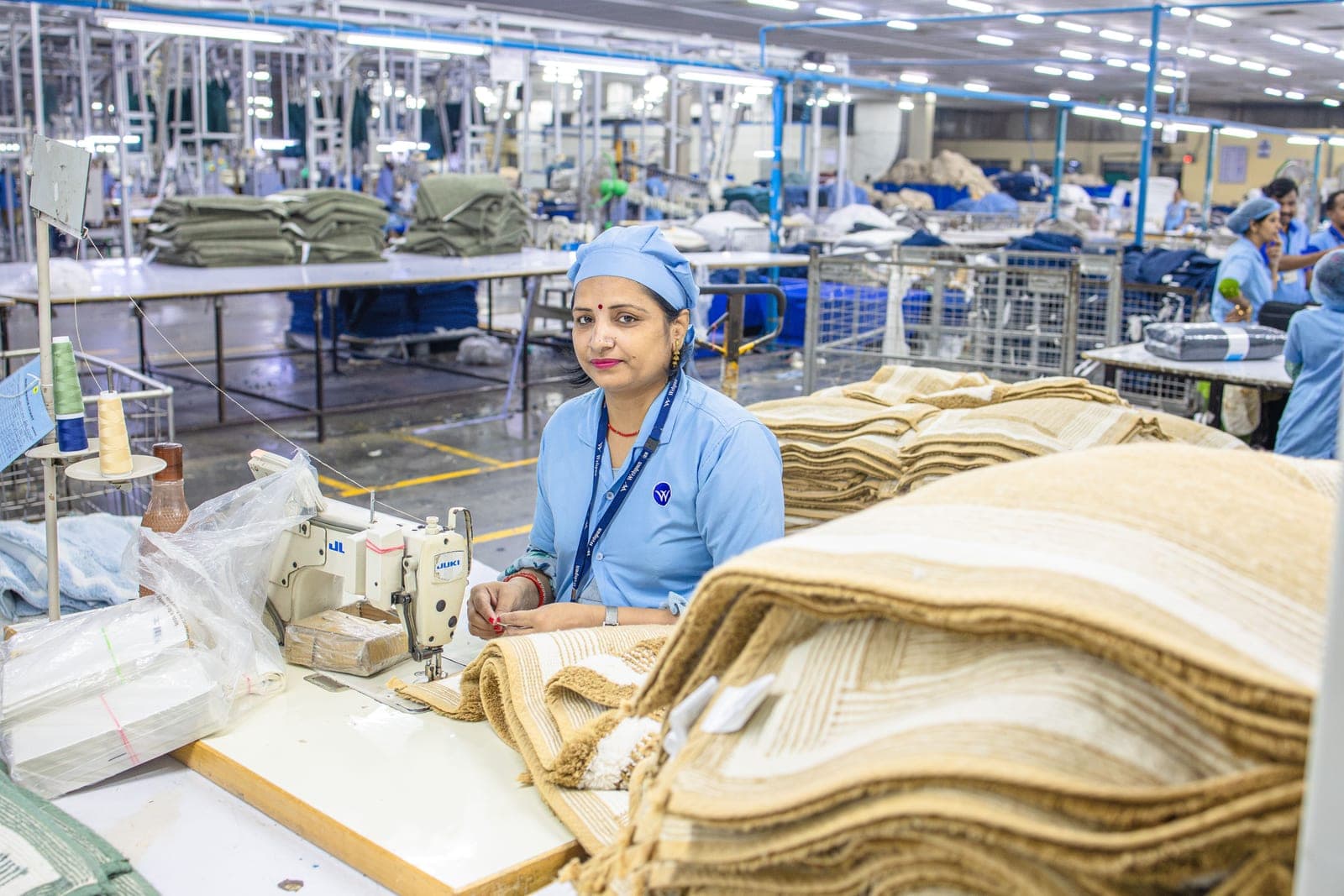
An MES lives on the floor. In a garment unit that means bundle tickets scanned at each operation, hourly output boards, operator efficiency measured against the SAM, and a live picture of work-in-progress by style, colour and size. In a mill it means machine status, downtime reasons, and production counted off the loom or the frame rather than off a tally sheet at the end of the shift.
The value is immediacy and granularity. A supervisor can see at 11am that line 3 is behind, see which operation is the bottleneck, and move labour while there is still a shift left to recover it. That is genuinely powerful, and no amount of end-of-day reporting substitutes for it. This is the territory our shop-floor module covers.
What ERP does that MES does not
ERP knows *why* the floor is making what it is making. It holds the buyer's order, the materials bought against it, the price quoted, the cost accruing, the quality result, and the invoice that follows. MES sees the work; ERP sees the business reason for the work.
Here is the practical consequence. An MES can tell you, precisely, that line 2 ran at a certain efficiency yesterday on style X. What it cannot tell you — because it does not hold the data — is whether style X made money. For that you need the quoted price, the actual fabric consumed, the trims, the rework, the overhead, and the shipping terms. That lives in ERP.
The trap: buying MES first
This is the most common expensive mistake in this area, and it is seductive because MES demos are impressive. Live dashboards, real-time counters, efficiency by operator. It feels like the future.
Then it goes in, and the factory ends up with **beautiful, granular, real-time data about a business whose orders, materials and costs still live in spreadsheets.** You now know your line efficiency to one decimal place, and you still cannot say what the order cost. The MES has made the floor visible without making the business calculable.
Worse, the numbers have nothing to attach to. An efficiency figure is only meaningful against a target; a target is only meaningful against a plan; a plan is only meaningful against an order. Take away the order and the material and the cost, and you have a very precise measurement of something you cannot act on commercially.
The other trap: assuming ERP alone is enough
The mirror-image mistake is equally real. An ERP without floor-level capture is a system whose production numbers are typed in by a human, at the end of the day, from memory or from a tally sheet. Those numbers will be optimistic, because they always are. The costing built on top of them will be optimistic too — and you will only find out at the bank.
This is the honest limitation of any ERP that stops at the office door. If the floor data is not captured where and when the work happens, everything downstream inherits its error.
What actually works: one record, both layers
The configuration that works is not "MES or ERP" but both, sharing one record. The order comes in through ERP. The plan is made against real capacity. The floor captures what actually happened — bundle by bundle, machine by machine. Those actuals flow straight back into the same order, so the cost is built from what happened rather than what was assumed, and the efficiency figure sits next to the margin it produced.
That is why Vastra ERP includes shop-floor capture rather than treating it as someone else's problem: production planning and shop-floor control feed the same cost and order master that finance works from, so line output and landed cost cannot disagree with each other.
Which do you buy first?
If you have neither, **start with ERP**, and make sure it can capture floor data. An ERP with basic floor capture beats a best-in-class MES bolted to spreadsheets, because at least the numbers connect to money.
If you already have a capable ERP and your floor is a black box, **an MES layer is the right next investment** — you have somewhere for the data to land.
If you already have an MES and cannot cost an order, you do not need a better MES. You need the business layer underneath it. Our guide to garment software maps out all five categories — CAD, PLM, ERP, shop-floor and billing — and is worth ten minutes before you spend anything.
Frequently Asked Questions
What is the difference between ERP and MES?
MES (Manufacturing Execution System) monitors and controls what happens on the factory floor in real time — machine status, hourly output, work-in-progress, operator efficiency, downtime reasons. ERP (Enterprise Resource Planning) runs the business around it: the customer order, the materials bought, the cost accrued, the quality result and the invoice. MES answers 'what is happening right now'; ERP answers 'what did this order cost, and did we make money'.
Do I need both ERP and MES?
Ideally they work as one system rather than two. An MES without ERP produces precise floor data attached to orders whose cost you still cannot calculate. An ERP without floor capture builds its costing on production numbers typed in at the end of the day, which are almost always optimistic. What works is one shared record where the floor's actuals flow back into the same order that finance invoices.
Should a garment factory buy MES or ERP first?
If you have neither, start with ERP — and make sure it can capture data on the floor. An ERP with basic shop-floor capture beats a best-in-class MES bolted onto spreadsheets, because at least the numbers connect to money. Add a deeper MES layer once you have somewhere for that data to land. If you already have an MES and still cannot cost an order, the missing piece is the business layer, not a better MES.
Is shop floor control the same as MES?
Shop-floor control is the core function of an MES — tracking and directing work as it moves through the floor, capturing output and status at each operation. MES is the broader term and can also include machine interfacing, downtime and quality capture, and scheduling execution. In practice many ERPs, including Vastra ERP, include shop-floor control as a module rather than requiring a separate MES product.
Vastra ERP Editorial Team
Textile Technology Experts
Our editorial team brings decades of combined experience in textile manufacturing, supply chain management, and enterprise technology. We publish in-depth guides, industry analysis, and practical insights for textile professionals worldwide.