Almost every guide to starting a textile business opens with the same reassuring line — the industry is huge, it is growing, and there is room for you. That is true, and it is also useless. The textile trade is enormous precisely because it has been absorbing new entrants for centuries, and a good number of them are gone within two years. Not because they made bad cloth, but because they misjudged how much cash the cloth itself would swallow, or because they bought a machine before they had a buyer. This guide is about those decisions — the ones that are actually load-bearing.
First, decide what kind of textile business you are starting
"Textile business" is not one business. It is at least five, and they have almost nothing in common in terms of capital, skill and risk. Getting this choice right is more consequential than anything else in this article, because it determines everything downstream.
**Trading and wholesale.** You buy finished cloth and sell it on, to retailers or to garment units. There is no production, no machinery and no labour to manage — your entire business is relationships, price discovery and working capital. It is the cheapest way in and the fastest to start. It is also the most brutally exposed to price movement: you make your margin on the gap between what you paid and what you sell for, and cloth sitting unsold is a loss compounding daily.
**Retail — a cloth shop.** You sell to end customers by the metre or the piece. Capital goes into location, interiors and the stock on the shelves. Margins per sale are healthier than wholesale, but you are now paying rent whether or not anyone walks in, and you will discover that a great deal of your money is tied up in slow-moving qualities you bought because a supplier gave you a good rate.
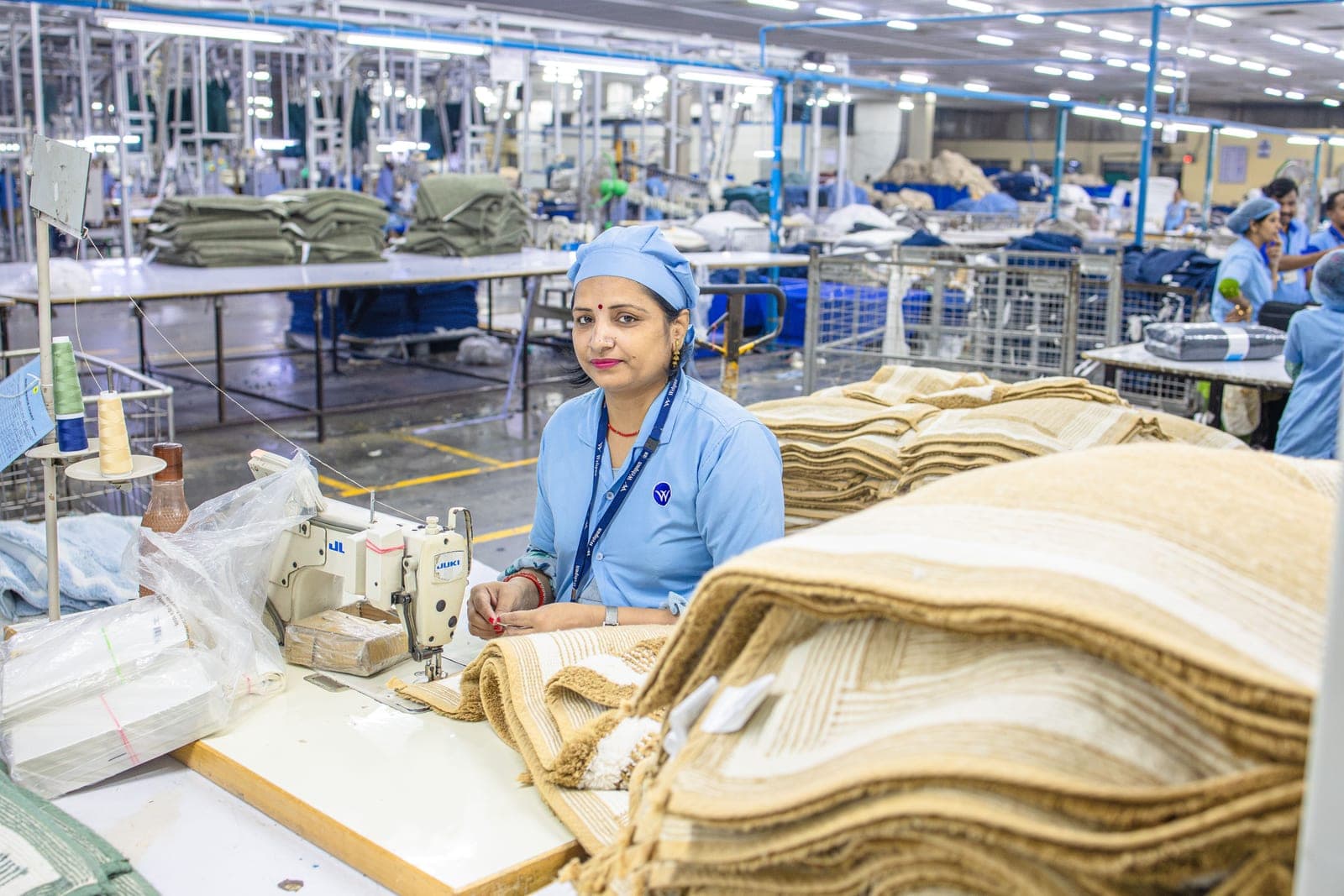
**Job work.** You own machines — looms, knitting machines, embroidery, dyeing — and you process other people's material for a conversion charge. You do not carry the cost of the fabric, which is a large and underrated advantage. What you carry instead is machine utilisation risk: an idle machine still costs you EMI, rent and power. Job work is a capacity business, and it lives or dies on keeping the machines fed.
**Manufacturing.** You buy raw material and make finished cloth or garments to sell as your own. This is the highest-margin model on paper, and it is also the one that combines every risk in the list — material price, machine utilisation, labour, quality, and inventory. Most people who fail in textiles fail here, and they fail because they were really running a trading business with a factory attached and did not notice.
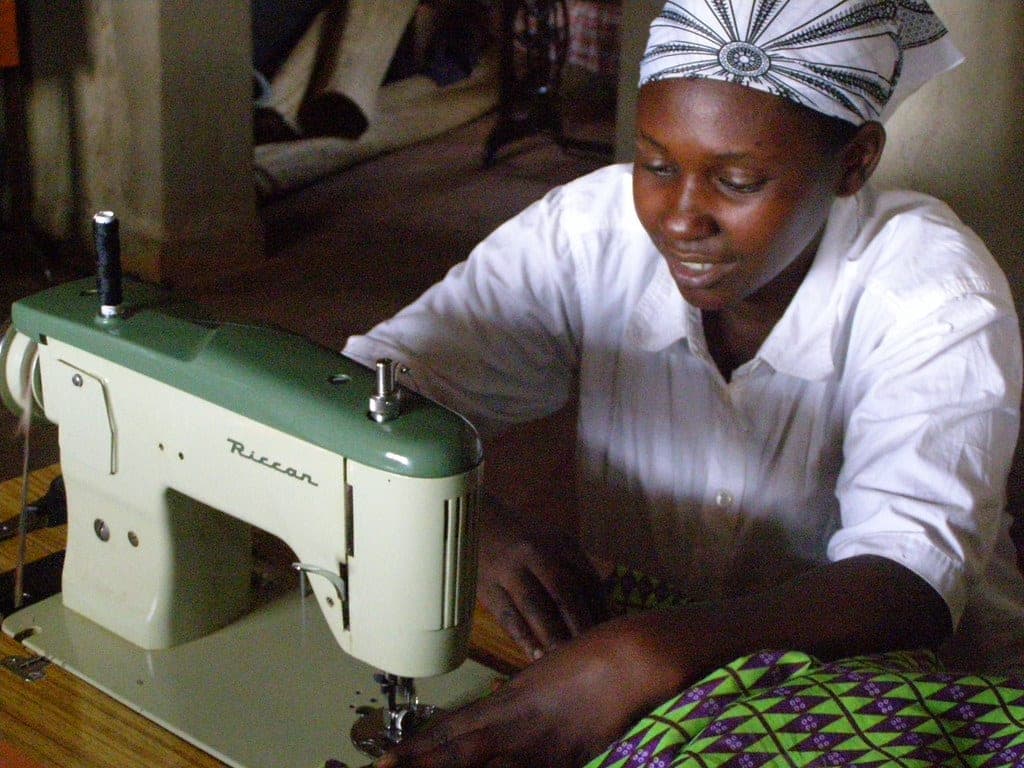
**Garment manufacturing.** You cut and sew finished garments, either for buyers on a cut-make-trim basis or for your own label. It is more labour-intensive and more order-driven than fabric manufacturing, and it is a genuinely different discipline. Our garment manufacturing ERP guide goes deep on how these operations actually run.
If you are undecided, the honest advice is this: start with the model that requires the least capital to reach your first paying customer. You can add machines later with money the business earned. You cannot easily un-buy a loom.
The registrations and licences you actually need
This part is bureaucratic but genuinely straightforward, and it is worth doing properly rather than starting informally and regularising later — because your first serious customer will ask for a GST invoice, and you cannot give them one.
In India, the baseline set is: a business entity (proprietorship is fine to begin; a private limited company matters when you take on partners or outside money), a **PAN** and a bank account in the business name, **GST registration** (mandatory above the turnover threshold, and effectively mandatory from day one if you want to sell to any registered business), and **Udyam registration** as an MSME, which is free and unlocks access to priority-sector lending and various support schemes.
Beyond that, it depends on the model. If you employ workers on a factory floor, you enter the territory of the **Factories Act**, shops-and-establishment registration, and eventually **EPF and ESI** once you cross the employee thresholds. If you run wet processing — dyeing, printing, bleaching — you will need **pollution-control board consent**, and this is not a formality: effluent is the single most heavily regulated aspect of the textile industry and the one most likely to shut you down. If you intend to export, you need an **Importer-Exporter Code (IEC)**, and you should register with the relevant export promotion council for your product.
Rules and thresholds change, and they vary by state. Treat the list above as a map of what to ask about, not as legal advice — confirm the current requirements with a local chartered accountant before you commit.
How much capital you actually need — and where it disappears
Here is the number that surprises people. In a textile business, the machinery is rarely the thing that runs you out of money. **Working capital is.**
Think about the cash cycle. You pay for yarn or fabric up front, or on short credit. It sits as raw material. It sits again as work in progress. It sits again as finished stock waiting to sell. Then you sell it — and in this industry, you sell it on credit, often 30, 60 or 90 days. From the day your money leaves your account to the day it comes back, months can pass. Every rupee of turnover you add requires more cash locked into that cycle. This is why textile businesses can be growing, profitable on paper, and still unable to pay their supplier on Friday.
So when you plan capital, plan three buckets, not one. **Fixed capital** for machinery, deposits and setup. **Working capital** for the material, wages and power that will be tied up in the cycle at any given moment. And a **cash buffer** for the gap between shipping goods and getting paid, plus the orders that go bad. The third bucket is the one first-timers omit, and it is the one that kills them.
The precise figures depend entirely on your model, your state and your scale, and anyone who quotes you a single national number is guessing. Get real quotes locally — for machinery, for the deposit on your premises, and critically, ask three people already in your line what credit terms their customers actually take. That last answer will tell you more about your capital needs than any spreadsheet.
Get the customer before the capacity
This is the most-ignored rule in the industry, and it is the reason so much machinery sits idle in industrial estates.
The instinctive order is: arrange finance, buy machines, set up, then go find buyers. It feels like progress because it is visible. It is also backwards. The moment your machine is installed, the clock starts on your EMI and your rent, and you are now under pressure to accept whatever work walks in — including badly priced work — because idle capacity feels worse than cheap work. That is how a new business trains itself into a low-margin trap in its first six months.
Invert it. Find the buyer first. Take an order you cannot yet fulfil in-house and get it done on job work at someone else's machines. Your margin will be thinner — and you will have learned what the buyer really wants, what quality they will reject, how long they take to pay, and whether this segment is worth committing capital to. Then, when you buy the machine, you buy it with a customer already attached to it.
Sourcing: the relationship is the asset
In textiles, your supplier relationship is not a procurement detail — it is a core asset, and it is often what separates two otherwise identical businesses. A supplier who trusts you gives you credit; that credit directly funds your working-capital cycle. A supplier who trusts you also calls you first when a good lot comes in at a good price, and holds shade consistency for your repeat orders instead of shipping you whatever is on the floor.
Practical guidance: do not chase the lowest quote in your first year. Chase reliability and consistency, pay on time even when it hurts, and build a track record. And do not become dependent on a single supplier — a business whose only source of a critical quality can raise the price at will does not really control its own margins.
One quiet detail that matters more than beginners expect: **shade and lot consistency**. Cloth from two different dye lots can look identical in a shop and visibly different under a customer's lights. Mixing lots in one order is a classic new-entrant mistake, and the rejection lands on you.
Pricing: know what it actually costs you
Most new textile businesses price by looking at what the competition charges and shaving a little. This works until it suddenly does not — usually at the exact moment you win a big order and discover it loses money at volume.
Your real cost per metre or per piece is not the material price. It is material, **plus wastage** (which is real, measurable, and always higher than you assumed), plus conversion or labour, plus power, plus a share of your rent, EMI and salaries, plus the cost of the money that sits locked in your cycle for ninety days, plus a realistic allowance for rejects and returns. Miss any of these and you have quoted a price that feels profitable and is not.
The discipline that separates businesses that grow from businesses that merely turn over is the ability to answer, after an order ships, what that order actually made. Not what the category makes on average — that specific order. We wrote about this at length in profit per order in textiles, because it is the number most owners genuinely cannot produce.
The mistakes that end year one
**Buying machinery before demand.** Covered above, and worth repeating, because it is the most expensive mistake available to you.
**Underestimating the cash cycle.** Profitable on paper, broke in practice. Model your cash, not just your margin.
**Chasing volume at bad margins.** A big order from a slow-paying buyer at a thin price can consume all your working capital and starve the profitable small orders you were already serving.
**Ignoring dead stock.** Cloth that does not move is not an asset; it is cash you already spent, quietly decaying. Left unmanaged, it becomes the largest line item on a balance sheet nobody wants to look at. Dead stock in textile inventory is worth reading before you have the problem, not after.
**Running the whole thing on memory and WhatsApp.** This works fine at ten orders a month. It fails silently somewhere around fifty — not with a crash, but with a slow drift where nobody is quite sure what is in stock, what was promised, or which customer still owes what. By the time it is obvious, you have already lost money to it.
When to put systems in — and how little you need at the start
Do not buy an ERP in month one. You do not need it, and you would be automating a business you have not yet figured out. What you do need from day one is discipline about three numbers: what you have in stock, what each customer owes you, and what each order actually cost.
A spreadsheet can hold all three, badly, for a while. The point at which it stops working is recognisable: when the stock figure on your sheet and the cloth on the shelf stop agreeing, when you cannot say without checking who is overdue, and when someone has to spend a full day assembling a number that should take a minute. That is the moment software earns its price — not before.
When you get there, start narrow. Most textile businesses should begin with billing and stock, because that is where the leakage is and where the payback is immediate. Production planning, costing and quality can come later, and if you choose a platform that can grow, they switch on without a migration. Our guide to textile software lays out the categories honestly, including when you are better off not buying anything yet.
The realistic first year
If you take one thing from this guide, take this: in your first year, your job is not to build a factory. It is to prove that someone will reliably buy what you sell, at a price that covers your true cost, and pay you in a timeframe your cash can survive.
Everything else — the machines, the premises, the systems, the brand — is a consequence of getting that right, and a liability if you get it wrong. The textile industry rewards patience and punishes enthusiasm, which is an uncomfortable thing to tell an entrepreneur, and the truest thing in this article.
Ready to think about the numbers seriously? A textile business plan is the next step — and it is mostly an exercise in being honest with yourself about the cash cycle above.
Frequently Asked Questions
How much money do I need to start a textile business?
It depends far more on which model you choose than on scale. Trading and wholesale need the least fixed capital but heavy working capital, because you pay for cloth up front and get paid on 30–90 day credit. A cloth shop adds rent, interiors and shelf stock. Job work needs machinery but not material. Manufacturing needs all of it. The mistake almost everyone makes is budgeting for machinery and premises while under-budgeting working capital and a cash buffer — which is what actually runs new textile businesses out of money. Get local quotes and ask three people already in your line what credit terms their customers really take.
Which textile business is most profitable for a beginner?
The highest paper margins are in manufacturing, but that model also stacks every risk — material price, machine utilisation, labour, quality and inventory — which is why most first-time failures happen there. For a beginner, the sensible entry is usually the model that gets you to a paying customer with the least capital, typically trading or job work. Profitability in textiles is decided less by the model you pick than by whether you know your true cost per unit and whether your customers pay on time.
What licences and registrations does a textile business need in India?
The baseline is a business entity, PAN, a business bank account, GST registration, and Udyam (MSME) registration, which is free. Beyond that it depends: employing workers on a factory floor brings in the Factories Act, shops-and-establishment registration and eventually EPF/ESI; wet processing such as dyeing or printing requires pollution-control board consent, which is strictly enforced; exporting requires an Importer-Exporter Code (IEC). Thresholds and rules vary by state and change over time — confirm the current position with a local chartered accountant.
Should I buy machinery before I have customers?
No — and this is the most common and most expensive mistake in the industry. Once a machine is installed, the EMI, rent and power start immediately, which pressures you into accepting badly priced work just to avoid idle capacity. That is how a new business trains itself into a low-margin trap in its first six months. Find the buyer first, fulfil the early orders through job work on someone else's machines even at a thinner margin, learn what the buyer actually wants and how they pay — and only then buy the machine, with a customer already attached to it.
When does a new textile business need software?
Not on day one. What you need immediately is discipline about three numbers: stock on hand, what each customer owes, and what each order actually cost. A spreadsheet holds those for a while. Software earns its price at a recognisable moment — when your stock figure stops matching the shelf, when you cannot say who is overdue without checking, and when assembling a basic number takes a day. Most textile businesses should then start narrowly with billing and stock rather than a full ERP.
Vastra ERP Editorial Team
Textile Technology Experts
Our editorial team brings decades of combined experience in textile manufacturing, supply chain management, and enterprise technology. We publish in-depth guides, industry analysis, and practical insights for textile professionals worldwide.