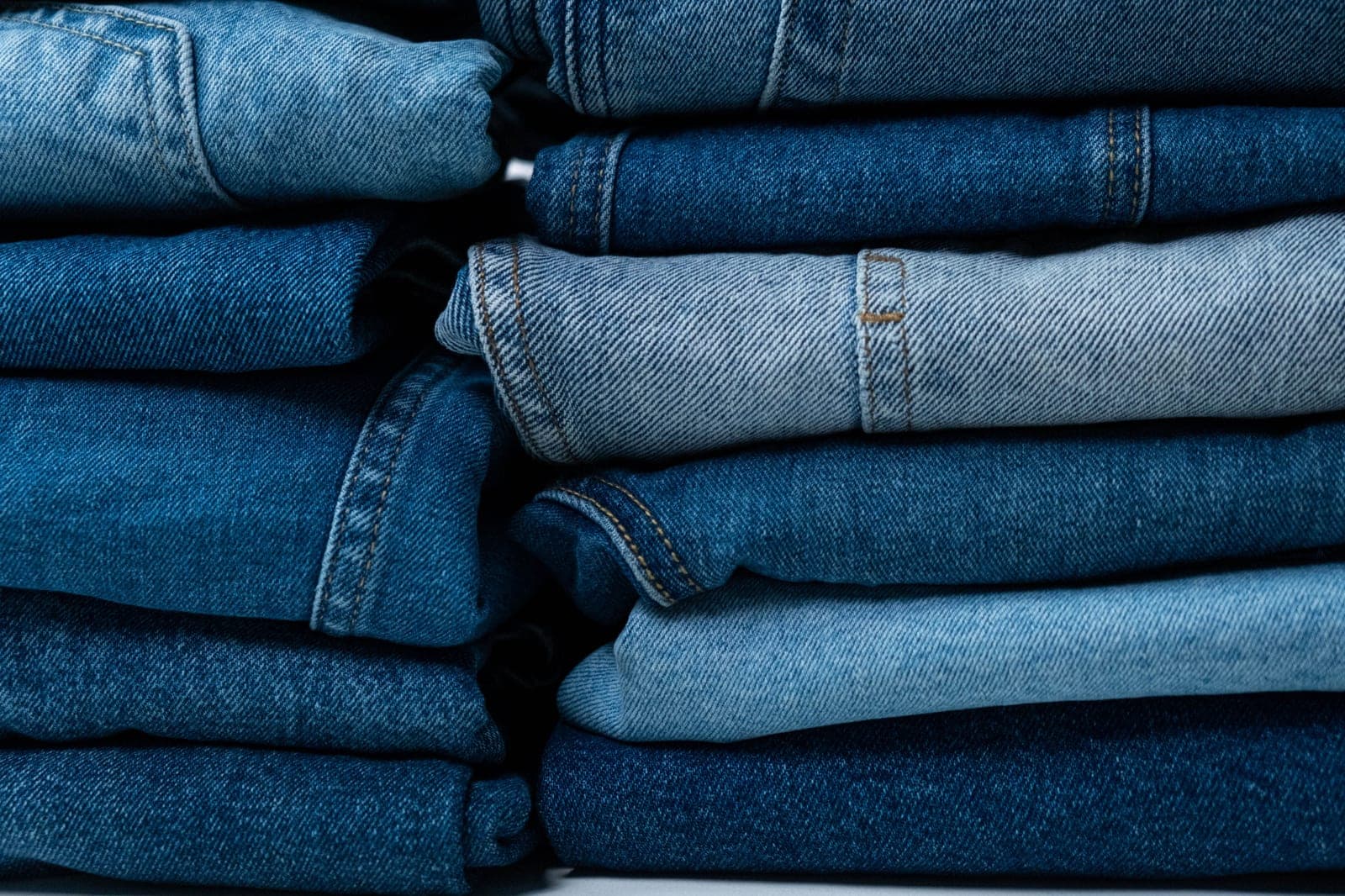
Raw denim, straight off the loom, is stiff, dark and uniform. The soft hand, the faded shades, the worn-in look that sells a pair of jeans — almost all of it is created after the garment is made, in the wash. Denim washing is where a commodity fabric becomes a fashion product, and it is why two physically identical pairs of jeans can carry very different price tags. It is also a process where a laundry's reputation is made or broken, because the whole point of a wash is a specific, repeatable effect. This guide covers the main denim washing techniques and how the process is managed.
Why denim is washed
Washing does several things at once: it removes the stiffness and size from raw denim to give a softer hand, it creates the faded and contrasted look that is the aesthetic of jeans, and it can pre-shrink the garment so it fits predictably after the customer washes it. Because indigo dye sits mostly on the surface of the yarn, controlled abrasion and chemistry can strip colour selectively — which is what makes the whole vocabulary of denim finishes possible.
The main washing techniques
**Stone washing** tumbles the garments with pumice stones to abrade the surface, creating a worn, faded look. **Enzyme washing** uses cellulase enzymes to achieve a similar softening and fading more consistently and with less damage than stones. **Bleach washing** uses oxidising agents to lighten the shade, often dramatically. **Acid washing** tumbles denim with bleach-soaked stones for a sharp, mottled contrast. **Sand blasting and hand scraping** create localised wear (though sand blasting has been widely phased out on health grounds). And **laser finishing** now creates fades, whiskers and wear patterns digitally, with far less water and chemical and far more repeatability. Most finished jeans combine several of these.
The management problem: consistency, cost and compliance
A denim wash is only valuable if it is repeatable. A buyer approves a specific wash on a sample, then orders thousands of pieces that must all match that approved standard — and matching a wash is harder than matching a flat colour, because it involves shade, contrast and wear pattern together. On top of consistency sits cost (water, chemical, enzyme, energy and the labour of a multi-step process) and increasingly compliance (water use and effluent are under real scrutiny). A laundry that runs washes from memory struggles on all three.
How ERP brings denim washing under control
A garment and processing ERP treats each wash as a recorded recipe tied to the order. The wash formula — steps, chemicals, enzymes, times, temperatures — is stored and reused so the approved wash is reproduced, not remembered. Consumption of water, chemical and energy is captured against the batch, so cost per wash is real and the environmental numbers are available. The batch is traceable, so a wash that drifts from the approved standard can be traced and corrected. This connects the laundry to the wider garment ERP and the production planning that schedules it, all on the textile ERP platform.
Where AI helps
AI's role in denim washing is grounded and growing. Computer vision can compare a washed garment against the approved standard and quantify the difference in shade and contrast, catching a batch that has drifted before it ships. On captured recipe and consumption data, AI can flag which formulas run costly or inconsistent. And laser finishing is itself a digital, data-driven process that pairs naturally with a system that stores and reuses patterns. As always, honestly: AI does not replace the wash-master's craft, which remains central — it gives the laundry objective measurement and data where it previously relied on the eye.
The wash is where denim earns its margin and its reputation, and both depend on doing the same wash the same way, batch after batch, at a known cost. A laundry that records its recipes and consumption can manage all three; one that works from memory is always chasing consistency. If wash-match rejections or runaway water and chemical costs are hurting you, that is a process-control gap, and you can see how wash recipes and consumption are tracked with your own styles.
Frequently Asked Questions
What are the main denim washing techniques?
The main techniques are stone washing (tumbling with pumice stones for a worn look), enzyme washing (cellulase enzymes for consistent softening and fading), bleach washing (oxidising agents to lighten), acid washing (bleach-soaked stones for mottled contrast), sand blasting and hand scraping (localised wear), and laser finishing (digital fades and whiskers with less water and chemical). Most finished jeans combine several.
Why is denim washed?
Washing removes the stiffness and size from raw denim for a softer hand, creates the faded and contrasted look that is the aesthetic of jeans, and pre-shrinks the garment for predictable fit. Because indigo dye sits mostly on the yarn surface, controlled abrasion and chemistry strip colour selectively, which is what makes the whole range of denim finishes possible.
How is denim washing kept consistent?
By treating each wash as a recorded recipe tied to the order: the formula (steps, chemicals, enzymes, times, temperatures) is stored and reused so the approved wash is reproduced rather than remembered, consumption of water, chemical and energy is captured per batch, and the batch is traceable. AI computer vision can also compare washed garments to the approved standard and quantify drift.
Vastra ERP Editorial Team
Textile Technology Experts
Our editorial team brings decades of combined experience in textile manufacturing, supply chain management, and enterprise technology. We publish in-depth guides, industry analysis, and practical insights for textile professionals worldwide.