A finished garment in a shop looks simple. The journey that produced it was not. Between a designer's idea and a carton of shirts ready to ship lies a sequence of distinct manufacturing stages, each requiring different skills, machines and controls, and each with its own ways of going wrong. Understanding that sequence — the garment manufacturing process, in order — is the foundation of running or improving a factory, because a problem at one stage ripples into all the ones after it. This guide walks the whole journey, step by step.
1. Design and tech pack
It starts with a design, translated into a tech pack — the technical package that tells the factory exactly how to make the garment: the flat sketch, measurements, the bill of materials, construction details, and colourways. The tech pack is the blueprint everything downstream follows; a vague one guarantees problems later.
2. Pattern making and sampling
From the design and measurements, a pattern is made — the precise templates for each garment piece. A sample garment is then made and checked for fit, construction and appearance, going through rounds of correction until the buyer approves it. Only an approved sample and pattern move forward. This development stage is where most iteration happens.
3. Sourcing and pre-production
With the style approved, materials are sourced against the bill of materials — fabric, trims, accessories — through purchase orders, and incoming fabric is checked by 4-point inspection. The pattern is graded into all the sizes, and a marker is made to lay the pieces out efficiently on the fabric. Nothing is cut until materials are in and checked.
4. Cutting
Fabric is spread in many layers and cut to the marker, then the cut pieces are bundled and ticketed by size and shade for tracking. Cutting is where the biggest cost — fabric — is committed irreversibly across every layer at once, so accuracy here is critical.
5. Sewing
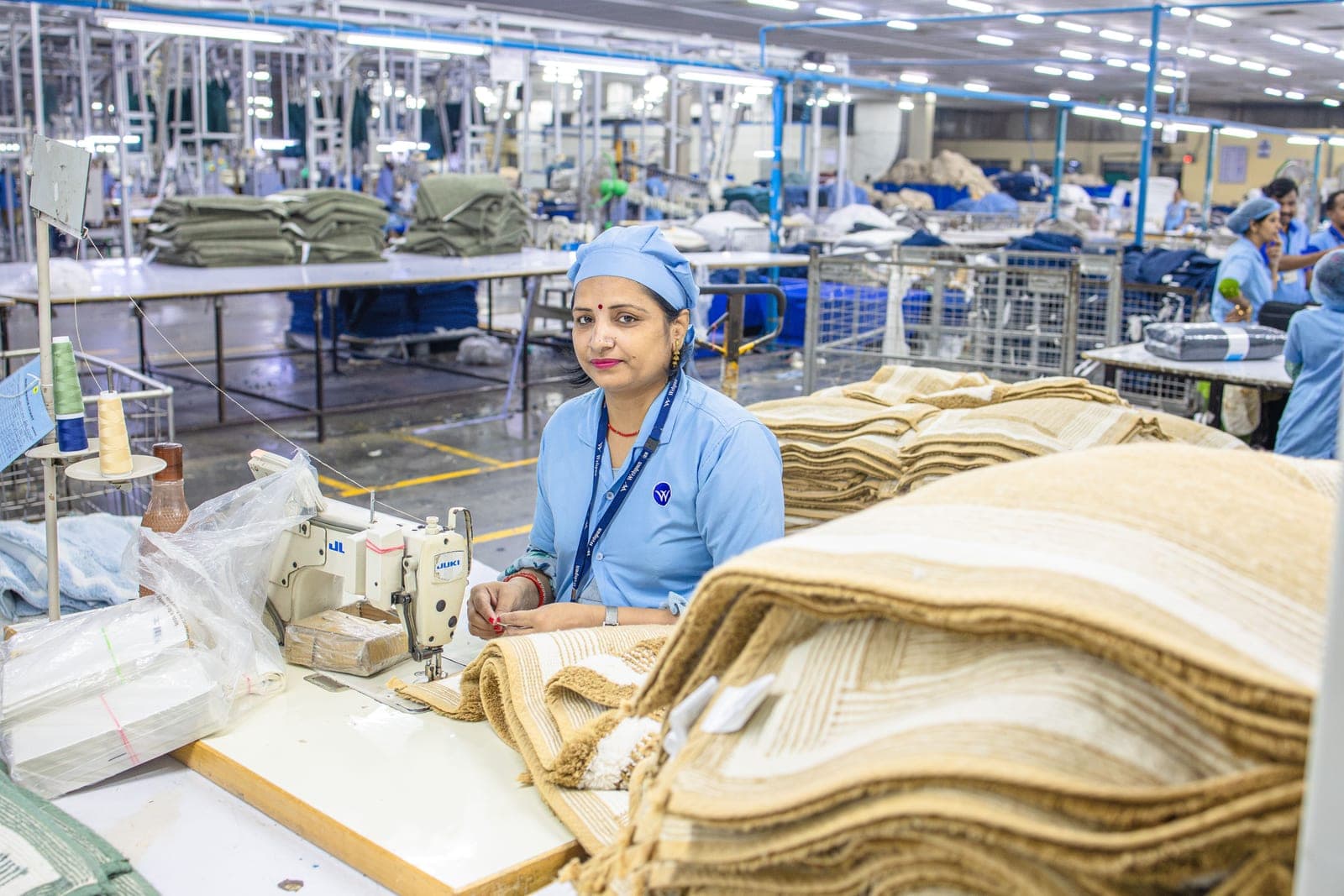
The cut bundles flow to the sewing lines, where the garment is assembled through a sequence of operations, each on the machine built for it — joining seams, attaching components, finishing edges. This is usually the most labour-intensive stage and the one where line balancing and efficiency most affect cost and delivery.
6. Finishing, checking and packing
Sewn garments are finished — trimmed of loose threads, pressed, and given any value-added treatment like washing, printing or embroidery. Every garment is checked (with a final AQL audit before shipment), then folded, tagged, polybagged and packed into cartons per the buyer's packing specification, ready for dispatch and export documentation.
Why the sequence matters — and how ERP ties it together
The reason to see the process as one connected sequence is that the stages are not independent: a vague tech pack causes sampling delays; a pattern error multiplies through cutting; a cutting mistake reaches sewing; a sewing bottleneck misses the ship date. A garment ERP connects every stage to the buyer order — tech pack and sample in PLM, materials through purchasing, cutting and sewing on the shop floor, quality and costing throughout — so the whole process is one visible, planned flow rather than a series of disconnected handoffs. That connection is what lets a factory hit ship dates and know its true cost, on the textile ERP platform.
The garment manufacturing process is a sequence — design and tech pack, pattern and sampling, sourcing, cutting, sewing, finishing and packing — where each stage feeds the next and a problem anywhere ripples everywhere. Seeing it whole, and running it as one connected flow rather than isolated steps, is what separates a factory that ships on time and knows its cost from one that firefights. You can see how the whole process connects on one system with your own styles and orders.
Frequently Asked Questions
What are the steps of the garment manufacturing process?
In order: design and tech pack (the blueprint), pattern making and sampling (templates and an approved sample), sourcing and pre-production (materials, fabric inspection, grading, marker making), cutting (spreading, cutting to the marker, bundling), sewing (assembly through operations on specialised machines), and finishing, checking and packing (trimming, pressing, value-adds, AQL check, folding and cartoning).
Which stage of garment manufacturing is most labour-intensive?
Sewing is usually the most labour-intensive stage, where the garment is assembled through a sequence of operations each on the machine built for it. It's also where line balancing and operator efficiency most affect cost and delivery, which is why the sewing floor is a central focus for productivity improvement.
Why should the garment manufacturing process be managed as one connected flow?
Because the stages aren't independent — a vague tech pack causes sampling delays, a pattern error multiplies through cutting, a cutting mistake reaches sewing, and a sewing bottleneck misses the ship date. A garment ERP connects every stage to the buyer order so the whole process is one visible, planned flow rather than disconnected handoffs, which is what lets a factory hit ship dates and know its true cost.
Vastra ERP Editorial Team
Textile Technology Experts
Our editorial team brings decades of combined experience in textile manufacturing, supply chain management, and enterprise technology. We publish in-depth guides, industry analysis, and practical insights for textile professionals worldwide.