In most garments, fabric is the single largest cost — often more than half. So the biggest lever on a garment's material cost is not negotiating the fabric price; it is using less of it per garment. And most of that saving is won or lost in one step, before a single piece of fabric is cut: marker making. It is a quietly technical process that directly moves the margin on every garment produced, and understanding it explains why two factories making the same garment from the same fabric can have very different costs. This guide explains marker making and how it is being optimised.
What a marker is
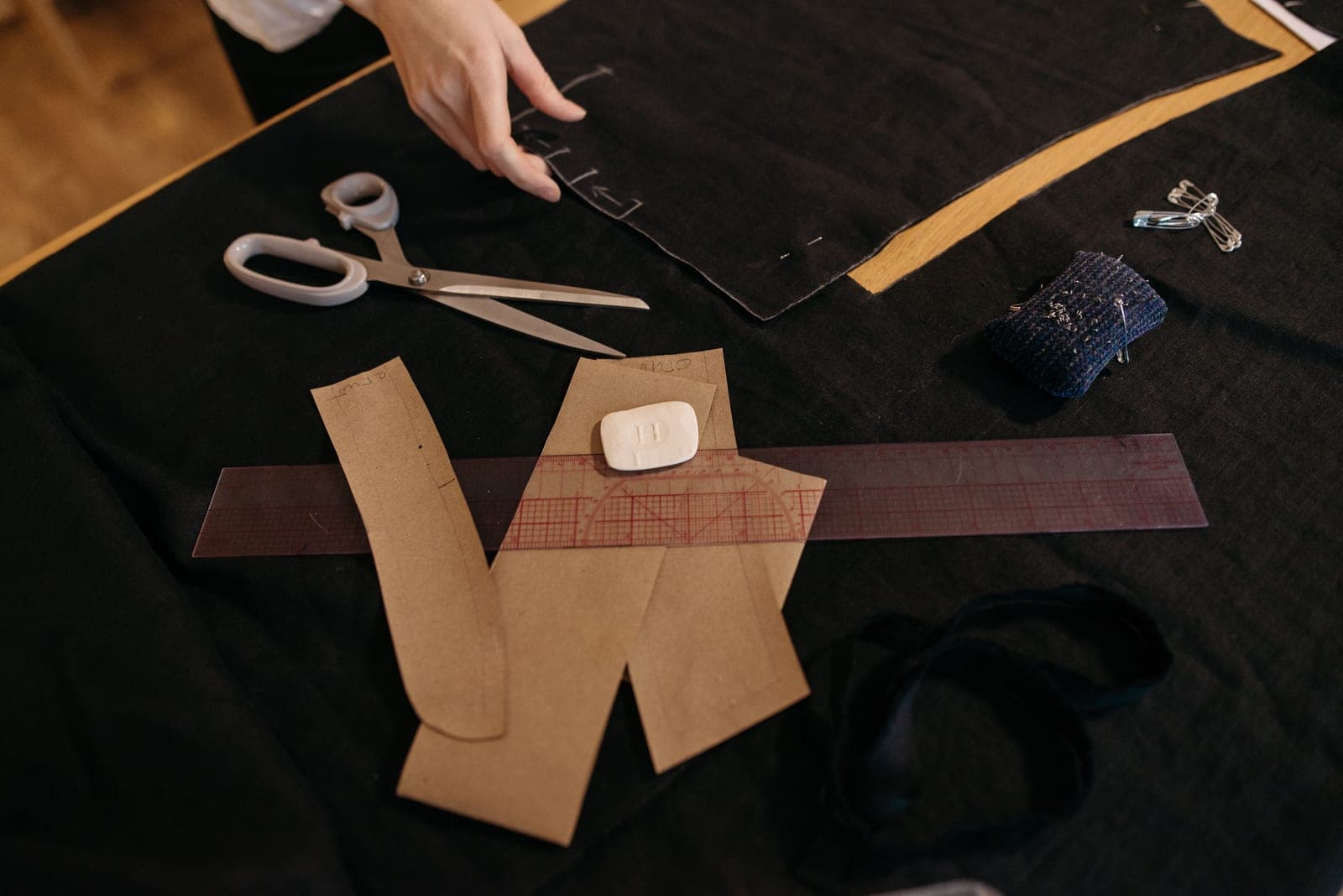
A marker is the layout of all the pattern pieces for a garment — every panel, in every size in the cut — arranged on the width of the fabric to be cut, like a giant, precise jigsaw. When fabric is spread in many layers and cut, the marker is the plan laid on top that determines exactly where each piece comes from. The goal of marker making is to fit all the required pieces into as little fabric length as possible, because every centimetre of fabric the marker does not use is fabric saved on every layer of the spread.
Why marker efficiency is margin
Marker efficiency — the percentage of fabric in the marker that ends up as garment pieces rather than waste between them — translates directly into cost. A marker at 85% efficiency wastes 15% of the fabric; one at 88% wastes 12%. That three-point difference does not sound like much until you remember it applies to fabric, the biggest cost, on every single garment in the order. Across a large order, a few points of marker efficiency is a meaningful sum. This is why serious garment factories obsess over marker efficiency: it is one of the highest-leverage numbers in the whole operation, and it feeds directly into garment costing.
What makes marker making hard
Fitting the pieces tightly is a genuinely difficult optimisation. Pieces are irregular shapes; they must respect the fabric's grain line and, for patterned fabric, matching of stripes, checks or nap; different sizes must often be combined in one marker in the right ratio; and the fabric width constrains everything. A skilled marker-maker balances all of this by experience, and the difference between a good and a poor marker is real fabric. It is exactly the kind of complex packing problem where human skill has a ceiling and computation can help.
How CAD and AI optimise the marker
Modern marker making is done in CAD, which lets pieces be arranged and efficiency measured precisely rather than by hand. On top of that, AI and automatic-nesting algorithms can search enormous numbers of possible layouts to find tighter arrangements than a human would reach — squeezing out extra points of efficiency that, on fabric, pay for themselves quickly. This is a genuinely strong use of computation: marker optimisation is a well-defined problem where a few percent matters and the search space is huge. The resulting fabric consumption flows into the BOM, costing and production planning on the garment ERP, so the saving is captured, not just achieved.
Marker making is where a garment factory decides, before cutting anything, how much fabric each garment will really cost — and a few points of marker efficiency on the biggest cost is margin most factories leave on the table. Optimising the marker with CAD and AI, and feeding the real consumption into costing, is one of the clearest wins in garment manufacturing. If your fabric utilisation is set by hand and never really measured, that is efficiency and margin waiting to be recovered, and you can see how consumption flows from marker to cost with your own styles.
Frequently Asked Questions
What is marker making in garment manufacturing?
A marker is the layout of all the pattern pieces for a garment — every panel, in every size in the cut — arranged on the fabric width to be cut, like a precise jigsaw. Marker making is the process of fitting those pieces into as little fabric length as possible. When fabric is spread in layers and cut, the marker is the plan on top determining where each piece comes from.
Why does marker efficiency matter?
Because fabric is usually the largest cost in a garment (often more than half), and marker efficiency — the percentage of fabric that becomes garment pieces rather than waste — applies to that cost on every single garment. A marker at 88% versus 85% efficiency saves three points of fabric across the whole order, which is a meaningful sum. It's one of the highest-leverage numbers in garment manufacturing.
How do CAD and AI improve marker making?
Modern marker making uses CAD to arrange pieces and measure efficiency precisely rather than by hand. AI and automatic-nesting algorithms then search enormous numbers of possible layouts to find tighter arrangements than a human reaches, squeezing out extra efficiency that pays for itself on fabric. It's a strong use of computation — a well-defined problem where a few percent matters and the search space is huge.
Vastra ERP Editorial Team
Textile Technology Experts
Our editorial team brings decades of combined experience in textile manufacturing, supply chain management, and enterprise technology. We publish in-depth guides, industry analysis, and practical insights for textile professionals worldwide.