A garment design — a sketch, a reference, a tech pack — is a picture of an idea. A factory cannot cut and sew a picture; it needs precise templates for every piece of the garment, in exact dimensions, that fit together correctly when assembled. Turning the idea into those templates is pattern making, and it is one of the most skilled and consequential steps in garment manufacturing — the technical translation without which nothing gets made correctly. This guide explains what pattern making is and how it works today.
What pattern making is
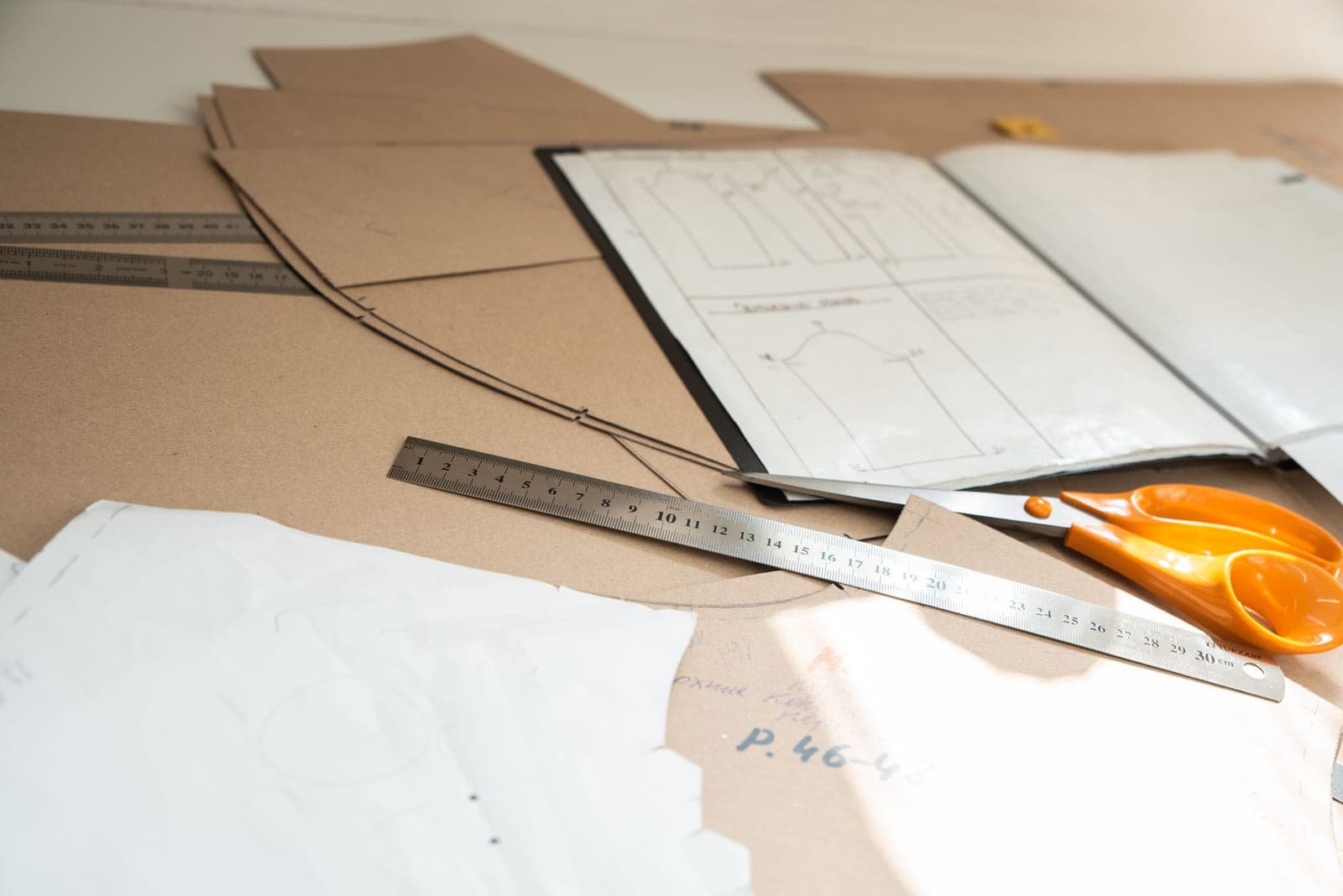
Pattern making is the process of creating the pattern — the set of flat templates for each component of a garment (front, back, sleeves, collar, cuffs, pockets and so on) — from a design and a set of measurements. Each pattern piece precisely defines the shape, size, seam allowances, grain lines, notches and markings needed to cut that component and sew it to its neighbours. A well-made pattern is what ensures the finished garment fits, hangs and assembles as the designer intended. It is part craft, part geometry, and entirely essential.
How a design becomes a pattern
There are two main routes. **Flat pattern making** starts from a set of basic pattern blocks (slopers) — foundation patterns for a standard body — and manipulates them, adding and moving shape, to create the pattern for the new design. **Draping** works in three dimensions, pinning and shaping muslin on a dress form to develop the shape directly, then transferring it to a flat pattern. Many patterns use both. Either way, the output is a precise set of pieces, first developed as a sample size and then checked by making a sample garment before anything scales up.
Manual vs CAD pattern making
Traditionally, patterns were drafted by hand on paper — and skilled hand pattern makers remain highly valued. Increasingly, though, pattern making is done in specialist CAD software, which lets pattern makers draft, modify and store patterns digitally with precision, and connects directly to grading and marker making. CAD does not replace the pattern maker's skill and judgement about how a garment should be shaped; it gives that skill precise, storable, connectable tools — which matters enormously when a style will be graded into many sizes and cut thousands of times.
How it connects to the rest of production
Pattern making sits at a critical junction. The pattern feeds grading (scaling it into every size), then marker making (laying the pieces out to save fabric), then cutting. Its accuracy determines whether all of this works — an error in the pattern multiplies across every size and every garment cut. A garment ERP and PLM system connect the pattern to the style, the BOM, and production, so the pattern is managed as part of the style's development on the apparel PLM and garment ERP platform rather than living as loose files.
Where AI helps
AI is beginning to assist pattern making, with tools that can generate base patterns from measurements or adapt existing patterns, speeding routine work — though skilled pattern makers still refine fit and shape, so the honest position is AI-assisted rather than AI-made patterns. On the management side, document AI reads tech packs and specifications into the system to start the process from clean data. The craft of shaping a garment remains human; AI speeds the routine parts and the surrounding workflow.
Pattern making is the skilled translation of a design into the precise templates a factory can actually make — the step where an idea becomes producible, and where an error multiplies through every size and every cut. Managing patterns precisely, connected to grading, marker making and the style, is what keeps garment development accurate. If your patterns live as loose files disconnected from the rest of production, that is a gap worth closing, and you can see how pattern development is managed with your own styles.
Frequently Asked Questions
What is pattern making in garment manufacturing?
Pattern making is creating the set of flat templates for each component of a garment (front, back, sleeves, collar and so on) from a design and measurements. Each piece precisely defines the shape, size, seam allowances, grain lines, notches and markings needed to cut that component and sew it to its neighbours. A well-made pattern ensures the finished garment fits, hangs and assembles as intended.
What is the difference between flat pattern making and draping?
Flat pattern making starts from basic pattern blocks (slopers) for a standard body and manipulates them — adding and moving shape — to create the new design's pattern. Draping works in three dimensions, pinning and shaping muslin on a dress form to develop the shape directly, then transferring it to a flat pattern. Many patterns use both approaches.
How does CAD help with pattern making?
CAD software lets pattern makers draft, modify and store patterns digitally with precision, and connects directly to grading and marker making. It doesn't replace the pattern maker's skill and judgement about how a garment should be shaped — it gives that skill precise, storable, connectable tools, which matters greatly when a style will be graded into many sizes and cut thousands of times.
Vastra ERP Editorial Team
Textile Technology Experts
Our editorial team brings decades of combined experience in textile manufacturing, supply chain management, and enterprise technology. We publish in-depth guides, industry analysis, and practical insights for textile professionals worldwide.