Muslin is about as plain as fabric gets — an unassuming, loosely-woven cotton cloth, usually undyed, that rarely gets a second glance. And yet it is one of the most useful and historically significant fabrics in the world, playing quiet but essential roles in fashion, food, medicine and the home. The fabric that a couturier drapes to develop a design and the cloth that strains your homemade paneer are, at heart, the same humble muslin. This guide explains what muslin is, where it came from, and why such a simple cloth is so widely used.
What muslin is
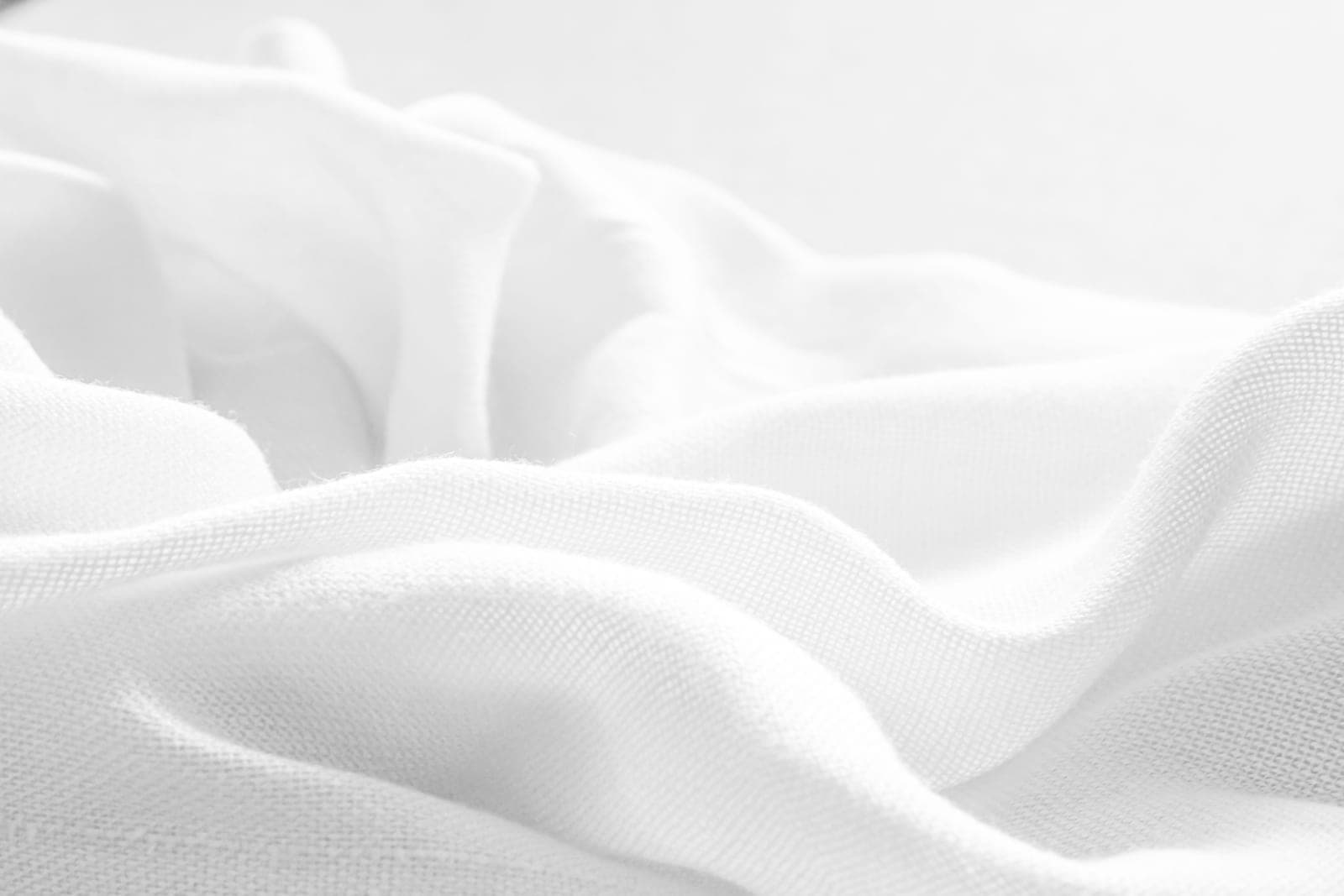
Muslin is a plain-weave cotton fabric, typically lightweight and somewhat loosely woven, most often left undyed in its natural off-white. Its defining qualities are its simplicity and breathability: the plain weave and open construction make it soft, light, and air-permeable. Muslin comes in a range of weights, from very fine and sheer to a coarser, sturdier cloth, but it is always recognisably plain, cotton, and unpretentious. It is the fabric equivalent of a blank canvas.
A surprising history
Muslin's plainness belies a remarkable past. The finest muslin in history was woven in Bengal, particularly around Dhaka, and was so extraordinarily fine and sheer that it earned poetic names and was prized across the ancient and medieval world — a genuine luxury good traded globally. The name itself is often linked to Mosul in Iraq, a trading centre. That a fabric now synonymous with plainness was once among the most coveted textiles on earth is one of the quiet ironies of textile history.
The many uses of muslin
Muslin's usefulness comes from being cheap, plain, soft and breathable. **In fashion**, it is the fabric of the toile (or muslin) — designers drape and stitch it to develop and test a garment's fit and pattern before cutting expensive fashion fabric, making it essential to pattern development. **In the kitchen**, it strains, wraps and filters — cheesecloth is a muslin. **In the home and for babies**, its softness and breathability make it ideal for swaddles, cloths and light coverings. **In medicine and craft**, it serves as bandaging, backing and a base for other work. One plain cloth, an unusually wide range of jobs.
How ERP handles muslin
Even a humble fabric is a real product with a real cost, and a business producing or trading muslin tracks it like any other: a textile ERP holds its plain-weave construction, GSM and width as structured data, manages its stock, and costs it from real consumption. Because muslin is often a high-volume, thin-margin commodity, accurate costing and stock control matter precisely because there is little margin to absorb errors. It sits within the same fabric discipline of the textile ERP platform as any premium cloth.
Muslin is the humble, plain-weave cotton that quietly does more jobs than almost any other fabric — draping a couturier's toile, straining a kitchen, swaddling a baby, and once, in its finest form, ranking among the world's great luxuries. Simple does not mean unimportant. For a business, even a commodity cloth deserves accurate costing and stock control, and you can see how fabric is tracked with your own qualities.
Frequently Asked Questions
What is muslin fabric?
Muslin is a plain-weave cotton fabric, typically lightweight and somewhat loosely woven, most often left undyed in its natural off-white. Its defining qualities are simplicity and breathability — the plain weave and open construction make it soft, light and air-permeable. It comes in a range of weights from fine and sheer to coarser and sturdier, but is always plain, cotton and unpretentious.
What is muslin fabric used for?
In fashion it is the fabric of the toile — designers drape and stitch it to test a garment's fit and pattern before cutting expensive fabric. In the kitchen it strains, wraps and filters (cheesecloth is muslin). At home and for babies its softness and breathability suit swaddles and light coverings. In medicine and craft it serves as bandaging, backing and a base for other work.
Why was muslin historically significant?
The finest muslin in history was woven in Bengal, particularly around Dhaka, and was so extraordinarily fine and sheer that it was prized across the ancient and medieval world as a luxury good traded globally. The name is often linked to Mosul in Iraq, a trading centre. A fabric now synonymous with plainness was once among the most coveted textiles on earth.
Vastra ERP Editorial Team
Textile Technology Experts
Our editorial team brings decades of combined experience in textile manufacturing, supply chain management, and enterprise technology. We publish in-depth guides, industry analysis, and practical insights for textile professionals worldwide.