Warp and weft are the two most basic words in weaving, and also two of the most commonly muddled. Every woven fabric ever made is built from these two sets of yarn crossing each other — and yet the difference between them is not merely terminology. Warp and weft behave differently, are made differently, and give fabric its direction, its stretch and its grain. Understanding which is which explains a surprising amount about how fabric behaves and why it is cut the way it is. This short guide makes warp and weft clear.
What warp and weft are
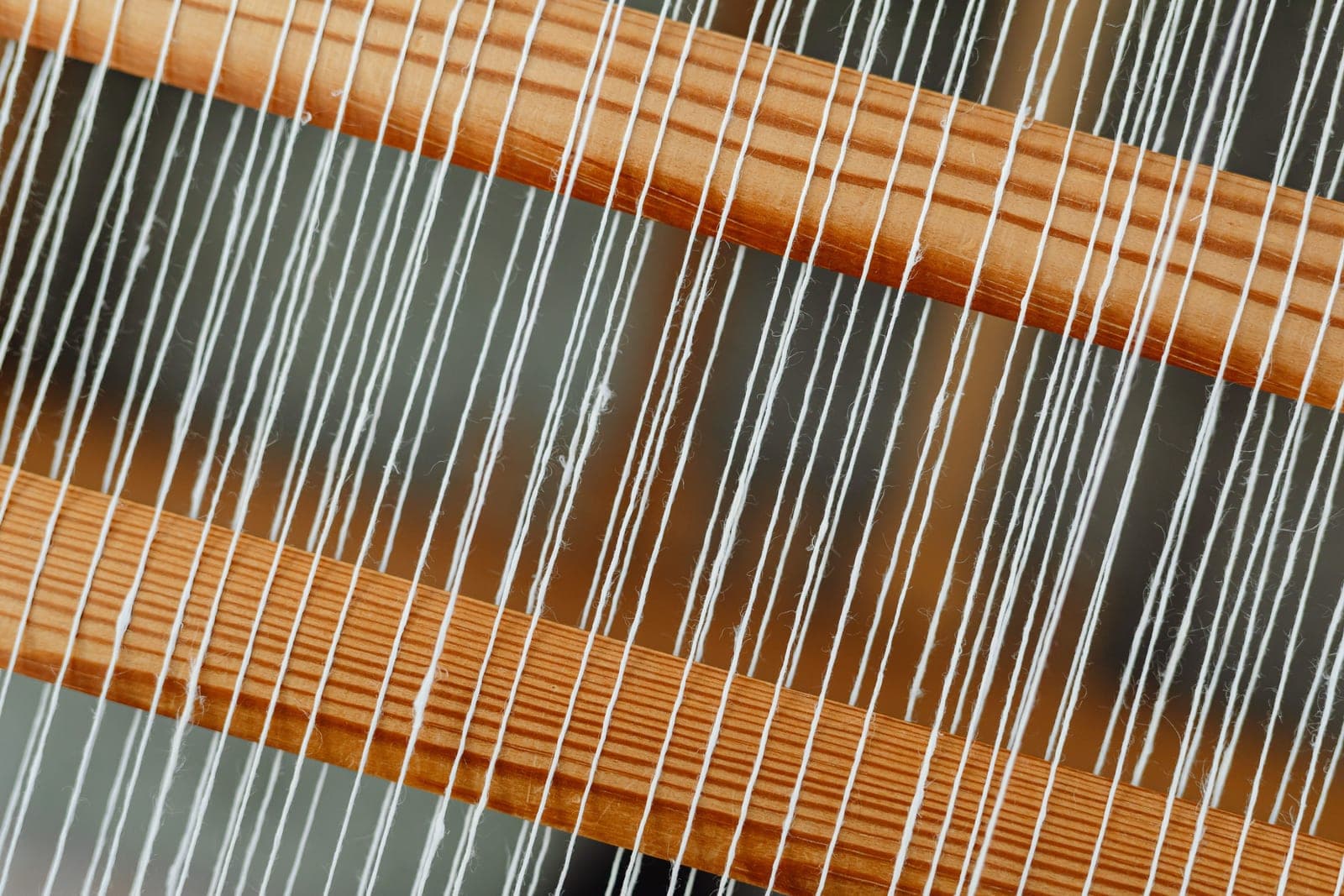
In a woven fabric, the **warp** yarns run lengthwise — along the length of the fabric, parallel to the selvedge (the finished edge). They are the yarns held under tension on the loom, running the whole length of the cloth. The **weft** yarns (also called the filling or pick) run crosswise — across the width of the fabric, over and under the warp, inserted one at a time during weaving. A simple way to remember it: warp runs the way the fabric comes off the loom; weft is 'woven' across it, left to right.
Why the difference matters
Warp and weft are not interchangeable, and their differences shape the fabric. Because warp yarns bear the tension and abrasion of weaving, they are usually stronger, finer and more tightly twisted than weft yarns — which is why fabric is generally stronger and less stretchy along its length (the warp direction) than across (the weft direction). This directional difference is the reason garments are cut with attention to grain: patterns are laid so that the warp runs in the direction that needs strength and stability, while the crosswise weft direction gives a little more give. Cut a garment off-grain and it hangs and wears wrongly.
Where warp and weft show up in production
The distinction runs through the whole textile process. In spinning, warp yarn is often made to a higher specification because it must survive weaving. In weaving, warp preparation — warping and sizing — is the demanding part precisely because the warp must withstand tension, while weft is simply inserted. Fabric construction is specified separately for each: ends per inch (warp density) and picks per inch (weft density). And in cutting, respecting the grain — the warp direction — is a quality requirement. A fabric's full identity includes both its warp and its weft specification, which is why they are recorded separately.
How ERP captures warp and weft
A textile ERP holds fabric construction with warp and weft as distinct, structured attributes — the warp and weft yarn counts, and the ends and picks per inch — so a fabric is defined precisely rather than by a vague description. That precision matters for quoting, consumption and costing, and quality, because a fabric is only fully specified when both yarn systems are. It is part of the fabric-master discipline of the textile ERP platform that keeps fabric data accurate across the business.
Warp and weft are simple ideas with real consequences: two yarn systems, made differently, behaving differently, giving fabric its direction and grain. Getting them straight is the foundation of understanding how woven fabric works and why it is cut the way it is. For a business, capturing both precisely in the fabric record is what keeps quoting, costing and cutting accurate — and you can see how fabric construction is specified with your own qualities.
Frequently Asked Questions
What is the difference between warp and weft?
In a woven fabric, warp yarns run lengthwise — along the fabric, parallel to the selvedge, held under tension on the loom. Weft yarns (also called filling or pick) run crosswise — across the width, over and under the warp, inserted one at a time during weaving. A simple memory aid: warp runs the way the fabric comes off the loom; weft is woven across it.
Why does the difference between warp and weft matter?
Because warp yarns bear the tension and abrasion of weaving, they're usually stronger, finer and more tightly twisted than weft, so fabric is generally stronger and less stretchy along its length (warp) than across (weft). This is why garments are cut with attention to grain — patterns are laid so the warp runs where strength is needed — and cutting off-grain makes a garment hang and wear wrongly.
How is warp and weft recorded for a fabric?
A fabric's construction specifies each separately: the warp and weft yarn counts, and the ends per inch (warp density) and picks per inch (weft density). A textile ERP holds these as distinct structured attributes so the fabric is defined precisely rather than by a vague description — which matters for accurate quoting, consumption, costing and quality.
Vastra ERP Editorial Team
Textile Technology Experts
Our editorial team brings decades of combined experience in textile manufacturing, supply chain management, and enterprise technology. We publish in-depth guides, industry analysis, and practical insights for textile professionals worldwide.