In a garment factory, the cutting room is where commitment becomes irreversible. Up to this point, fabric is still just fabric; once it is cut, it is committed to being a specific garment, in specific sizes, and a mistake cannot be un-cut. And because factories cut many layers of fabric at once, a single error — a wrong marker, a shading mismatch, a miscut — is multiplied across every layer instantly. That combination of irreversibility and multiplication makes fabric cutting one of the highest-stakes operations in manufacturing. This guide walks through how the cutting room works.
Spreading
Cutting starts with spreading: laying the fabric out in many smooth, aligned layers on a long cutting table, building up a stack (a 'lay') that may be dozens or hundreds of plies deep. Spreading has to be precise — layers must be flat, tension-free, aligned and free of defects — because everything cut from the lay inherits its quality. Care is taken to keep shade consistent within a lay (grouping fabric from the same dye lot), because pieces cut from different shades will show when sewn into one garment.
Marker laying and cutting
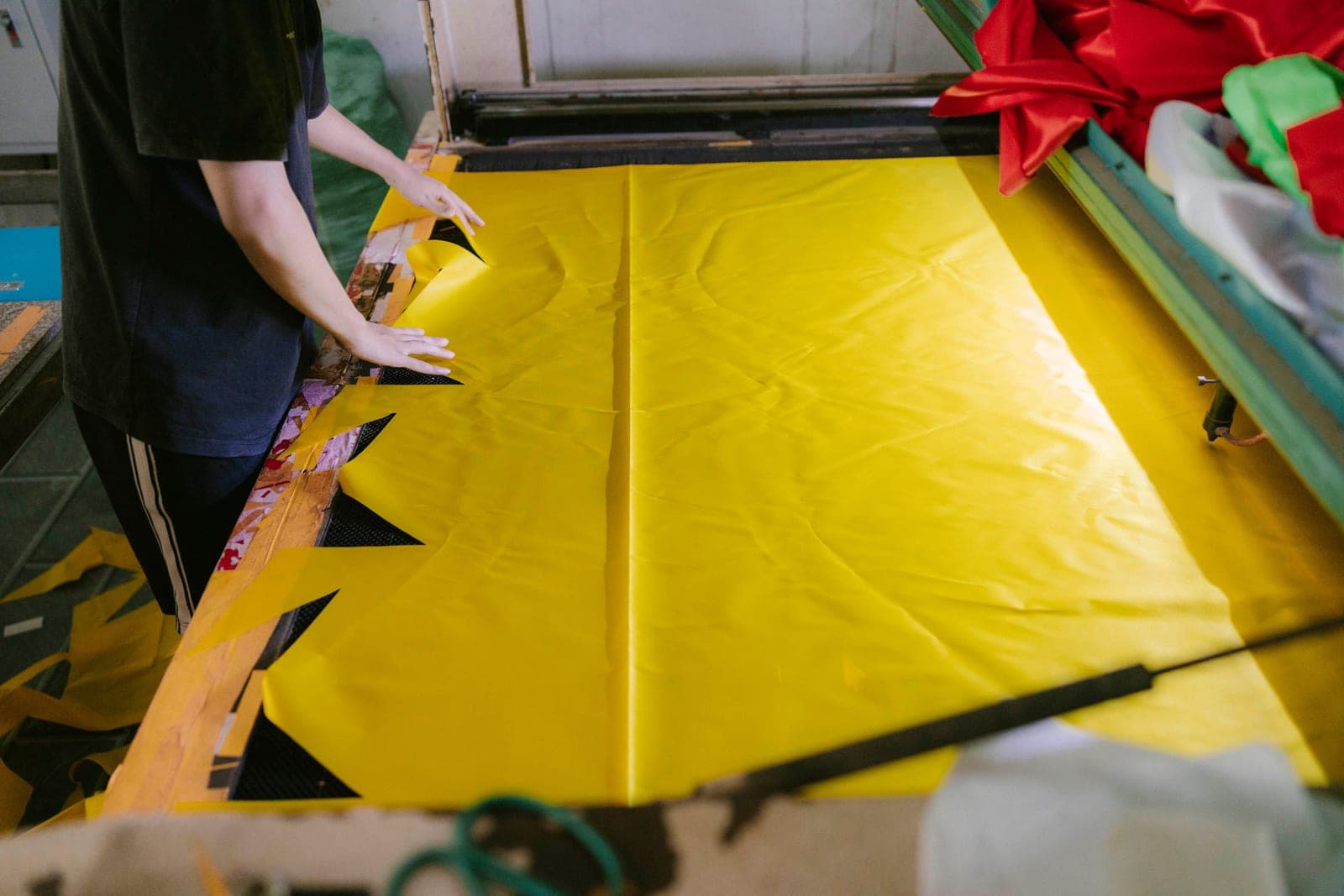
The marker — the optimised layout of all the pattern pieces for the sizes being cut — is placed on top of the lay, and the fabric is cut through all layers following it. Cutting may be done with hand-guided straight-knife or band-knife machines, or increasingly by computer-controlled automatic cutters and laser or die cutting for precision and speed. The goal is accurate pieces that match the pattern exactly, because inaccurate cutting causes sewing and fit problems downstream. Every centimetre matters, since the marker efficiency determines how much fabric — the biggest cost — each garment uses.
Bundling and ticketing
Once cut, the pieces for each garment must stay organised. Cut components are sorted, tied into bundles by size and shade, and ticketed — each bundle labelled and numbered so it can be tracked through sewing. This bundle system is how a factory keeps work-in-progress organised and traceable across the sewing lines: a bundle ticket follows the pieces, is scanned at operations, and links the work back to its order. Good bundling keeps a factory's flow orderly; poor bundling creates chaos and mixed-up garments.
How ERP manages the cutting room
A garment ERP ties the cutting room to the order and the rest of production. Cut plans are generated from orders and markers; lays and cuts are recorded; fabric consumption is captured against the cut so costing reflects reality; and bundles are ticketed and tracked into sewing. Because cutting commits the biggest cost (fabric) irreversibly, measuring consumption and utilisation here directly protects margin. It is part of the garment ERP production flow on the textile ERP platform.
The cutting room is where an order becomes irreversible physical pieces, and where the biggest cost — fabric — is committed across many layers at once, so accuracy and organisation are everything. Spreading, cutting to the marker, and bundling for traceability are the three acts, and managing them as measured, connected steps protects both quality and margin. If your cutting room's consumption and flow are not really tracked, that is where fabric and control leak, and you can see how cutting is managed with your own orders.
Frequently Asked Questions
What are the steps of fabric cutting in a garment factory?
Spreading (laying fabric in many smooth aligned layers to build a stack, or lay), marker laying and cutting (placing the optimised pattern layout on the lay and cutting through all layers with knife machines or automatic/laser cutters), and bundling and ticketing (sorting cut pieces into labelled, numbered bundles by size and shade so they can be tracked through sewing).
Why is the cutting room so high-stakes?
Because cutting is irreversible — once fabric is cut it's committed to a specific garment and can't be un-cut — and factories cut many layers at once, so a single error like a wrong marker, a shading mismatch or a miscut is multiplied across every layer instantly. Cutting also commits the biggest cost, fabric, so mistakes here are both irreversible and expensive.
How does ERP help manage fabric cutting?
A garment ERP generates cut plans from orders and markers, records lays and cuts, captures fabric consumption against the cut so costing reflects reality, and tickets and tracks bundles into sewing. Because cutting commits the biggest cost (fabric) irreversibly, measuring consumption and utilisation in the cutting room directly protects margin and keeps work-in-progress traceable.
Vastra ERP Editorial Team
Textile Technology Experts
Our editorial team brings decades of combined experience in textile manufacturing, supply chain management, and enterprise technology. We publish in-depth guides, industry analysis, and practical insights for textile professionals worldwide.