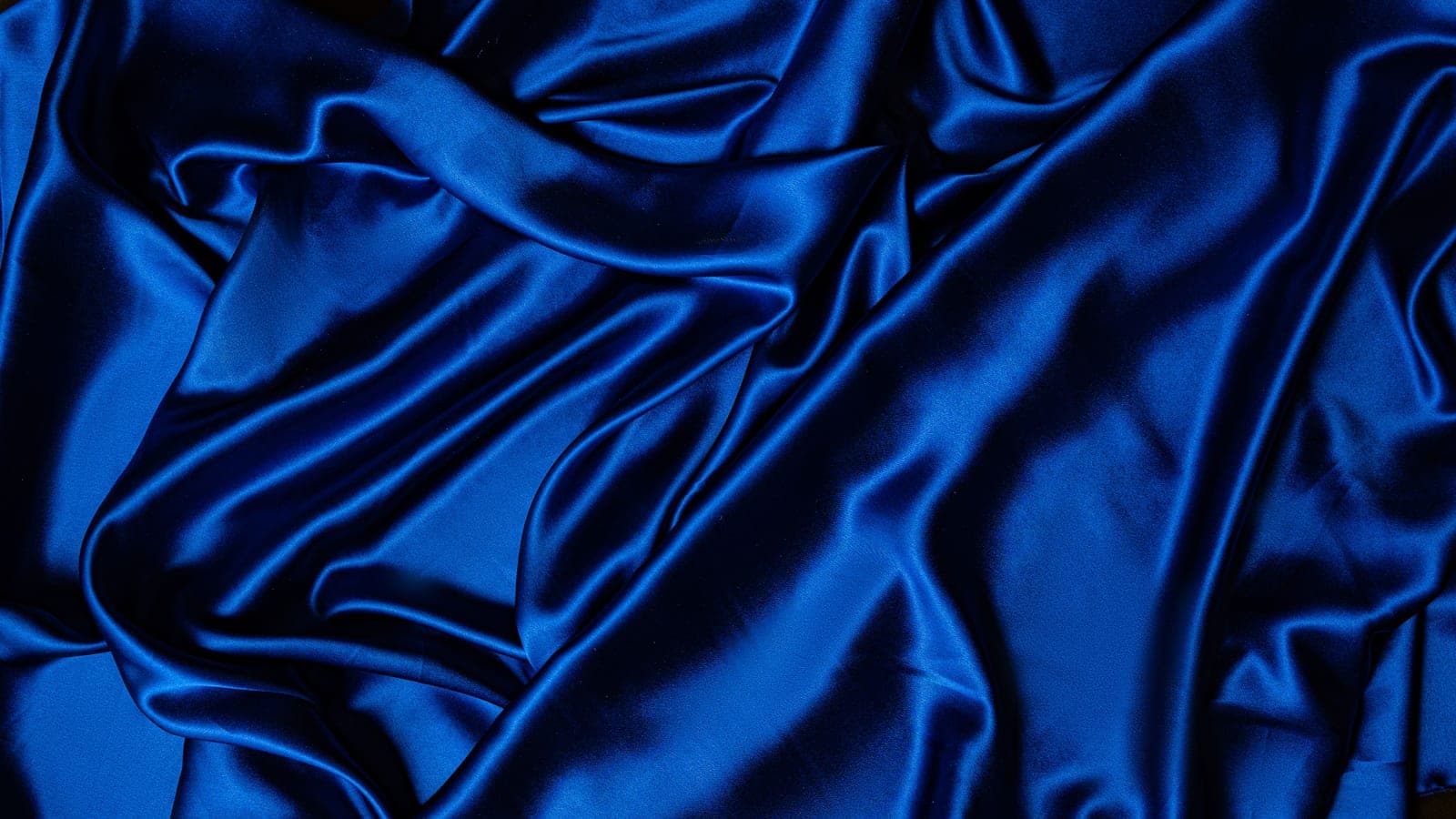
The luxurious sheen of satin is one of the most recognisable qualities in all of textiles — and one of the most misunderstood. Many people assume satin is a fibre, like silk, or a finish applied to fabric. It is neither. Satin is a weave: a specific way of interlacing yarn that produces a smooth, lustrous surface regardless of the fibre used. Understanding the satin weave explains why satin shines, why it snags, and why the same weave in cotton is called sateen. This guide makes the satin weave clear.
What the satin weave is
The satin weave is one of the three basic weaves, and it is defined by long 'floats'. Where plain weave interlaces every yarn at every crossing, the satin weave lets a warp (or weft) yarn float over four, seven or more opposing yarns before going under just one, and it staggers these floats so they never line up into a visible diagonal. The result is a surface made up almost entirely of long, unbroken yarn floats lying parallel — which reflects light smoothly and evenly, creating the characteristic lustre. The few interlacing points are scattered and hidden, so the eye sees only the sheen.
Why satin behaves the way it does
Every property of satin follows from those floats. The smooth, lustrous face and the fluid, liquid drape come from the long floats lying flat and reflecting light. But the same floats make satin less durable and prone to snagging — a float caught by a nail pulls and mars the surface, because there is so much exposed yarn between interlacings. Satin also has a distinct face and back (the lustrous float side and the duller reverse), unlike reversible plain weave. It is, in short, a weave that trades durability for beauty.
Satin vs sateen vs silk
The terminology causes endless confusion, so here is the clean version. **Satin weave** is the structure. **Satin** as a fabric traditionally means the satin weave made with filament yarns (originally silk, now often polyester or nylon) with the floats on the warp. **Sateen** is the same satin weave made with spun cotton yarns, usually with the floats on the weft — so sateen is 'cotton satin'. And **silk** is a fibre, which may or may not be woven as satin. So 'silk satin' means silk fibre in a satin weave, while 'cotton sateen' means cotton in a satin weave. The weave and the fibre are two separate things.
How ERP captures a satin fabric
For a fabric business, a satin is defined by its weave structure alongside its fibre, yarn counts and construction — all of which a textile ERP holds as structured attributes so the fabric is specified precisely. That matters because a satin needs the right loom capability, its floats affect inspection (float snags are a specific defect), and its premium positioning affects costing. Capturing the weave as data, not just a name, keeps quoting, production planning and quality accurate on the textile ERP platform.
Satin is a weave, not a fibre or a finish — long floating yarns that reflect light into that signature sheen, at the cost of durability. Knowing that clears up satin versus sateen versus silk, and explains why satin drapes so beautifully and snags so easily. For a business, capturing the weave precisely in the fabric record is part of keeping production and quality accurate, and you can see how fabric construction is specified with your own qualities.
Frequently Asked Questions
What is a satin weave?
The satin weave is one of the three basic weaves, defined by long floats: a warp or weft yarn floats over four, seven or more opposing yarns before going under one, with the floats staggered so they never form a visible diagonal. The surface is almost all long parallel yarn floats, which reflect light smoothly to create satin's characteristic lustre, with the few interlacing points hidden.
What is the difference between satin and sateen?
Satin weave is the structure. 'Satin' as a fabric traditionally means the satin weave made with filament yarns (silk, polyester, nylon) with floats on the warp. 'Sateen' is the same satin weave made with spun cotton yarns, usually with floats on the weft — essentially 'cotton satin'. Silk, meanwhile, is a fibre that may or may not be woven as satin; the weave and the fibre are separate things.
Why does satin snag easily?
Because of its long floats. The satin weave leaves long, unbroken yarn floats exposed on the surface between widely-spaced interlacing points, which is what creates the smooth lustre. But those exposed floats are easily caught and pulled — a float snagged by a nail mars the surface. Satin trades durability for its beauty and fluid drape.
Vastra ERP Editorial Team
Textile Technology Experts
Our editorial team brings decades of combined experience in textile manufacturing, supply chain management, and enterprise technology. We publish in-depth guides, industry analysis, and practical insights for textile professionals worldwide.