Look closely at any woven fabric and you will see it is built from two sets of yarns crossing at right angles — the warp running lengthwise and the weft running across. How those two sets interlace is the weave, and remarkably, almost every woven fabric in the world is a variation on just three basic weaves. Understanding them explains why denim is diagonal and durable, why poplin is crisp and plain, and why satin is smooth and lustrous — and why the weave a buyer specifies changes how the fabric must be made. This guide walks through the types of weaving clearly.
The three basic weaves
**Plain weave** is the simplest and most common: each weft yarn passes over one warp yarn and under the next, alternating every row, like a checkerboard. It is strong, stable, hard-wearing and reversible, and it makes everything from poplin and shirting to canvas and muslin. **Twill weave** passes the weft over one or more warps and then under two or more in a staggered progression, producing the characteristic diagonal line. Twill is durable, drapes well and hides soil, which is why it makes denim, gabardine and chino. **Satin weave** floats the warp (or weft) over several yarns before interlacing, so the surface is mostly one set of yarns — smooth, lustrous, but less durable and prone to snagging. It makes satin and sateen.
Derivative and fancy weaves
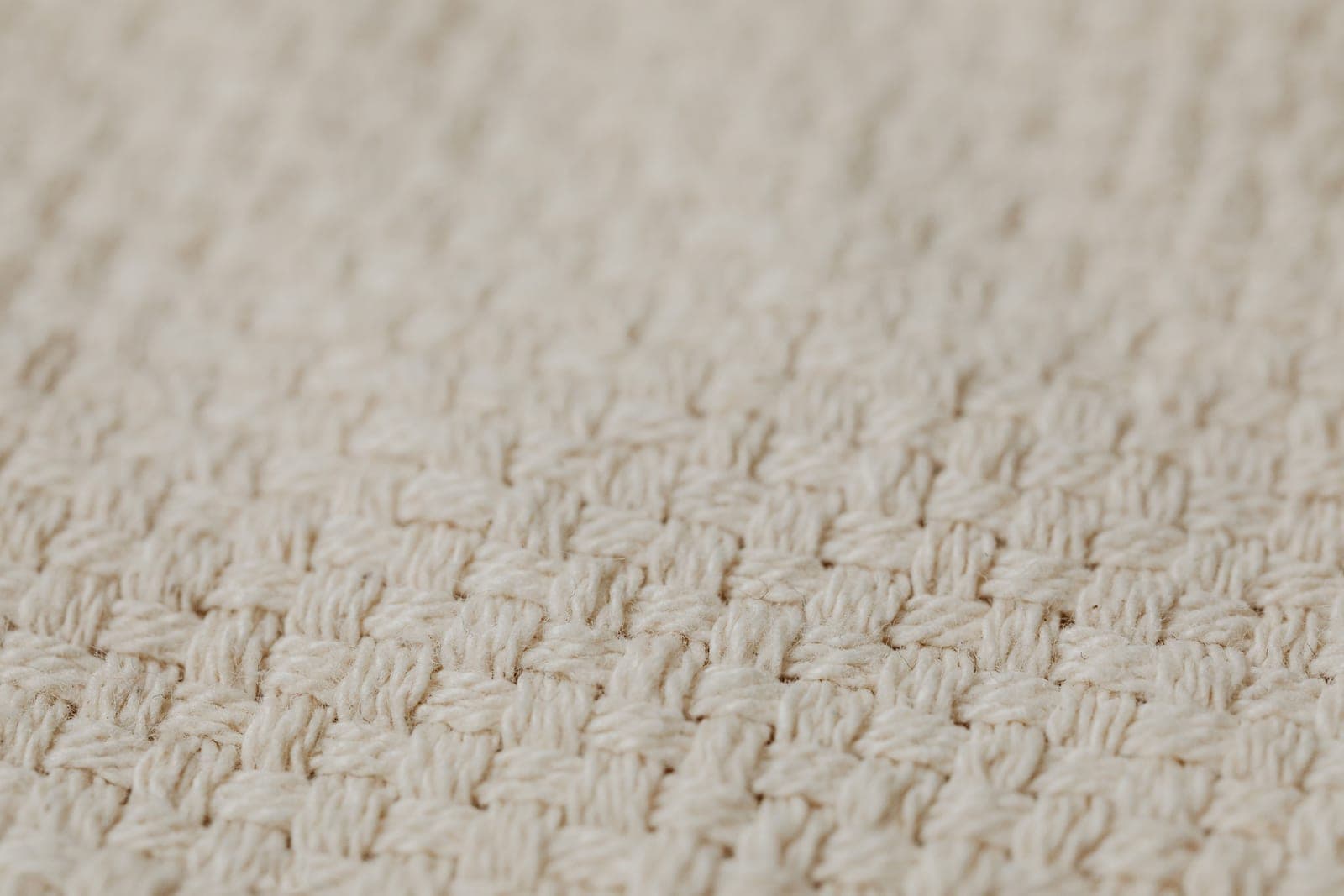
From these three come many derivatives. Basket weave is a plain-weave variation grouping yarns in pairs. Herringbone and houndstooth are twill variations. Beyond the basics lie the fancy weaves — dobby (small geometric patterns), jacquard (large intricate woven designs like brocade and damask), and pile weaves (velvet, corduroy, terry towelling). Each needs specific loom capability, which is why a mill's loom set determines what it can make.
Why the weave matters beyond the fabric
The weave is not just an appearance choice; it drives production. Different weaves need different loom setups and, for complex weaves, different looms entirely — a jacquard needs a jacquard loom. The weave affects yarn consumption, weaving speed and defect profile: satin floats snag, twills show certain faults, plain weave is the most forgiving. It also links to fabric type and end use, so a mill quoting an order needs to know it has the loom capacity for that weave at that width. The weaving process itself sits downstream of these choices.
How ERP handles weave and loom planning
A weaving ERP ties the weave and construction to the loom and the order. Each fabric quality carries its construction (weave, warp and weft counts, ends and picks per inch, width), so quoting and consumption are accurate rather than guessed. Orders are planned against looms that can actually make that weave, and production planning sequences work to match loom capability and cut changeovers. Fabric is inspected and defects captured by weave-specific fault types. This is the manufacturing discipline of the textile ERP platform, applied to the weaving floor.
Three basic weaves — plain, twill, satin — and their derivatives account for nearly every woven fabric made. Knowing them is not academic: it is what lets a mill quote a construction accurately, plan the right loom, and predict the fabric's behaviour. If your loom planning is done by feel and construction data lives in a supervisor's head, that is where errors and missed capacity hide, and you can see how construction and loom planning work with your own fabrics.
Frequently Asked Questions
What are the three basic types of weaving?
Plain weave (weft over one warp and under the next, alternating — strong, stable, reversible, makes poplin, shirting, canvas), twill weave (weft over and under in a staggered progression giving a diagonal line — durable, makes denim, gabardine, chino), and satin weave (warp or weft floats over several yarns — smooth and lustrous but less durable, makes satin and sateen). Most woven fabrics are variations of these three.
Why does the type of weave matter in production?
The weave drives how the fabric is made: different weaves need different loom setups, and complex weaves like jacquard need specific looms. The weave affects yarn consumption, weaving speed and the defect profile. So a mill quoting an order must know it has the loom capacity for that weave at that width — which is why construction data needs to be structured, not held in someone's head.
What are fancy weaves?
Fancy weaves go beyond the three basics: dobby weaves make small geometric patterns, jacquard weaves make large intricate designs like brocade and damask, and pile weaves make velvet, corduroy and terry towelling. Each needs specific loom capability, so a mill's loom set determines which fabrics it can produce.
Vastra ERP Editorial Team
Textile Technology Experts
Our editorial team brings decades of combined experience in textile manufacturing, supply chain management, and enterprise technology. We publish in-depth guides, industry analysis, and practical insights for textile professionals worldwide.