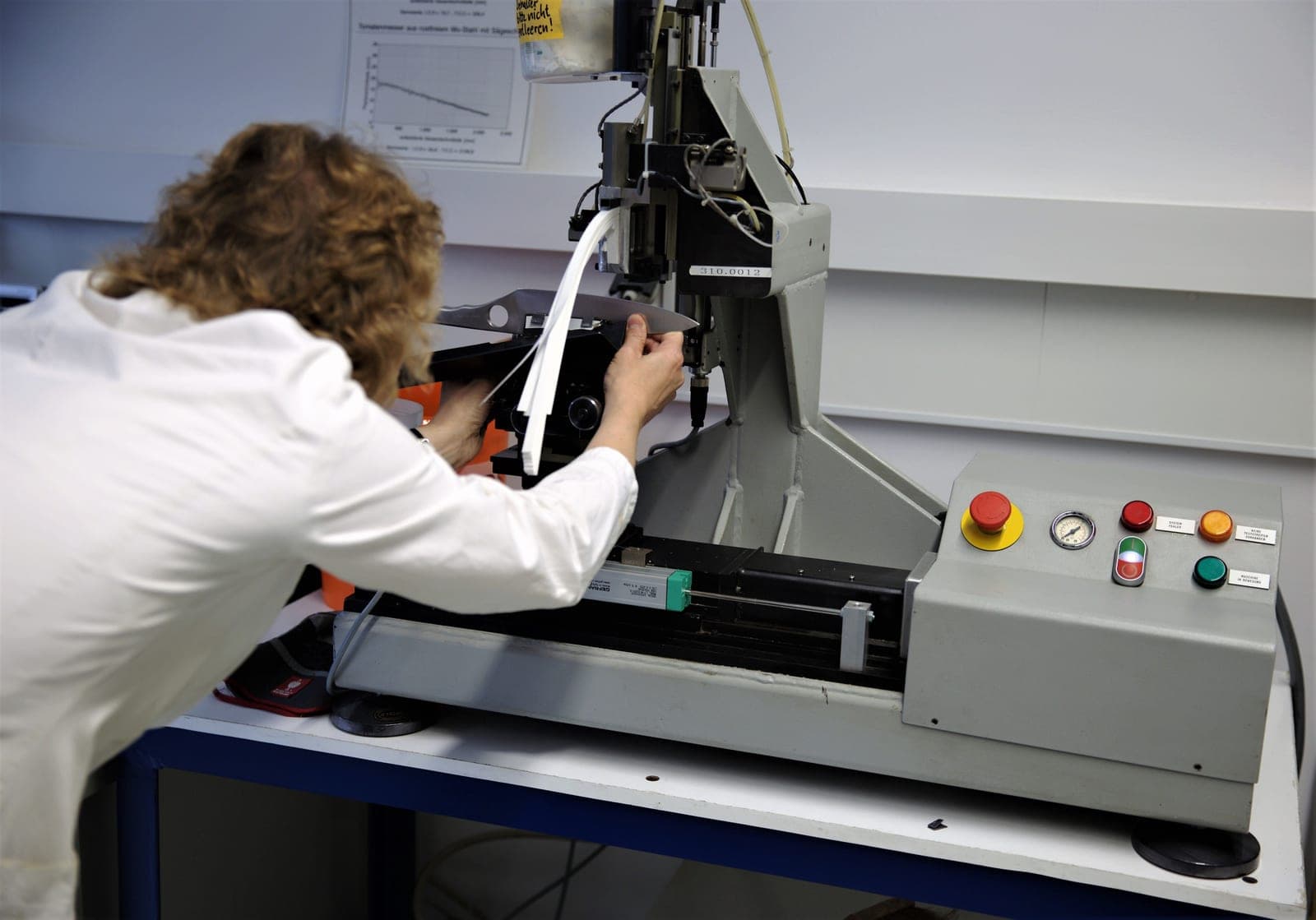
Every time a buyer accepts a fabric, they are trusting that it will do what it is supposed to — hold its colour, keep its shape, survive wear, meet its weight. That trust is not blind; it rests on textile testing, the battery of standardised checks that turn 'this seems like a good fabric' into 'this fabric meets these specified, measured properties'. Testing is the language in which quality is agreed between makers and buyers, and a fabric business that tests well and records what it finds carries a real advantage. This guide covers the main textile tests and why the data they produce matters as much as the tests themselves.
Physical and dimensional tests
A core group of tests measures the fabric's physical properties. **Weight** — the GSM, the most-quoted single number. **Strength** — tensile and tear strength, how much force the fabric withstands. **Dimensional stability** — shrinkage on washing, the residual shrinkage that decides whether garments keep their size. **Construction** — ends and picks per inch (thread count), which verifies the fabric matches its specification. These establish that the fabric is physically what it claims to be, at the weight, strength and stability agreed.
Colour and appearance tests
A second group tests colour and surface. **Colourfastness** — resistance of the colour to washing, rubbing (crocking), light and perspiration, so the dye does not bleed, fade or transfer. This is one of the most common causes of buyer rejection, because a colour that runs ruins garments and other items washed with them. **Pilling** — resistance to the little balls of fibre that form with wear. **Appearance after washing** — whether the fabric stays smooth or distorts. These verify that the fabric will look right not just new, but after use.
Why testing is really about data
Running a test produces a result, but the value is in what happens to that result. A test figure recorded against the roll and lot becomes evidence: proof to a buyer that the fabric meets specification, a defensible record if a dispute arises, and — captured across many lots — a dataset that reveals trends. Is GSM drifting on a particular machine? Is colourfastness weaker from a particular dye batch? A test result written on a slip and filed answers only 'did this roll pass'; the same result captured as data answers 'is our process staying in control'. Testing without capturing the data throws away most of its worth.
How ERP turns testing into quality intelligence
A textile ERP holds test results as structured data against rolls and lots in the quality control module. That means a fabric's compliance can be evidenced to a buyer, a defect or complaint can be traced to the batch and its test figures, and trends across machines, shifts and suppliers become visible so a drifting process is caught early. It ties testing to the rest of production on the textile ERP platform, so a test is not an isolated checkpoint but part of a connected quality picture.
Where AI helps
AI supports testing mainly through the data it produces: with test results captured across many lots, analytics can flag the drift patterns and correlations a human reviewing individual slips would miss — the machine trending toward low GSM, the dye batch with weak fastness. Document AI also reads external lab reports and buyer test specifications into the system accurately, so third-party results join the same dataset. The tests themselves are done on instruments to standards; AI makes the accumulated results a source of quality intelligence rather than a filing cabinet.
Textile testing is how fabric quality stops being an opinion and becomes a set of measured, agreed facts — and capturing those facts as data is what turns testing from a pass/fail gate into a way of keeping the whole process in control. A fabric business that tests and records well can prove its quality, trace its problems and catch its drift; one that tests and files cannot. If your test results live on slips in a drawer, that is quality intelligence going to waste, and you can see how test data drives quality with your own fabrics.
Frequently Asked Questions
What are the main textile tests?
They fall into two groups. Physical and dimensional tests: weight (GSM), tensile and tear strength, dimensional stability (shrinkage), and construction (ends and picks per inch). Colour and appearance tests: colourfastness (to washing, rubbing, light and perspiration), pilling resistance, and appearance after washing. Together they verify the fabric is physically and visually what it claims to be, new and after use.
Why is colourfastness testing important?
Because a colour that runs, fades or transfers ruins the garment and anything washed with it, making poor colourfastness one of the most common causes of buyer rejection. Colourfastness testing measures the colour's resistance to washing, rubbing (crocking), light and perspiration, verifying the dye will hold up in real use rather than just looking right when new.
Why does capturing test data matter, not just running tests?
Because a test result recorded against the roll and lot becomes evidence of compliance to a buyer, a defensible record in a dispute, and — across many lots — a dataset revealing trends (GSM drifting on a machine, weak fastness from a dye batch). A result written on a slip and filed only answers 'did this roll pass'; captured as data it answers 'is our process staying in control'.
Vastra ERP Editorial Team
Textile Technology Experts
Our editorial team brings decades of combined experience in textile manufacturing, supply chain management, and enterprise technology. We publish in-depth guides, industry analysis, and practical insights for textile professionals worldwide.