For centuries velvet has been the fabric of thrones, robes and finery — its deep, soft pile and the way its colour shifts as light catches it have made it a byword for luxury. But velvet is not defined by its fibre or its use; it is defined by its structure. Velvet is a pile fabric, and the classic way of making it is one of the cleverest tricks in weaving. This guide explains what velvet is, how it is made, and the varieties you will encounter.
What velvet is
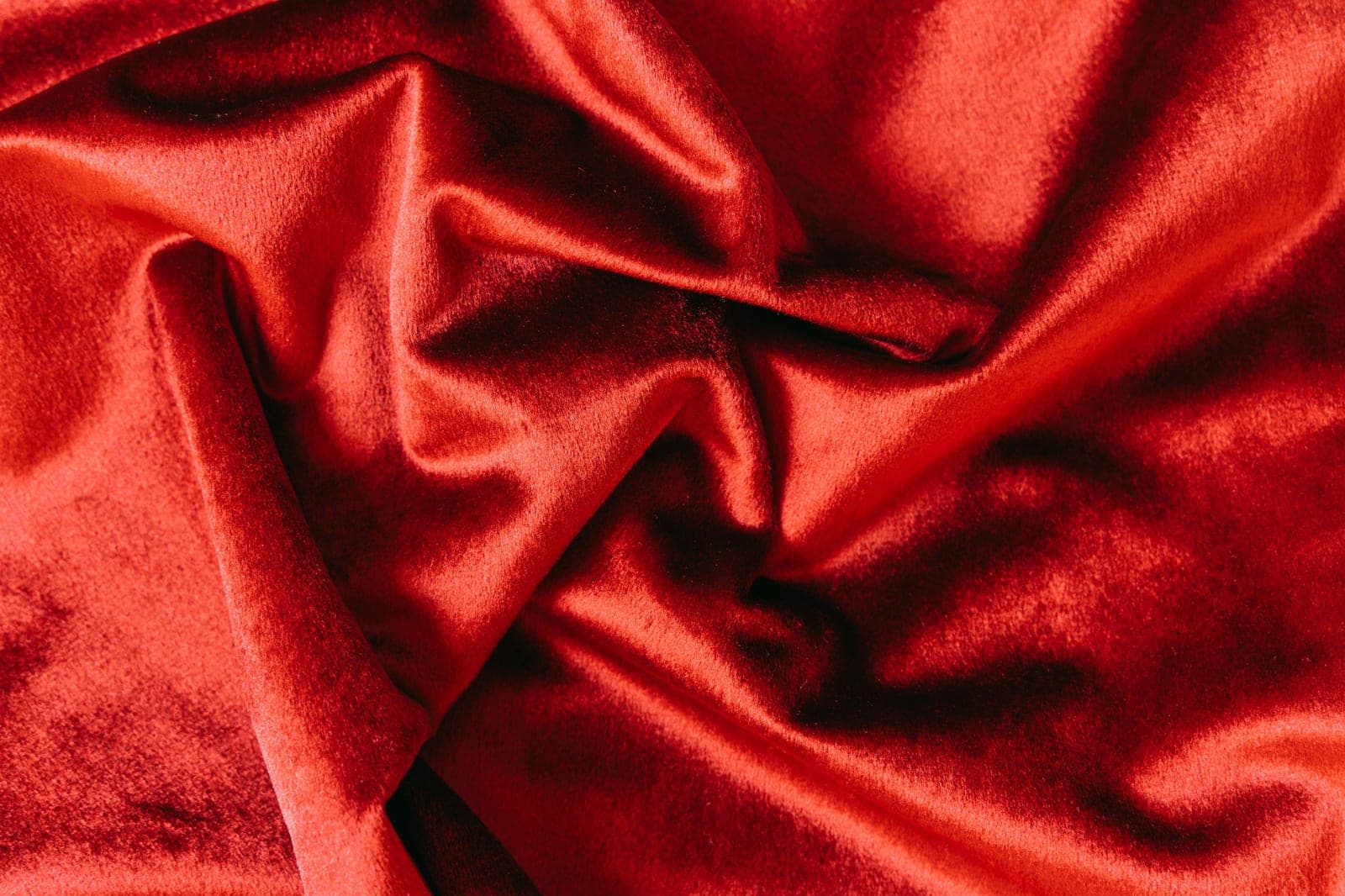
Velvet is a woven pile fabric — a fabric with a dense layer of short, upright fibres (the pile) standing up from a woven base. It is that pile, cut and standing vertically, that gives velvet its soft hand, its depth, and its characteristic sheen that changes with the direction of the light and the nap. Velvet is distinct from velveteen (a similar pile fabric made on the weft rather than the warp, usually in cotton) and from velour (a knitted pile fabric). Traditionally velvet was silk; today it is made in cotton, synthetics and blends.
How velvet is woven
The ingenious classic method is double-cloth weaving. Two layers of backing fabric are woven at the same time, one above the other, connected by a set of pile warp yarns that pass between them. A blade then slices through those connecting yarns down the middle, separating the two layers — and the cut yarns spring up as the pile on each. In one pass, two pieces of velvet are made. Other methods use wires to form and cut loops, and some pile fabrics are made by other routes, but the double-cloth cut is the classic that captures why velvet is special: the pile is woven in, not glued or flocked on.
The types of velvet
Velvet comes in many forms. **Crushed velvet** has the pile pressed in varying directions for a lustrous, patterned shimmer. **Panne velvet** is crushed in one direction for a high sheen. **Devoré (burnout) velvet** uses chemicals to dissolve pile in a pattern, leaving sheer areas. **Embossed velvet** is heat-pressed with a design. **Stretch velvet** blends in elastane. Each variety is a different treatment of the same essential pile structure, for different looks and uses from apparel to upholstery.
How ERP handles velvet production
Velvet is a premium, technically demanding fabric, and a business making it benefits from tracking it precisely. A textile ERP holds velvet's construction and pile specification as structured data, ties the demanding production (the pile weaving and cutting) to orders, captures the higher yarn consumption that pile requires so costing is accurate, and tracks the quality issues specific to pile fabrics (pile direction, crush marks, evenness). It gives a premium-fabric maker the operational grip of the textile ERP platform on a product where quality and cost both matter greatly.
Velvet is a pile fabric — its luxury comes from a dense layer of cut fibres standing up from a woven base, made in the classic case by weaving two layers and slicing them apart. That structure explains its softness, its shifting sheen, and its many varieties. For a business, tracking this demanding premium fabric precisely protects its quality and margin, and you can see how premium-fabric production is managed with your own qualities.
Frequently Asked Questions
What is velvet fabric?
Velvet is a woven pile fabric — a fabric with a dense layer of short, upright cut fibres (the pile) standing up from a woven base. That standing pile gives velvet its soft hand, depth and the characteristic sheen that shifts with the direction of light and nap. It is distinct from velveteen (a weft-pile fabric, usually cotton) and velour (a knitted pile fabric).
How is velvet made?
The classic method is double-cloth weaving: two layers of backing fabric are woven at once, one above the other, connected by pile warp yarns passing between them. A blade slices through those connecting yarns down the middle, separating the layers, and the cut yarns spring up as pile on each — making two pieces of velvet in one pass. The pile is woven in, not glued or flocked on.
What are the types of velvet?
Crushed velvet (pile pressed in varying directions for a shimmering pattern), panne velvet (crushed one way for high sheen), devoré or burnout velvet (chemicals dissolve pile in a pattern for sheer areas), embossed velvet (heat-pressed with a design), and stretch velvet (blended with elastane). Each is a different treatment of the same essential pile structure.
Vastra ERP Editorial Team
Textile Technology Experts
Our editorial team brings decades of combined experience in textile manufacturing, supply chain management, and enterprise technology. We publish in-depth guides, industry analysis, and practical insights for textile professionals worldwide.