Run your hand over a piece of brocade, a damask tablecloth, or a traditional Banarasi silk, and you will feel something a printed fabric can never offer: the pattern is not on the surface, it is in the cloth. That is jacquard fabric, and it represents one of the highest expressions of the weaver's art — intricate designs woven directly into the material, thread by thread. It is also a demanding, high-value business to be in. This guide explains what jacquard fabric is, how the remarkable loom that makes it works, and what producing it asks of a mill.
What jacquard fabric is
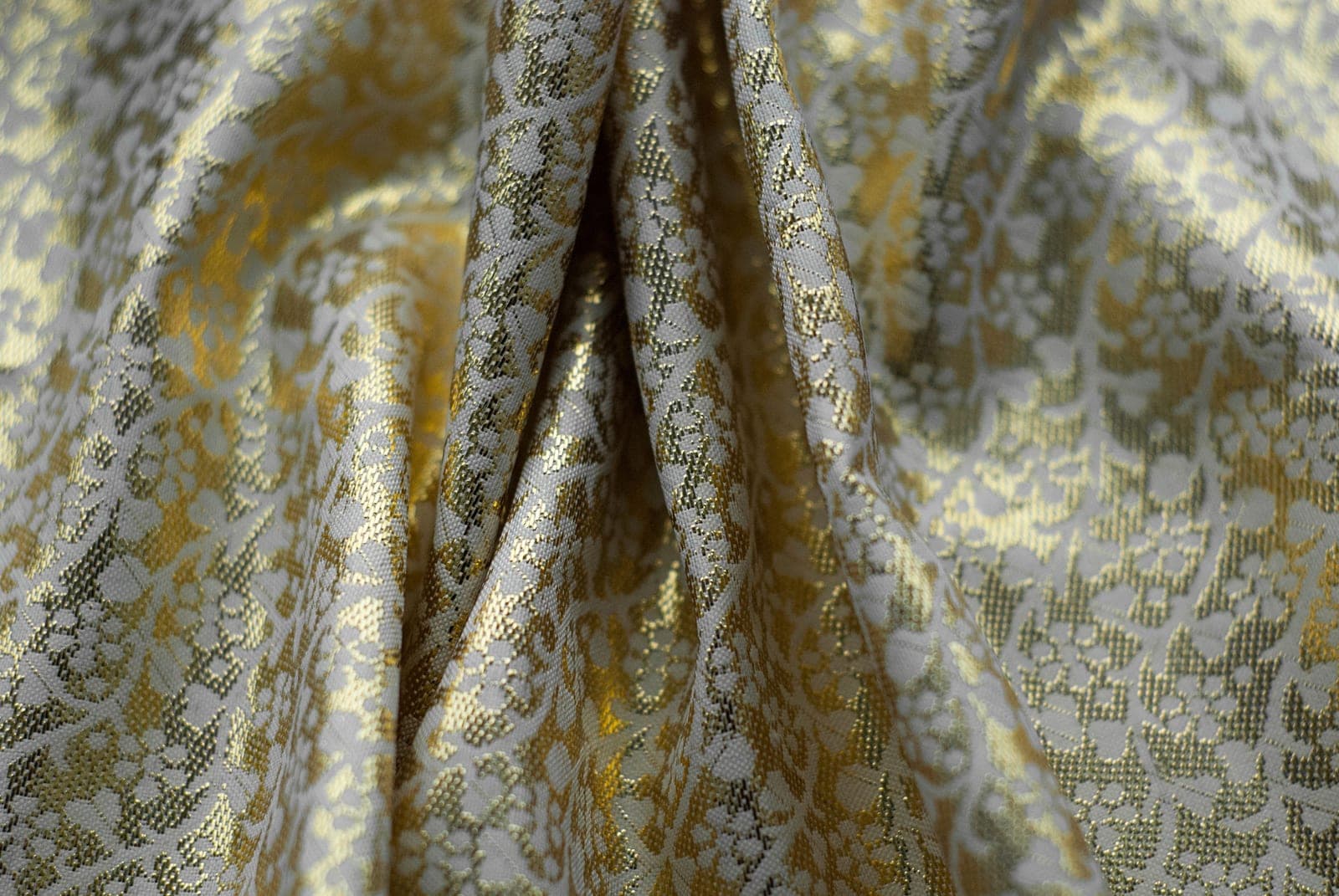
Jacquard fabric is not a single material but any fabric in which a complex pattern is woven directly into the cloth using a jacquard loom, rather than printed or dyed onto a plain fabric afterward. Because the design is created by the weave structure itself — raising and lowering individual warp threads in an intricate sequence — jacquard patterns are typically detailed, often reversible, and have a richness of texture no print can match. Common jacquard fabrics include brocade (often with metallic threads), damask (a reversible figured fabric), matelassé (a quilted-looking double cloth), and much of India's celebrated silk weaving tradition.
How the jacquard loom works
What makes jacquard possible is a loom that can control every single warp thread independently. On an ordinary loom, warp threads are raised in groups by a few harnesses, which limits patterns to simple, repeating structures. The jacquard mechanism — invented by Joseph Marie Jacquard in 1804, and famously an ancestor of the punched-card computer — instead controls each warp thread on its own, so any thread can be raised or lowered on any pick. That independent control is what allows the huge, non-repeating, pictorial designs jacquard is known for. Modern jacquard looms are electronically controlled, with the design loaded as a digital file rather than punched cards, but the principle is unchanged.
Why jacquard is a demanding business
Producing jacquard fabric is more complex and higher-value than plain weaving, and that cuts both ways. Designs must be developed and converted into the loom's control file — a specialised skill. Setup is involved, and looms are expensive and slower on intricate designs. Yarn consumption and cost vary with the complexity of the pattern. And because jacquard sits at the premium end, quality expectations and the cost of a defective run are both high. A jacquard mill lives on design capability, careful production and accurate costing of a product whose cost is genuinely design-dependent.
How ERP handles jacquard production
A weaving ERP helps a jacquard mill manage exactly the things that make jacquard hard. Each jacquard quality carries its design, construction and the loom capability it needs, so orders are quoted and planned against looms that can actually produce that design. Yarn consumption — which varies by design complexity — is captured against the fabric so costing reflects the real, design-dependent cost rather than a flat estimate. Production is scheduled to manage the longer setups and slower speeds of intricate work, and quality is tracked against the premium standard the product demands. It is the weaving discipline of the textile ERP platform, tuned for figured-fabric production.
Where AI helps
AI supports jacquard where design and data meet. On the design side, AI tools are increasingly used to help generate and adapt patterns and convert artwork toward the loom file, speeding a traditionally slow, skilled step (while designers still refine the result). On the production side, computer vision inspects intricate woven designs for the weaving faults a premium fabric cannot carry, and analytics on captured consumption data help cost design complexity accurately. The weaving artistry remains central; AI assists the design conversion and protects the quality and costing around it.
Jacquard fabric is where weaving becomes art — the pattern built into the cloth by a loom that controls every thread. Producing it profitably means mastering design conversion, planning demanding looms, and costing a product whose cost genuinely depends on its design. A jacquard mill that manages those as connected data competes on the premium quality buyers pay for; one that runs on memory struggles with exactly the complexity that makes jacquard valuable. If that is your business, you can see how figured-fabric production is managed with your own designs and looms.
Frequently Asked Questions
What is jacquard fabric?
Jacquard fabric is any fabric in which a complex pattern is woven directly into the cloth using a jacquard loom, rather than printed or dyed onto plain fabric afterward. Because the design is created by the weave structure itself, jacquard patterns are detailed, often reversible, and richly textured. Common examples include brocade, damask, matelassé and traditional Indian silks like Banarasi.
How does a jacquard loom work?
A jacquard loom can control every single warp thread independently, unlike an ordinary loom that raises threads in groups by a few harnesses. The jacquard mechanism — invented by Joseph Marie Jacquard in 1804 and an ancestor of the punched-card computer — lets any warp thread be raised or lowered on any pick, enabling the huge, non-repeating pictorial designs. Modern versions are electronically controlled from a digital design file.
Why is jacquard fabric production demanding?
Because it is more complex and higher-value than plain weaving: designs must be developed and converted into the loom's control file (a specialised skill), setup is involved, looms are expensive and slower on intricate designs, yarn consumption and cost vary with pattern complexity, and quality expectations are high at the premium end. A jacquard mill lives on design capability, careful production and design-dependent costing.
Vastra ERP Editorial Team
Textile Technology Experts
Our editorial team brings decades of combined experience in textile manufacturing, supply chain management, and enterprise technology. We publish in-depth guides, industry analysis, and practical insights for textile professionals worldwide.