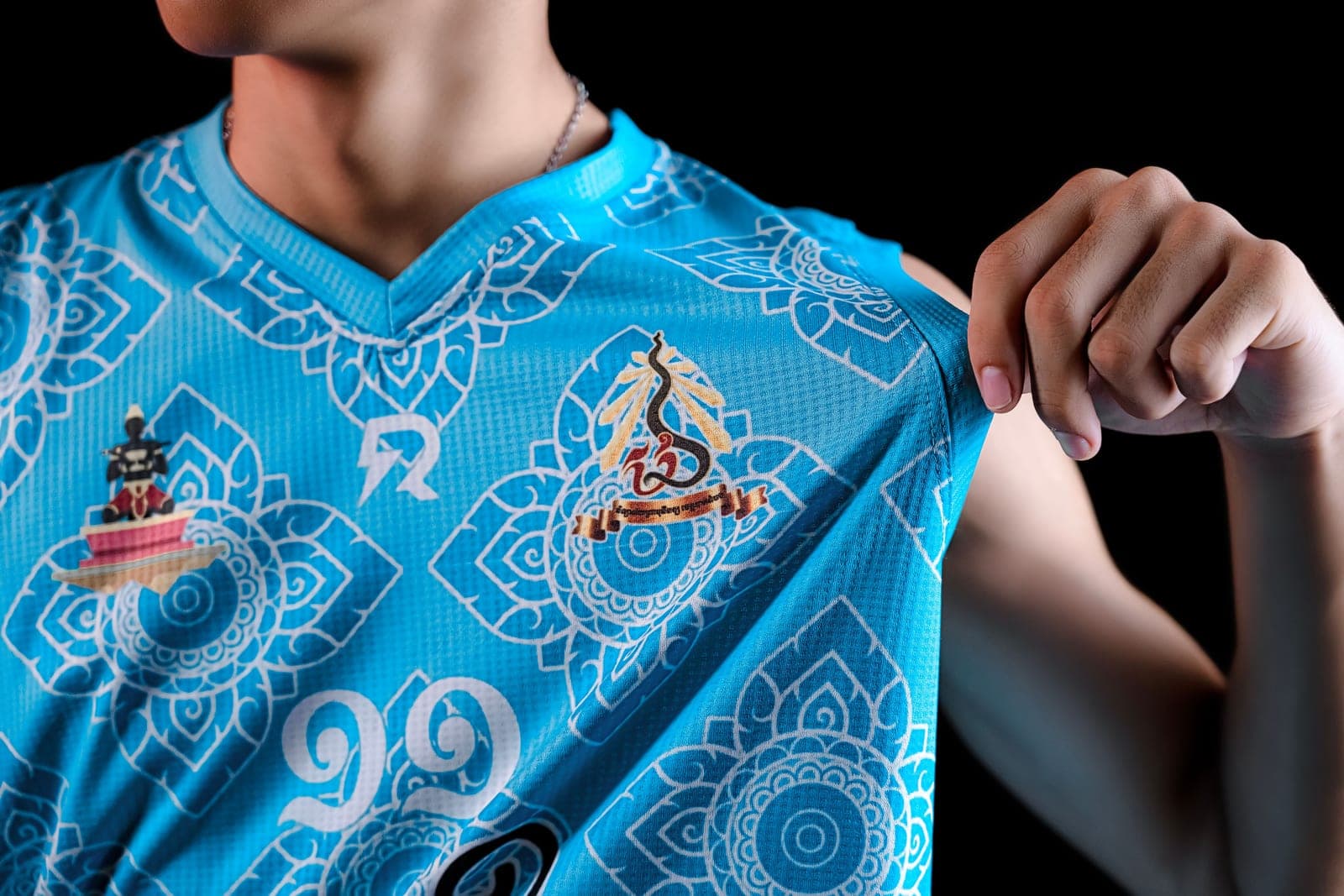
Look at a modern sports jersey — the all-over pattern that runs seamlessly across the whole garment, feels like nothing on the surface, and never cracks or peels no matter how many washes it survives. That is dye sublimation printing, and it works in a way quite unlike any other printing method: the ink does not sit on the fabric, it becomes part of it. Sublimation has reshaped whole categories of printed textiles, and understanding it — including its real limits — matters for anyone in the printing business. This guide explains how it works and where it fits.
How sublimation printing works
Sublimation exploits a piece of physics: certain dyes, when heated, turn directly from a solid into a gas without passing through a liquid stage (that is what 'sublimation' means). In practice, the design is first printed with special sublimation inks onto a transfer paper. The paper is placed against the polyester fabric and passed through a heat press at high temperature. The heat turns the dye to gas, which penetrates the surface of the polyester fibres and, as it cools, solidifies inside them. The colour is now bonded within the fibre, not layered on top — which is why sublimation prints do not crack, peel or fade the way surface prints can.
What sublimation is best and worst at
Sublimation's strengths are specific and strong: vivid, photographic, unlimited-colour designs; all-over printing right to the edges and seams; and exceptional durability and soft hand because there is no surface layer. Its limits are equally specific and important to be honest about. It works properly only on polyester (or high-polyester blends) — it will not bond into cotton. And it works only on light-coloured fabric, because the transparent dye cannot show over a dark base. So sublimation is superb for polyester sportswear, banners, flags and soft furnishings, and simply the wrong tool for a cotton T-shirt or a dark garment, where other printing methods are needed.
Where sublimation fits in a printing business
For a printing business, sublimation is one method among several, chosen by the job. Its no-setup, print-on-demand nature makes it ideal for short runs, customised and one-off pieces, and all-over polyester designs — which is why it dominates custom sportswear and personalised goods. A printer offering sublimation manages design files, transfer paper and ink consumption, heat-press scheduling, and quality (registration, colour, any pressing marks). As with every process, the operational reality is throughput, consistency and accurate costing of the service.
How ERP supports sublimation printing
A textile or garment ERP handles sublimation like other value-added processes: orders link to their designs and specifications, ink and paper consumption is captured so the service is costed accurately, production is scheduled across presses, and quality is tracked. Where sublimation is part of making a finished garment, it connects into the wider garment ERP so a printed panel or piece flows into the garment it belongs to, on one platform. The result is that a fast, made-to-order printing operation stays costed and controlled rather than run on feel.
Where AI helps
AI assists sublimation on the business and quality side: document AI reads custom orders and artwork briefs into the system — valuable for an operation handling many small, personalised jobs; computer vision checks printed output for colour and registration consistency; and analytics help cost and schedule a high-mix, made-to-order workload. The printing physics is fixed and reliable; AI helps manage the volume and variety of orders around it.
Sublimation printing bonds colour inside the fibre rather than onto it, which is exactly why it excels at durable, all-over, full-colour polyester printing — and exactly why it cannot print a cotton or dark garment. Knowing that boundary is what lets a printer use it for the right jobs and reach for other methods for the rest. If your printing operation runs a high mix of custom sublimation work, keeping it costed and scheduled is where the margin is protected, and you can see how print production is managed with your own jobs.
Frequently Asked Questions
How does sublimation printing work?
The design is printed with special sublimation inks onto transfer paper, which is placed against polyester fabric and passed through a heat press. The heat turns the dye directly from solid to gas (sublimation), which penetrates the polyester fibres and solidifies inside them as it cools. The colour is bonded within the fibre, not layered on top — which is why sublimation prints don't crack, peel or fade.
What are the limitations of sublimation printing?
It works properly only on polyester or high-polyester blends — it won't bond into cotton — and only on light-coloured fabric, because the transparent dye can't show over a dark base. So it's superb for polyester sportswear, banners, flags and soft furnishings, but the wrong method for a cotton T-shirt or a dark garment, where other printing methods are needed.
What is sublimation printing best used for?
Vivid, photographic, unlimited-colour, all-over designs on light polyester with exceptional durability and a soft hand. Its no-setup, print-on-demand nature makes it ideal for short runs, customised and one-off pieces, which is why it dominates custom sportswear, personalised goods, banners and soft furnishings.
Vastra ERP Editorial Team
Textile Technology Experts
Our editorial team brings decades of combined experience in textile manufacturing, supply chain management, and enterprise technology. We publish in-depth guides, industry analysis, and practical insights for textile professionals worldwide.