Most fabric is made by first spinning fibre into yarn and then weaving or knitting that yarn into cloth. Non-woven fabric skips all of that. It is made by bonding fibres directly into a sheet — no yarn, no loom, no knitting machine — and the result is a whole class of materials you use every day without ever thinking of them as fabric: the surgical mask, the disposable wipe, the geotextile membrane, the interlining inside a shirt collar. Non-wovens are one of the fastest-growing segments of the textile industry, and they run on quite different principles from conventional cloth. This guide explains what they are and where they are used.
What non-woven fabric is
A non-woven fabric is a sheet of fibres bonded together mechanically, chemically or thermally, without being spun into yarn or interlaced by weaving or knitting. The fibres are laid down as a web and then held together — by entangling them, gluing them, or melting them slightly so they fuse. Because it skips the yarn and fabric-formation stages entirely, non-woven production is fast and can be highly automated, which is part of why the category has grown so quickly. The trade-off is that non-wovens are generally less strong and less durable than woven fabrics of the same weight — which is fine, because many of their uses are disposable or single-purpose.
How non-wovens are made
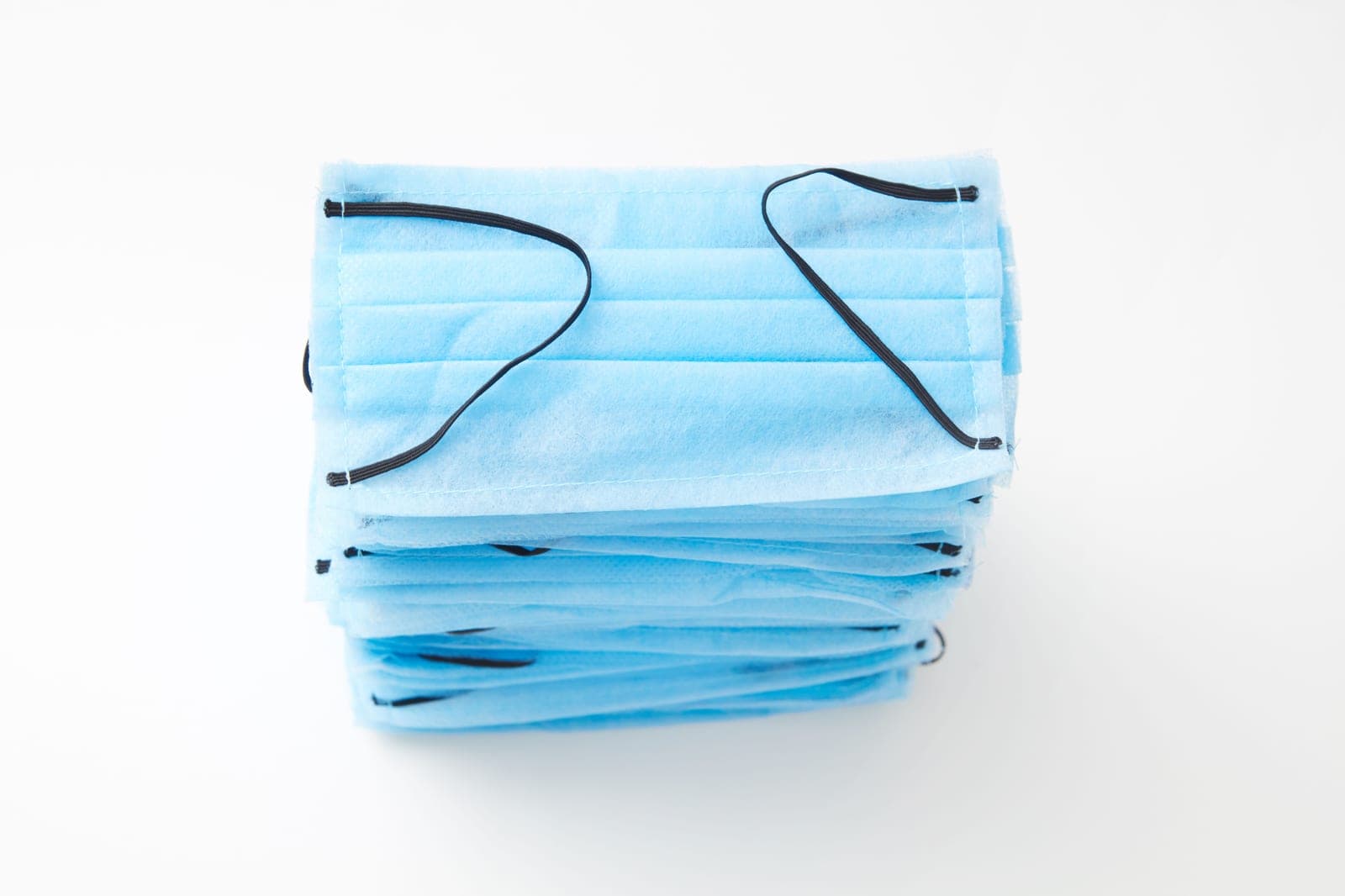
There are several main routes, defined by how the web is formed and bonded. **Spunbond** extrudes continuous filaments directly onto a belt and bonds them — the basis of much medical and hygiene fabric. **Meltblown** blows molten polymer into ultra-fine fibres, creating the fine filtration layer at the heart of face masks. **Spunlace (hydroentanglement)** uses high-pressure water jets to entangle fibres into a soft fabric, common for wipes. **Needle-punch** mechanically entangles fibres with barbed needles, used for heavier fabrics like geotextiles and felt. Each method suits different properties and products.
Where non-wovens are used
The applications span far beyond textiles as normally understood. **Medical and hygiene** — masks, gowns, drapes, wipes, diapers, sanitary products. **Filtration** — air, liquid and industrial filters. **Geotextiles** — soil stabilisation and drainage under roads and structures. **Automotive** — interior trim, insulation. **Construction** — membranes and roofing. **Apparel and home** — interlinings, backings, wadding. Many of these overlap with technical textiles, because non-wovens are frequently engineered for a functional job rather than appearance.
How ERP handles a non-woven business
A non-woven operation is a fast, high-volume, specification-driven manufacturing business, and it needs the ERP to match. Products carry their specification — weight, method, properties — and process parameters are recorded against production so output is controlled and repeatable. High-volume inventory of raw polymer and finished rolls is tracked, quality and test results are held against batches (critical where the product is medical or technical), and consumption is captured so the thin-margin, high-volume economics are managed accurately. It builds on the same fabric fundamentals while reflecting that a non-woven is bonded, not woven, on the textile ERP platform.
Where AI helps
AI supports non-wovens where volume and specification dominate: computer vision inspects the continuous web for defects at speed a human cannot sustain; analytics on process data flag the parameter drift that produces off-spec output before it accumulates in a high-volume run; and document AI reads demanding customer and regulatory specifications in accurately, which matters when the product is medical or technical. The bonding technology delivers the fabric; AI helps keep a fast, high-volume process in specification.
Non-woven fabric is the quiet giant of textiles — made without a single thread of yarn, yet essential to medicine, hygiene, filtration and infrastructure. It is a fast, specification-driven, high-volume business whose economics reward tight process control and traceability. If you make non-wovens and your process and quality data are not fully captured, that is both an efficiency and a compliance gap, and you can see how specification and volume are managed with your own products.
Frequently Asked Questions
What is non-woven fabric?
Non-woven fabric is a sheet of fibres bonded together mechanically, chemically or thermally, without being spun into yarn or interlaced by weaving or knitting. Fibres are laid down as a web and held together by entangling, gluing or melting them. Because it skips yarn and fabric-formation, production is fast and highly automated, though non-wovens are generally less strong than woven fabrics of the same weight.
How is non-woven fabric made?
By several routes defined by how the web is formed and bonded: spunbond (continuous filaments extruded and bonded — much medical/hygiene fabric), meltblown (molten polymer blown into ultra-fine fibres — the filtration layer in masks), spunlace or hydroentanglement (water jets entangle fibres into soft fabric — wipes), and needle-punch (barbed needles entangle fibres — geotextiles and felt).
Where is non-woven fabric used?
In medical and hygiene products (masks, gowns, wipes, diapers, sanitary products), filtration (air, liquid, industrial filters), geotextiles (soil stabilisation and drainage under roads), automotive (trim, insulation), construction (membranes, roofing), and apparel and home (interlinings, backings, wadding). Many uses overlap with technical textiles, as non-wovens are often engineered for a functional job.
Vastra ERP Editorial Team
Textile Technology Experts
Our editorial team brings decades of combined experience in textile manufacturing, supply chain management, and enterprise technology. We publish in-depth guides, industry analysis, and practical insights for textile professionals worldwide.