It is tempting to think of dye as just colour in a bottle, but dyeing is chemistry, and the class of dye used has to match the fibre being coloured. Use the right dye for the fibre and the colour fixes permanently and resists washing and light; use the wrong one and the colour bleeds, fades, rubs off, or never properly fixes at all. That is why an understanding of the main types of dyes is not academic for anyone in the dyeing business — it is the difference between a colour that lasts and a consignment that gets rejected. This guide walks through the main dye classes and what they suit.
Why dye class must match fibre
Different fibres have different chemistry, and a dye colours a fibre by forming a particular kind of bond or association with it. A dye designed to bond with the chemistry of cotton will not properly fix onto polyester, and vice versa. So the first rule of dyeing is that the dye class is chosen for the fibre — and for blended fabrics containing two fibres, two dye classes (and two dyeing steps) are often needed. Getting this match right is the foundation of colourfastness; getting it wrong is a built-in defect no amount of process control can fix.
The main dye classes
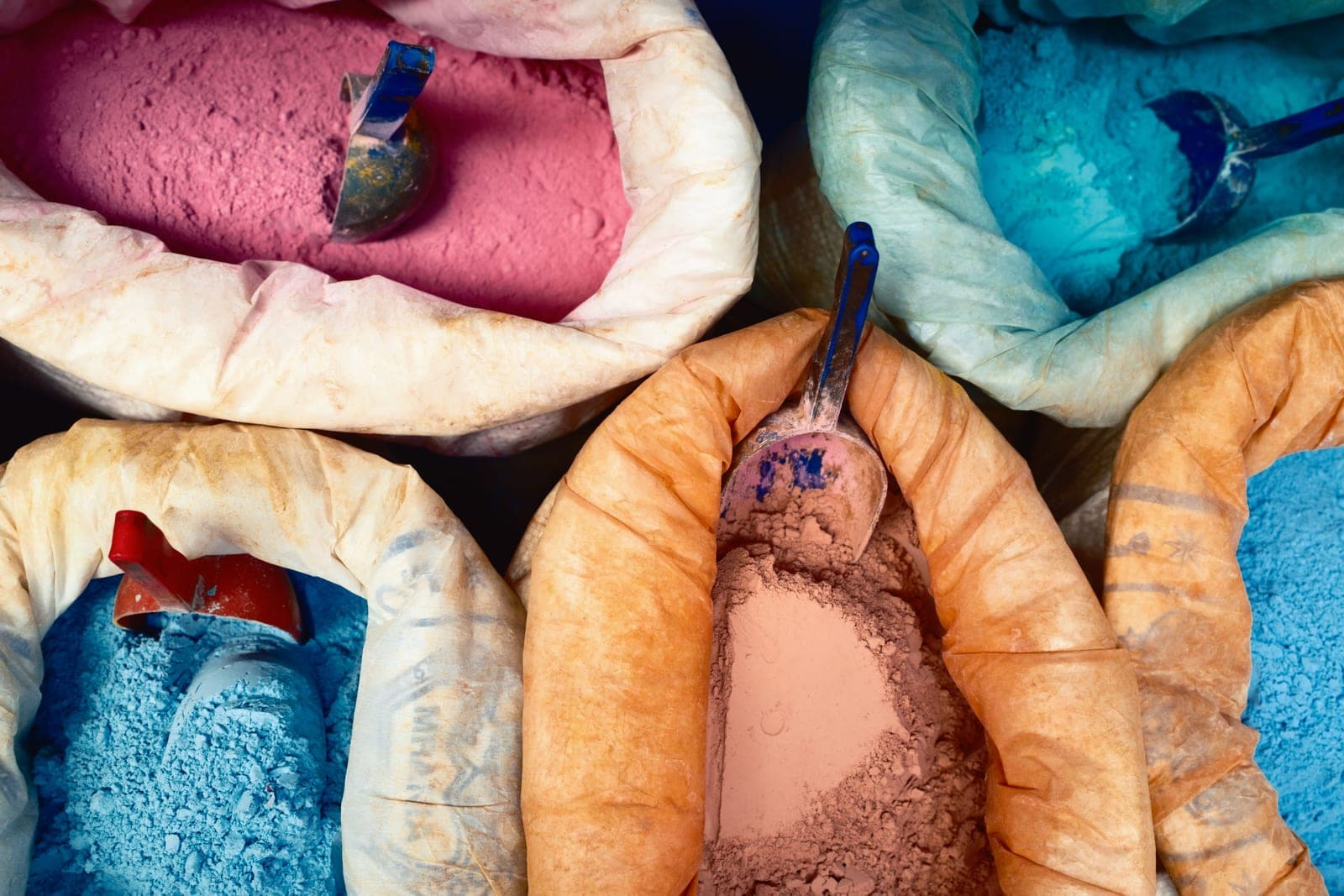
**Reactive dyes** form a strong chemical bond with cellulosic fibres (cotton, viscose, linen), giving excellent colourfastness and bright shades — the workhorse for cotton. **Direct dyes** also colour cellulosics and are simple and cheap, but with poorer wash-fastness. **Vat dyes** (including indigo, the colour of denim) are highly fast to washing and light and used where durability matters, though the process is more complex. **Disperse dyes** are the class for polyester and other synthetics, which most other dyes cannot colour. **Acid dyes** colour protein fibres (wool, silk) and nylon. **Sulphur dyes** give cheap, deep shades (like blacks) on cotton with good fastness. And **pigments**, strictly not dyes, are bound to the surface (as in much printing) rather than penetrating the fibre.
Why dye choice is a quality and cost decision
Dye class affects far more than colour. It determines colourfastness — how well the colour survives washing, rubbing and light, which is one of the most common causes of buyer rejection. It affects cost — dye classes differ significantly in price, and the choice trades off fastness against economy. It affects the process — different dyes need different temperatures, chemicals and times, which affects productivity and effluent. And it affects shade matching, since the same target colour is reached differently in different dye classes. So the dye decision ripples through quality, cost and process at once.
How ERP supports dye management
A textile dyeing ERP treats the dye as structured data, not just a line in a recipe. Dye classes and specific dyes are held in a controlled master; recipes tie the right dye to the fibre and shade and are reused for consistency; dye consumption is captured against batches so cost per shade is real; and test results for colourfastness are recorded, so the dye-fibre match is validated, not assumed. This is the dyeing and quality discipline of the textile ERP platform, which keeps colour a controlled, costed, traceable outcome.
Types of dyes are not interchangeable colours but distinct chemistries, each matched to particular fibres — and choosing correctly is what makes colour permanent, fast and economical rather than a defect waiting to appear. For a dyeing business, treating dye choice as the quality and cost decision it is, and recording recipes and fastness results against it, is what turns colour from a gamble into a controlled outcome. If colour-fastness rejections recur in your business, the dye-fibre match and its records are where to look, and you can see how dye recipes and results are managed with your own shades.
Frequently Asked Questions
What are the main types of dyes used in textiles?
Reactive dyes (strong bond with cotton and cellulosics, excellent fastness), direct dyes (cheap on cellulosics but poorer wash-fastness), vat dyes (very fast, including indigo for denim), disperse dyes (for polyester and synthetics), acid dyes (for wool, silk and nylon), sulphur dyes (cheap deep shades like blacks on cotton), and pigments (bound to the surface, as in printing, rather than penetrating the fibre).
Why must the dye class match the fibre?
Because a dye colours a fibre by forming a particular bond or association with its chemistry — a dye designed for cotton won't properly fix onto polyester, and vice versa. So the dye class is chosen for the fibre, and blended fabrics often need two dye classes and two dyeing steps. Getting this match right is the foundation of colourfastness; getting it wrong is a built-in defect no process control can fix.
How does dye choice affect quality and cost?
It determines colourfastness (survival of washing, rubbing and light — a common cause of rejection), affects cost (dye classes differ significantly in price, trading fastness against economy), affects the process (different temperatures, chemicals, times and effluent), and affects shade matching (the same colour is reached differently in different classes). So the dye decision ripples through quality, cost and process at once.
Vastra ERP Editorial Team
Textile Technology Experts
Our editorial team brings decades of combined experience in textile manufacturing, supply chain management, and enterprise technology. We publish in-depth guides, industry analysis, and practical insights for textile professionals worldwide.