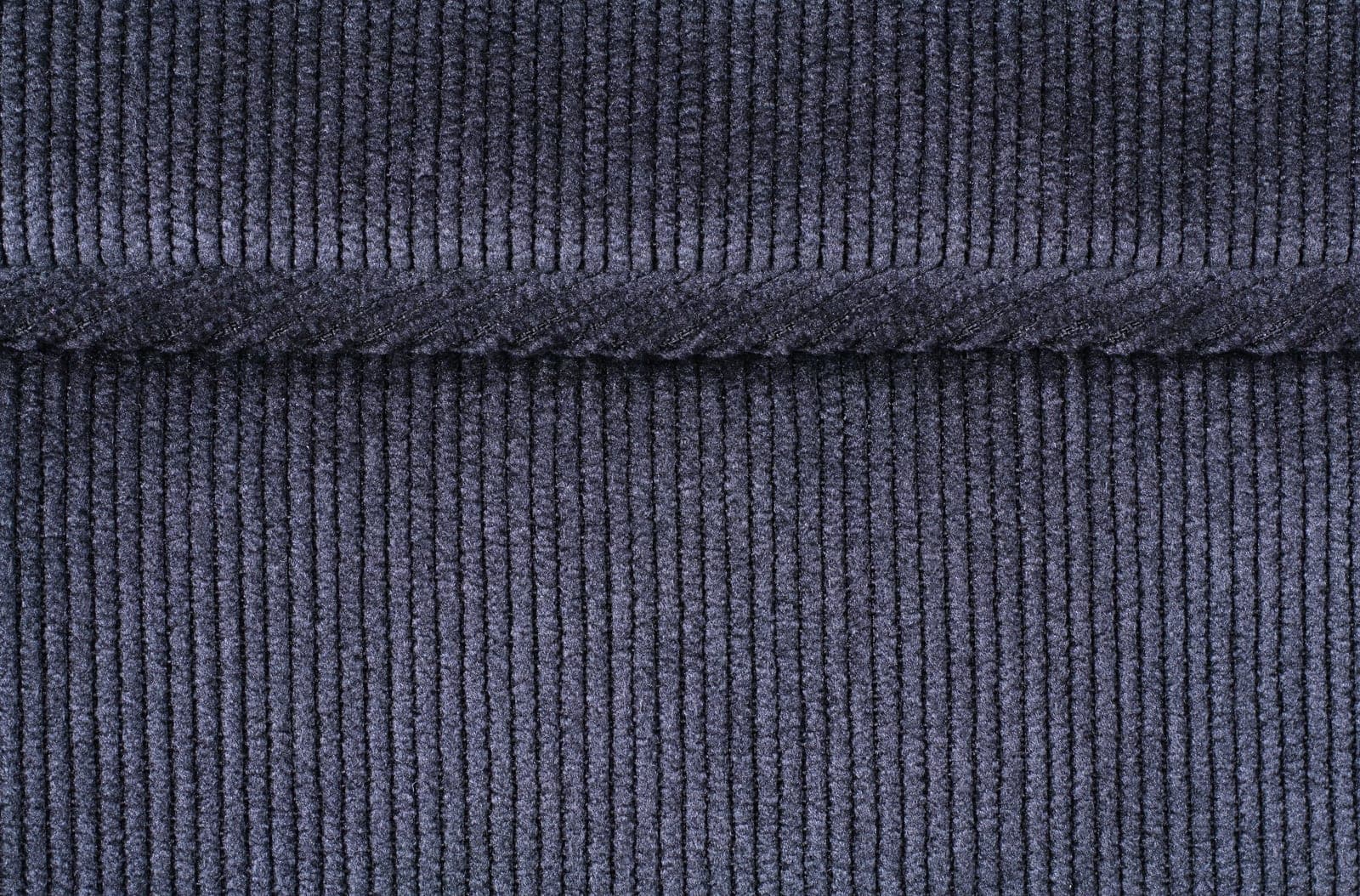
Run your fingers across a pair of corduroy trousers and you feel them immediately: the soft, raised ridges running down the fabric, and the valleys between. Those ridges — called wales — are corduroy's signature, and they are not a surface print or a simple texture but the result of the same pile-fabric technique that makes velvet. Corduroy is a hard-wearing, warm, distinctive cloth that cycles reliably in and out of fashion, and understanding how it is made explains both its durability and its character. This guide covers corduroy.
What corduroy is
Corduroy is a cut-pile fabric in which the pile is arranged into parallel ridges — the wales — running along the length of the fabric, separated by channels where the base fabric shows. Structurally it is related to velvet: extra pile yarns are woven into a base fabric and then cut, but in corduroy the cut pile is organised into these distinct raised cords rather than an even all-over pile. Traditionally cotton (often with a twill or plain base), corduroy is now also made in blends. The tufted ridges give it warmth, softness and a rugged, textured look.
How the ridges are made
The wales are created by weaving floats of extra weft yarn over the base fabric in aligned rows, then cutting those floats. When the cut fibres are brushed up, they form the raised, rounded pile cords — the wales — while the uncut base between them forms the valleys. The whole fabric is then brushed and finished to raise and even the pile. So the ridges are woven and cut into the fabric, which is why they are durable and integral rather than a fragile surface effect.
What wale count means
Corduroy is graded by its wale count: the number of ridges (wales) per inch across the fabric. A low wale count (say 1.5 to 6 wales per inch) means wide, chunky ridges — the bold, heavy corduroy of jackets and upholstery. A high wale count (16 or more) means fine, narrow ridges — 'pinwale' or 'needlecord', a lighter, finer fabric for shirts and children's wear. Standard corduroy sits around 11 wales per inch. Wale count is to corduroy what count is to yarn — the key specification that defines the product.
How ERP handles corduroy
Corduroy is a specific, spec-driven pile fabric, and a business making it tracks its wale count, base construction and pile alongside the usual fabric attributes. A textile ERP holds these as structured data so the exact corduroy is defined, ties the pile weaving and cutting to production, captures the higher yarn consumption of a pile fabric for accurate costing, and tracks pile-specific quality. As with velvet, it gives a maker of a textured, premium-ish fabric the operational control of the textile ERP platform.
Corduroy's ridges are a woven-and-cut pile organised into wales — durable, warm and integral to the fabric, not a surface effect — and the wale count is the specification that defines any given corduroy. That structure is why cords wear so well and feel so distinctive. For a business, capturing wale count and construction precisely keeps the product defined and costed, and you can see how a spec-driven fabric is managed with your own qualities.
Frequently Asked Questions
What is corduroy fabric?
Corduroy is a cut-pile fabric in which the pile is arranged into parallel ridges — called wales — running along the fabric's length, separated by channels where the base shows. It is structurally related to velvet (extra pile yarns woven in and cut), but the cut pile is organised into distinct raised cords rather than an even all-over pile. It is traditionally cotton and gives warmth, softness and a rugged texture.
How are corduroy's ridges made?
The wales are created by weaving floats of extra weft yarn over the base fabric in aligned rows, then cutting those floats. When the cut fibres are brushed up they form the raised, rounded pile cords (wales), while the uncut base between them forms the valleys. The fabric is then brushed and finished to raise and even the pile — so the ridges are woven and cut in, making them durable and integral.
What is wale count in corduroy?
Wale count is the number of ridges (wales) per inch across the fabric — the key specification defining a corduroy. Low wale counts (about 1.5–6 per inch) give wide, chunky ridges for jackets and upholstery; high counts (16 or more) give fine narrow ridges — pinwale or needlecord — for shirts and children's wear. Standard corduroy is around 11 wales per inch.
Vastra ERP Editorial Team
Textile Technology Experts
Our editorial team brings decades of combined experience in textile manufacturing, supply chain management, and enterprise technology. We publish in-depth guides, industry analysis, and practical insights for textile professionals worldwide.