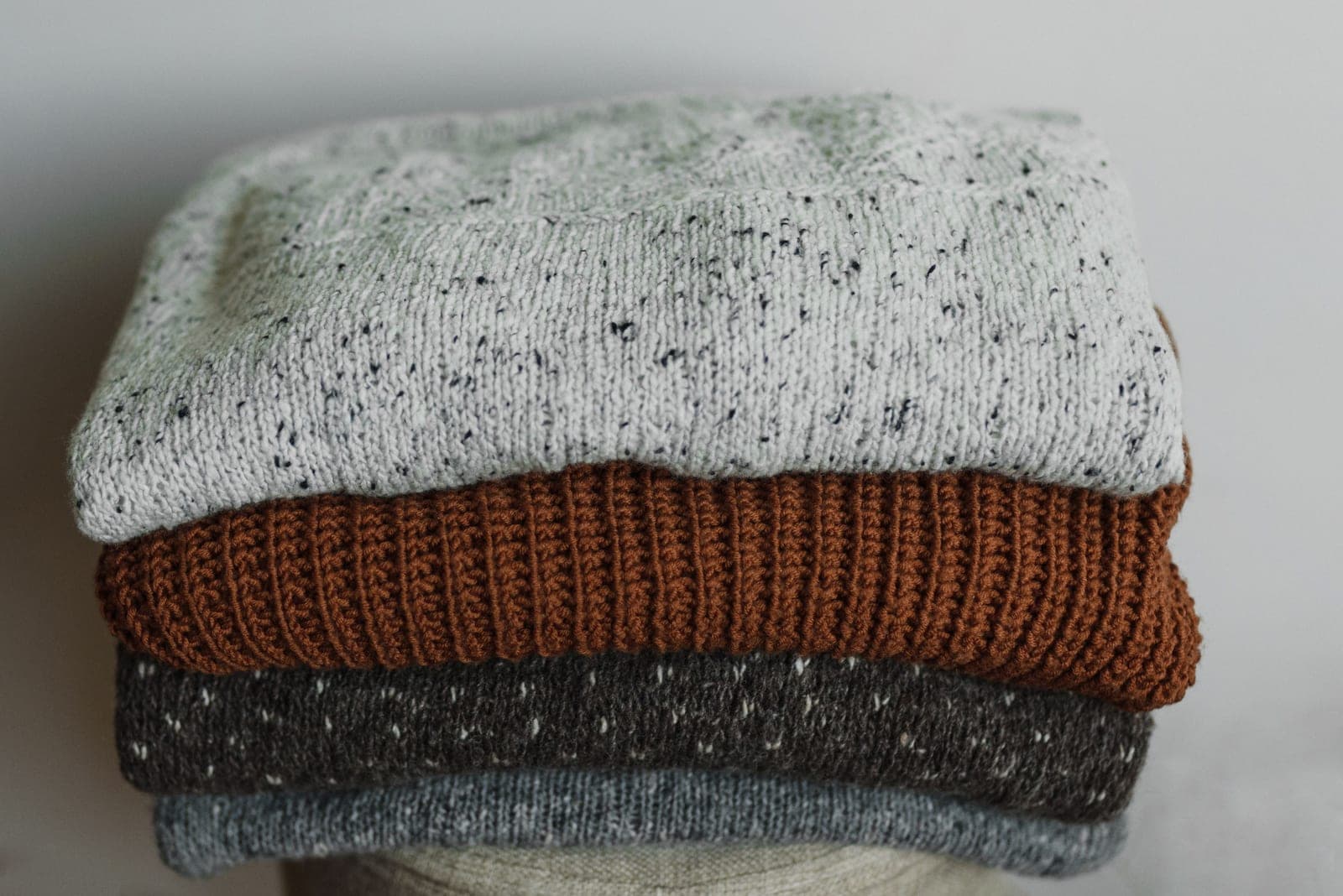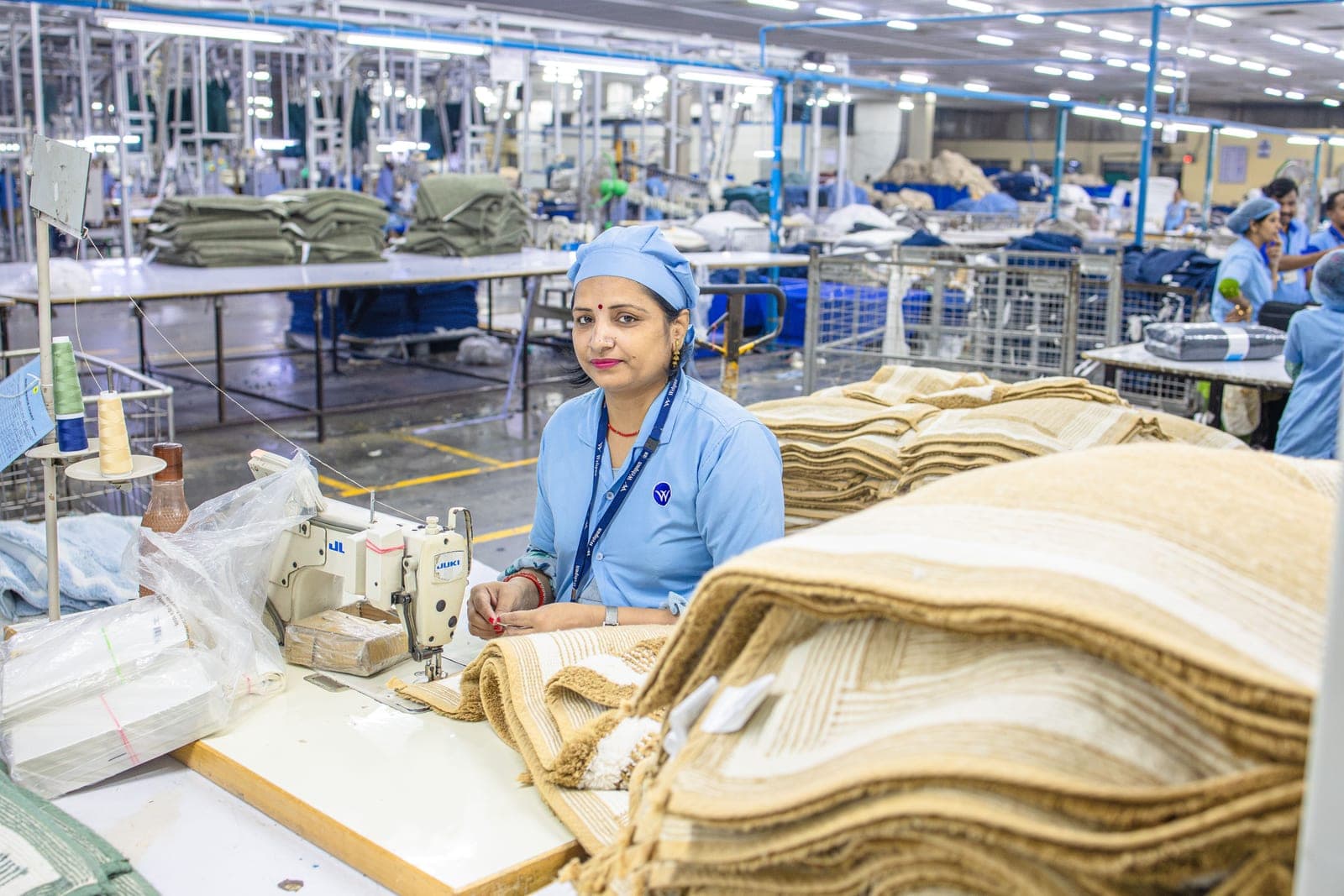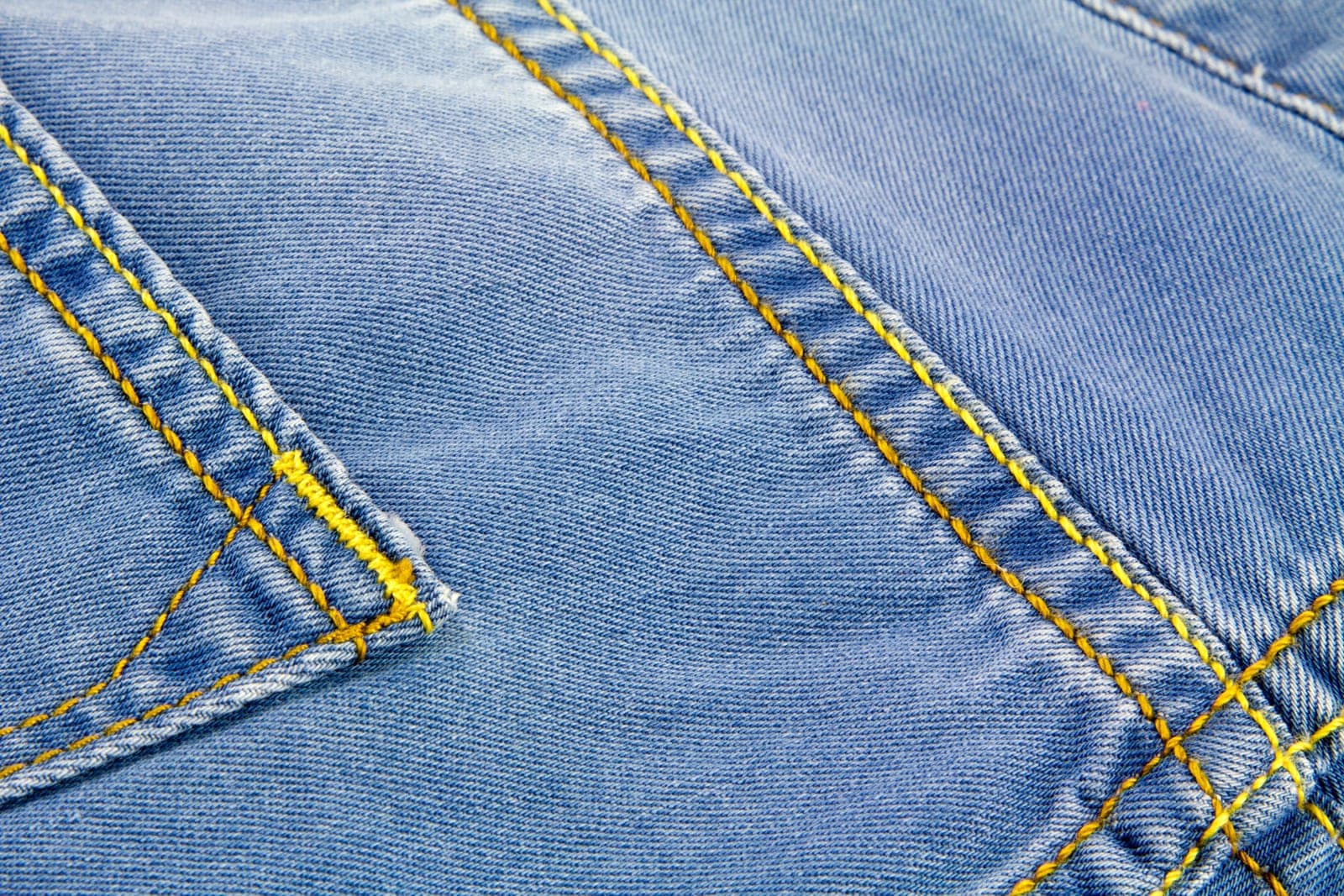
Look closely at a pair of jeans, a chino, or a classic trench coat, and you will see a distinctive diagonal line running across the fabric. That line is the signature of the twill weave — the second of the three basic weaves and the structure behind an enormous share of the world's durable, everyday clothing. Twill is the weave that dresses people for work and wear, and understanding it explains why denim lasts, why chino resists creasing, and why so many hard-working fabrics share that diagonal grain. This guide explains the twill weave.
What the twill weave is
The twill weave is created by passing the weft yarn over one or more warp yarns and then under two or more, and — crucially — shifting this pattern over by one step on each successive row. That regular step creates the diagonal line, or 'wale', that defines twill. Unlike plain weave, where every crossing interlaces, twill has fewer interlacings and longer floats, which is why it behaves so differently. The angle and prominence of the diagonal vary with the specific twill (a 2/1 twill, a 3/1 twill like much denim, a herringbone that reverses direction), but the shifting diagonal is always the signature.
Why twill is built for wear
Twill's properties make it the workhorse of durable clothing. It is **strong and durable** — while having fewer interlacings than plain weave, the structure and typically heavier yarns make twills tough. It **drapes better and is more flexible** than plain weave, because the longer floats let the fabric move. It **hides soil and stains well**, as the diagonal texture and often darker colours disguise marks — a real advantage for workwear. And it **resists wrinkling** better than plain weave. The trade-off is a distinct face and back (the diagonal is more pronounced on the face) rather than plain weave's reversibility.
The fabrics twill makes
Twill's durability and good looks give it a broad range. **Denim** — the archetypal 3/1 twill, dyed with indigo on the warp. **Chino and gabardine** — smooth, tightly-woven twills for trousers and uniforms. **Drill** — a strong twill for workwear and uniforms. **Herringbone and houndstooth** — patterned twills for jackets and suiting. **Tweed** — often a twill. From rugged denim to refined suiting, twill spans the practical and the elegant, united by that diagonal structure.
How ERP captures a twill fabric
As with any fabric, a twill is defined by its weave together with fibre, yarn counts and construction, which a textile ERP holds as structured data. The specific twill affects loom setup, yarn consumption and the fabric's behaviour, so capturing it precisely matters for quoting, production planning and quality. It is part of the fabric-master discipline of the textile ERP platform that keeps a mill's data accurate across every construction it makes.
Twill is the diagonal weave built for wear — durable, soil-hiding, good-draping, and behind everything from denim to gabardine. That shifting diagonal is not decoration; it is the structure that makes these fabrics work as hard as they do. For a business, capturing the weave precisely keeps production and costing accurate, and you can see how fabric construction is managed with your own qualities.
Frequently Asked Questions
What is a twill weave?
The twill weave passes the weft yarn over one or more warp yarns and under two or more, shifting the pattern over by one step on each successive row. That regular step creates the diagonal line, or wale, that defines twill. It has fewer interlacings and longer floats than plain weave, which gives twill its distinctive behaviour and appearance.
Why is twill fabric so durable?
Twill is strong and durable thanks to its structure and typically heavier yarns; it drapes better and is more flexible than plain weave because the longer floats let the fabric move; it hides soil and stains well thanks to the diagonal texture and often darker colours; and it resists wrinkling. These properties make twill the workhorse weave for workwear and everyday clothing like denim and chino.
What fabrics are made with a twill weave?
Denim (the archetypal 3/1 twill, indigo-dyed on the warp), chino and gabardine (smooth tight twills for trousers and uniforms), drill (strong twill for workwear), and patterned twills like herringbone and houndstooth for jackets and suiting, plus much tweed. Twill spans from rugged denim to refined suiting, united by its diagonal structure.
Vastra ERP Editorial Team
Textile Technology Experts
Our editorial team brings decades of combined experience in textile manufacturing, supply chain management, and enterprise technology. We publish in-depth guides, industry analysis, and practical insights for textile professionals worldwide.